


Likely to sell out
7 - 8.5 hours·English
4.8(27,934)
Reykjavik: Golden Circle Full-Day Tour with Kerid Crater
Look into a volcanic crater at KeriðFeel the spray of the Gullfoss Waterfall

Map the loop before you drive it. One clear Iceland route map shows every stop in order, the kilometers between them, and how a guided day tour covers the whole circuit, from Þingvellir to Geysir to Gullfoss to Kerið, without you touching a wheel. Pick your direction, time your stops, and see the whole day fall into place.
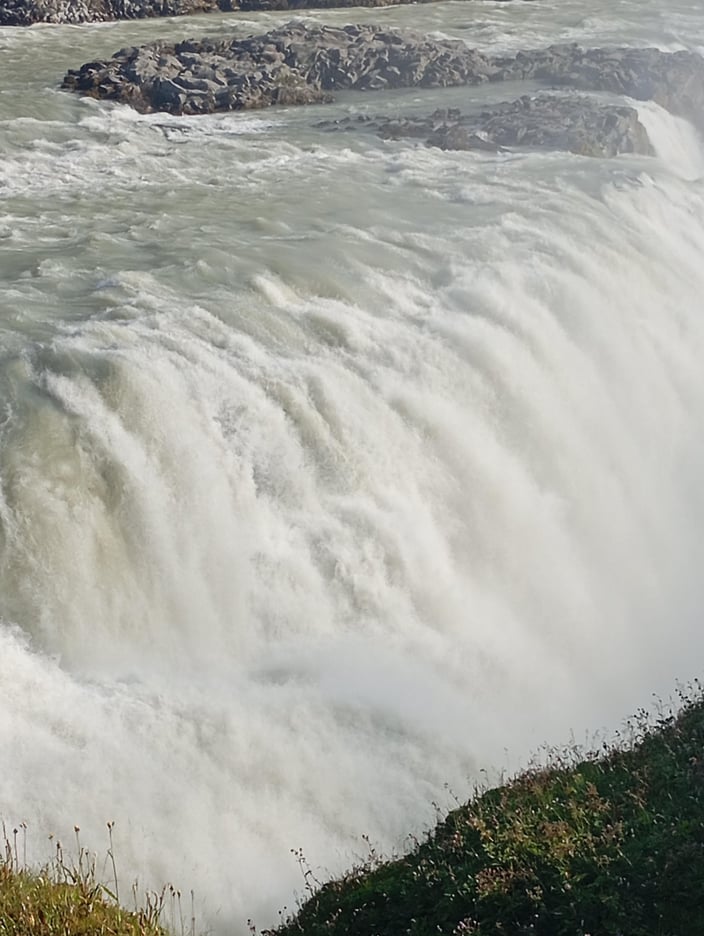
"Our Christmas guide was great - informative, friendly and funny. Bonus stop at an ice cream farm too!"





toilets at gullfoss are pay-per-use
The classic Golden Circle loop from Reykjavík runs about 230 km and takes 3.5 hours behind the wheel. What those numbers leave out is where to stop, which way to drive, and what winter does to the plan. The chapters here settle all three.
The loop covers roughly 230 km of paved road, about 3.5 hours of pure driving, and fills 6 to 8 hours with stops.
Clockwise from Reykjavík the order is Þingvellir, Geysir, Gullfoss, then Kerið, and the reverse order closes the same seamless circuit.
Most coaches leave Reykjavík around 8:30 am, so starting before 8 am beats them to every stop.
A 2WD car is legal on the loop year-round; winter tyres are mandatory from 1 November to 14 April.
Parking at Þingvellir, Geysir, Brúarfoss and Faxi runs through the Parka app, so screenshot your receipts.
Confirm your rental has winter tyres before you drive the iceland route map, and consider a 4x4 for extra traction in snow and ice, even though it is not legally required.
The numbers first, because they decide whether this fits one day of your trip. The classic circuit from downtown Reykjavík through Þingvellir National Park, the Geysir geothermal area and Gullfoss waterfall covers about 230 kilometers of paved road, and the wheel turns for roughly 3.5 hours if you never stop.
Count the stops the way drivers actually spend them and the day grows to six or eight hours. That is a full day out with dinner back in Reykjavík at a civilised hour, and it is why the route works best as the one big trip of that day.
The loop leaves the city and runs through open country to the northeast, so nothing between the sights eats your time except the road itself.
Winter stretches those numbers. Snow, wind and ice slow the drive well past what the map suggests, and people who run the circuit in winter build the extra time in from the first morning.

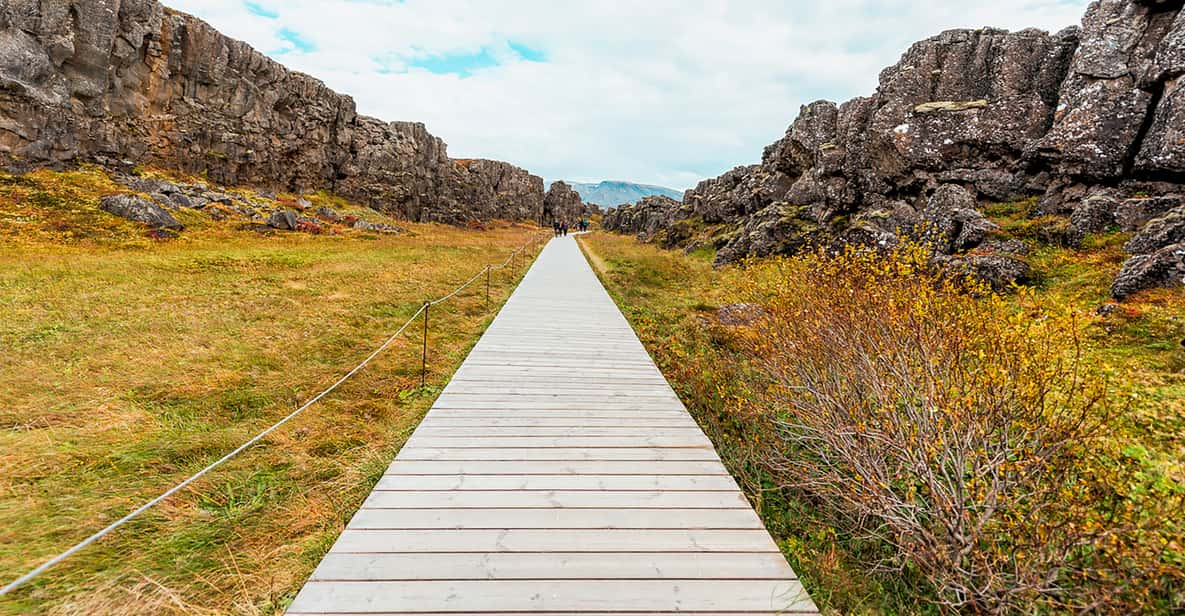
The whole circuit is one continuous line of ordinary paved highways, and it reads simply on any map of Iceland. Out of Reykjavík you go northeast on Route 1 to Mosfellsbær, then take Route 36 east to Þingvellir National Park.
From the park, Route 365 and Route 37 carry you past Laugarvatn, where you join Route 35 northeast toward the Geysir geothermal area and Gullfoss.
The return leg follows Route 35 south through Selfoss, where it reconnects with Route 1 west back to the city. Five road numbers, no gravel, no ferries, and no fork that strands you.
One preparation step saves the whole day: download offline maps for southwest Iceland before you leave, and load your route and destination pins on hotel Wi-Fi. Mobile data gets patchy between towns, and the GPS keeps tracking your position offline.
Drive clockwise from Reykjavík and the day sequences itself without a single backtrack. Þingvellir first, 51 km and about 49 minutes from the city. Then east to Geysir, 56 km and 52 minutes.
From there Gullfoss sits just 7.6 km away, a ten-minute drive. After the falls you head south 56 km to Kerið Crater, and from the crater it is 69 km, about an hour, back into Reykjavík.
Counterclockwise closes the same circuit. Kerið first, then Gullfoss, Geysir and Þingvellir, and the loop still runs with zero backtracking. Both directions shape the crowds, and the next chapter weighs them against your start time.
The long legs sandwich the short one. Geysir and Gullfoss sit ten minutes apart, so those two visits run together naturally, while the drive out and the drive home each take the better part of an hour.
Keep your phone navigation running even when you know the route. Through heavy fog, rain or snow it announces the next curve before you see it.

Most coaches run the loop clockwise, and their schedule is predictable enough to drive around. Tours leave Reykjavík around 8:30 am, which puts peak crowding at Geysir between 10:30 am and 2 pm and at Gullfoss between 11 am and 3 pm.
Two escapes exist. Leave the city before 8 am and you reach every sight ahead of the coach wave, whichever direction you drive. Or run the loop counterclockwise and you reach Geysir before the big buses, or a few hours after them, since they cluster there around noon.
Arrive at midday and you meet the peak head-on. An afternoon start also works, landing at the sights after the morning wave has rolled through.
Crowd pressure swings by month too. February and November sit near the top of the calendar's busyness, April and May near the bottom, and midsummer lands in between.
February: 5 out of 5 for how busy it gets.
Tap a month to read it.
What that means for your choice is simple: pair an early start with a shoulder month and you can have Gullfoss nearly to yourself on a good spring morning.
The entire loop is paved, and a 2WD car with winter tyres is legal and workable on it year-round. That surprises people. A 4x4 buys extra traction and clearance in snow and ice, and the ploughs clear the Golden Circle roads early because the route carries so much traffic.
One rule is firm: from 1 November to 14 April, winter tyres are mandatory on every rental car in Iceland. Your rental comes with them fitted, so there is nothing to arrange.
It is not; winter tyres are the legal requirement from 1 November to 14 April
The main circuit is paved end to end, and a standard car handles it
From October to April, skip it if you have never driven on snow, ice or sudden gales
In summer the route is simple to follow, clearly signposted back to Reykjavík, and light on traffic outside the city. Winter is the honest dividing line: if snow and gales are unfamiliar to you, that is when the tour bus earns its keep.
Self-drivers meet the route's small administrative friction at the car parks, and it catches people out because none of it takes cash at a barrier.
The Parka app runs parking at Þingvellir, Geysir, Brúarfoss and Faxi. At Þingvellir you can also pay online or at the on-site machines using your license plate, and one payment covers every park lot for the day.
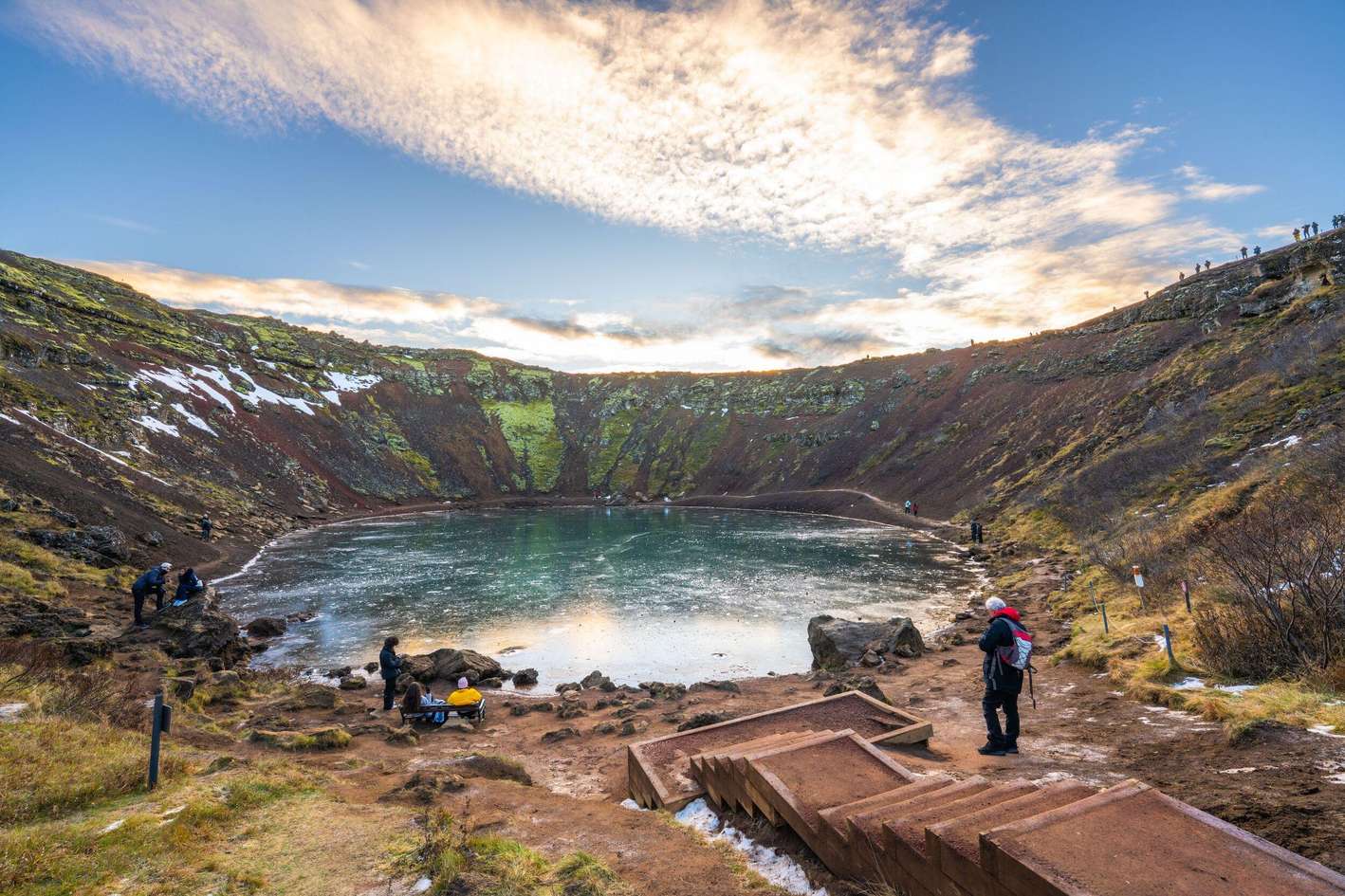
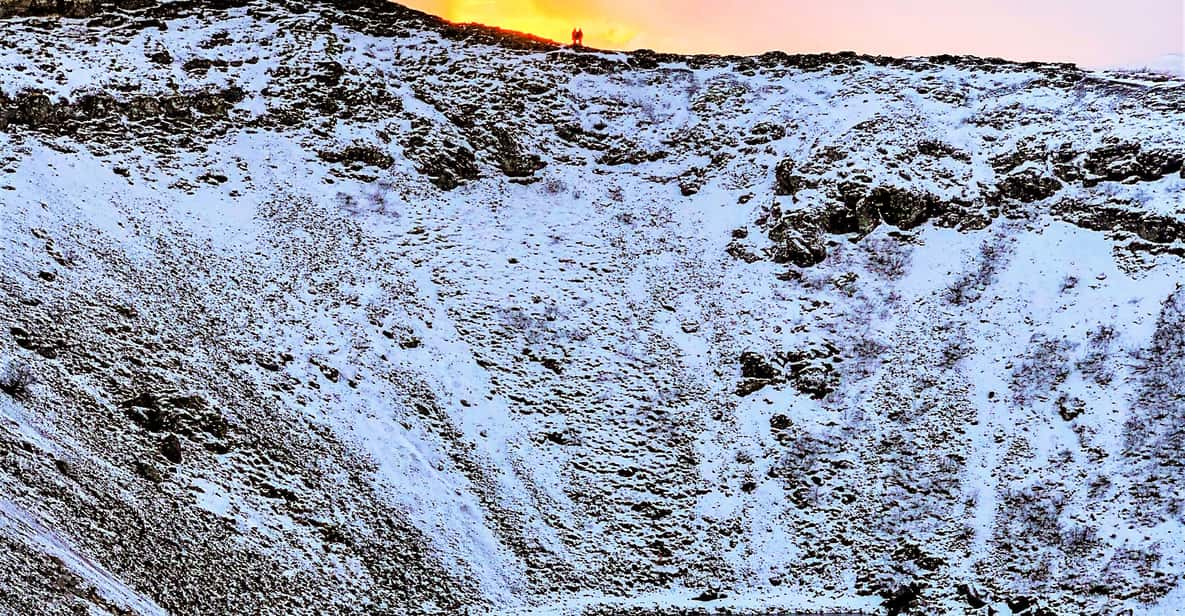
Kerið Crater works differently: parking there is free, and an admission fee per visitor is paid at the kiosk by the entrance, card or cash.
The fine comes later if you skip the app. Rental agencies pass automated parking charges to your bill, and mistakes happen. Screenshot every mobile parking receipt before you drive on, so you have proof when a charge you never earned appears.
Two minutes of phone work at each car park keeps a week of follow-up emails off your plate.

Food and fuel cluster in a handful of places, and the stretches between them are empty. Gas pumps sit at Geysir and Reykholt village, with fuel stations also in Laugarvatn, Flúðir and Selfoss. Gullfoss and Þingvellir have no fuel at all, so fill up before those legs.
For lunch, the classic stop is Friðheimar, the tomato greenhouse farm in Reykholt between the first two stops, where the fresh tomato soup and bread draw a queue of their own.
Expect to pay for the meal yourself; even tours that schedule it leave the bill to you. The shops at Geysir and Gullfoss sell food and drinks too, and their visitor centers hold the restrooms.
Electric drivers do well here. The Geysir Hotel has AC chargers, Gullfoss Café runs four 22 kW stalls, and Selfoss offers fast charging from several networks. Faxi and Kerið have none.
The route invites side stops, and the trick is picking one or two; stack more and the day frays. Brúarfoss sits between Þingvellir and Geysir, a short walk from its car park.
Faxi waterfall is a 15 to 20-minute stop right off the return leg. Most of these extras lie only 5 to 20 minutes off the main route.
Bathing is the detour people remember longest. The Secret Lagoon in Flúðir is the classic, a 1 to 2-hour geothermal soak, and Laugarvatn Fontana sits directly on the circuit. Travelers who finish a sightseeing day in warm water call it the best ending there is.
The warning comes from people who tried to do everything: pile on too many peripheral stops and a relaxed loop turns into a rushed one. Pick the detour that suits your day, the waterfall if you want a quick add, the lagoon if you want the day to end well.
Self-driving buys you one thing above all: pace. You linger at Gullfoss as long as the spray holds your interest, skip Þingvellir if you have seen it, and answer to nobody's schedule. In summer the loop is easy to follow and hard to get wrong.
A tour buys everything else. Guides add the geology and history the basalt keeps quiet, handle the winter driving, and absorb the parking apps and fees entirely.
A standard full-day coach tour takes about 8 hours from central Reykjavík, with 40 minutes to an hour at each main stop, and a minibus gets you a more personal day and stops the big coaches cannot reach.
| Your own schedule at every stop | Fixed stop times, about 40 to 60 minutes each | |
|---|---|---|
| Navigation and fatigue | You handle roads, parking apps and winter conditions | Someone else drives and books the route |
| Winter suitability | Only if you know snow and ice | Works in any season, guides reroute in storms |
| Total day length | 6 to 8 hours including stops | About 8 hours, pickup included |
The tour that runs this exact circuit is the Golden Circle Full-Day Tour with Kerid Crater, which covers Þingvellir, Geysir, Gullfoss and the crater in one day with pickup from Reykjavík. If you are short on time, new to driving abroad, or visiting in winter, it takes the whole navigation question off the table.
The one thing that can genuinely stop this trip is weather. The Golden Circle stays open year-round and the roads are ploughed daily, but severe storms close exposed sections such as Mosfellsheiði and Lyngdalsheiði for hours at a time, and orange alerts halt non-essential travel outright.
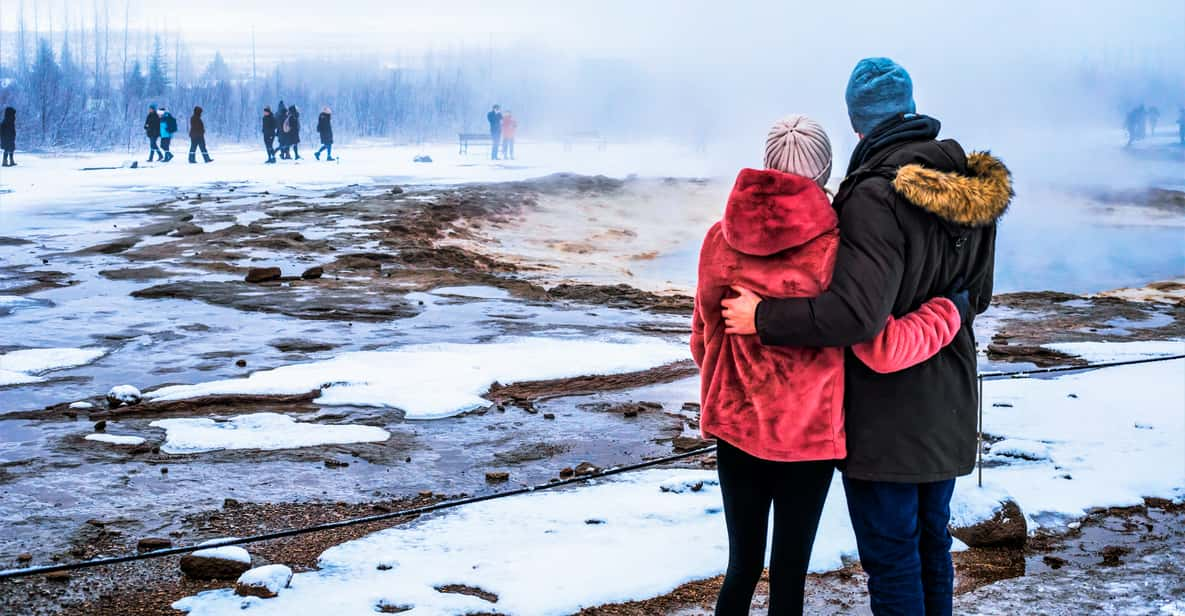
At Gullfoss, freezing spray coats the footpaths in sheet ice. The lower canyon path closes in winter because it can be impossible to stand upright without ice spikes, and signs recommend crampons at the falls. Bring microspikes and use them when paths are icy; you will not need them on every visit.
Check conditions before you set out on safetravel.is, road.is and vedur.is, or call the road administration hotline at 1777.
| If this happens | What happens then |
|---|---|
| Hellisheiði pass closes | The usual detour runs through the lower Þrengsli pass |
| A road closes mid-drive | Stay at a safe stop and contact your activity provider about rescheduling |
| A tour is cancelled for weather | You are offered another date or a full refund |
| A tour runs partway then turns back | Tours cut short mid-day are generally not refunded |
That last line matters when you book. A cancelled tour refunds in full; a tour that ran partway before turning back usually does not, so keep slack in the day around any tight connection.
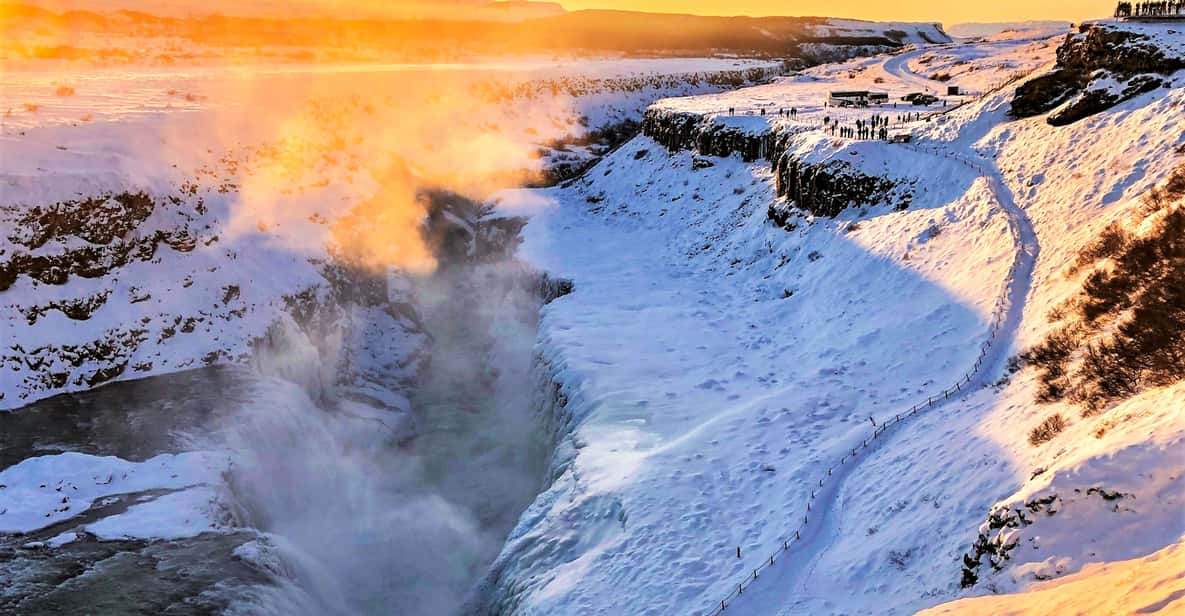
The Golden Circle route map resolves into one clean day: about 230 km, five paved road numbers, and four stops that sequence themselves clockwise or in reverse. Drive it in summer for pace and lingering, book the tour that runs the same circuit in winter, and start before 8 am either way.
Go when the forecast is kind, carry ice grips from November to April, and screenshot your parking receipts. The day takes care of the rest.
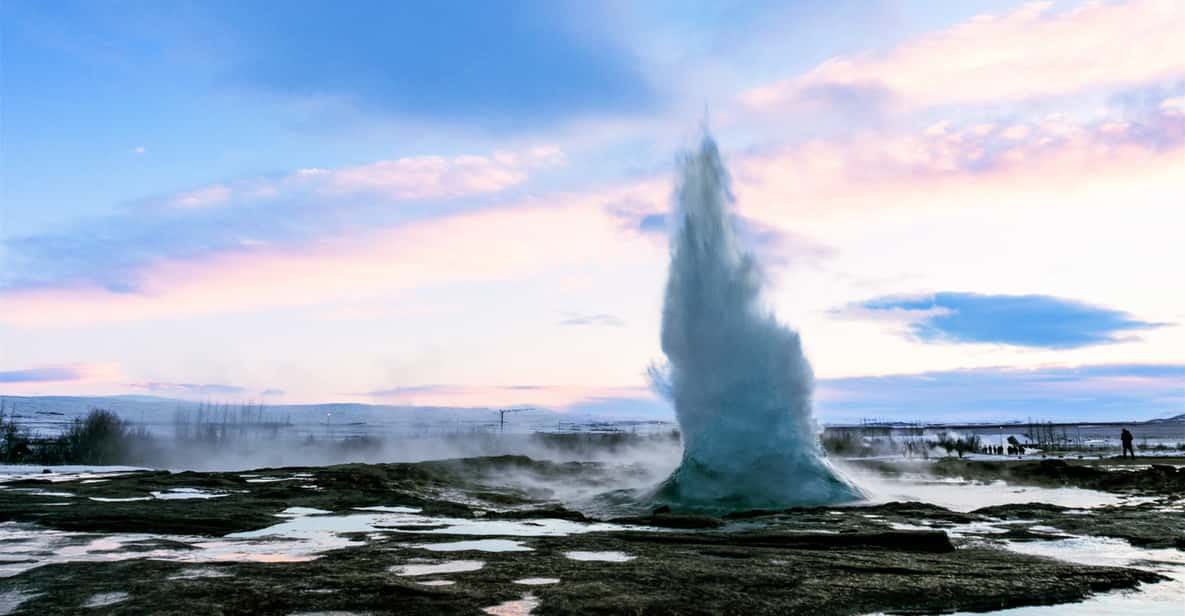
strokkur erupts every 6 to 10 minutes
Hand the whole loop and the driving to a guide, with the classic three stops covered in one day.

Prefer fewer seats and a slower pace? See how minibus tours run the same circuit you just mapped.
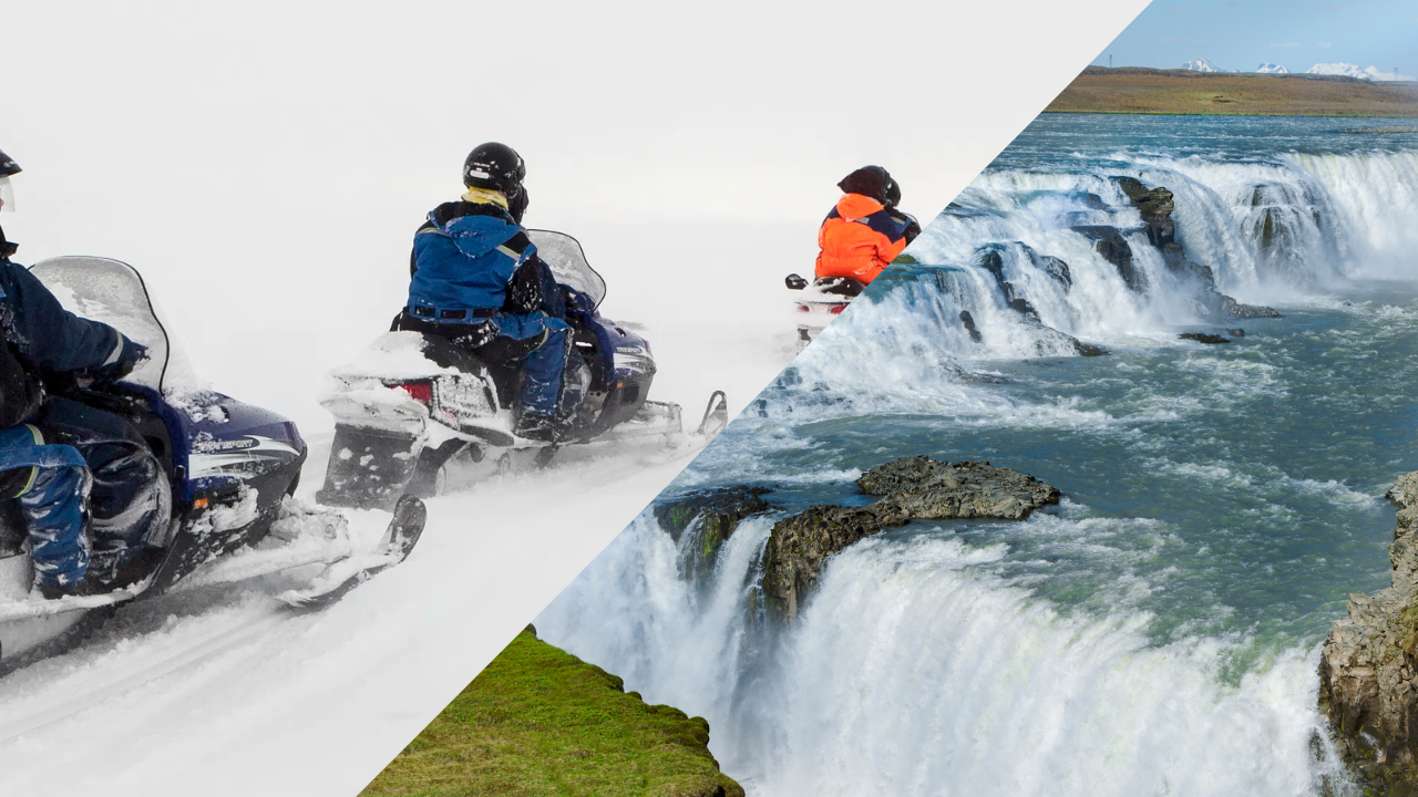
The loop is fully paved, so find out when a rugged Super Jeep genuinely earns its place on it.
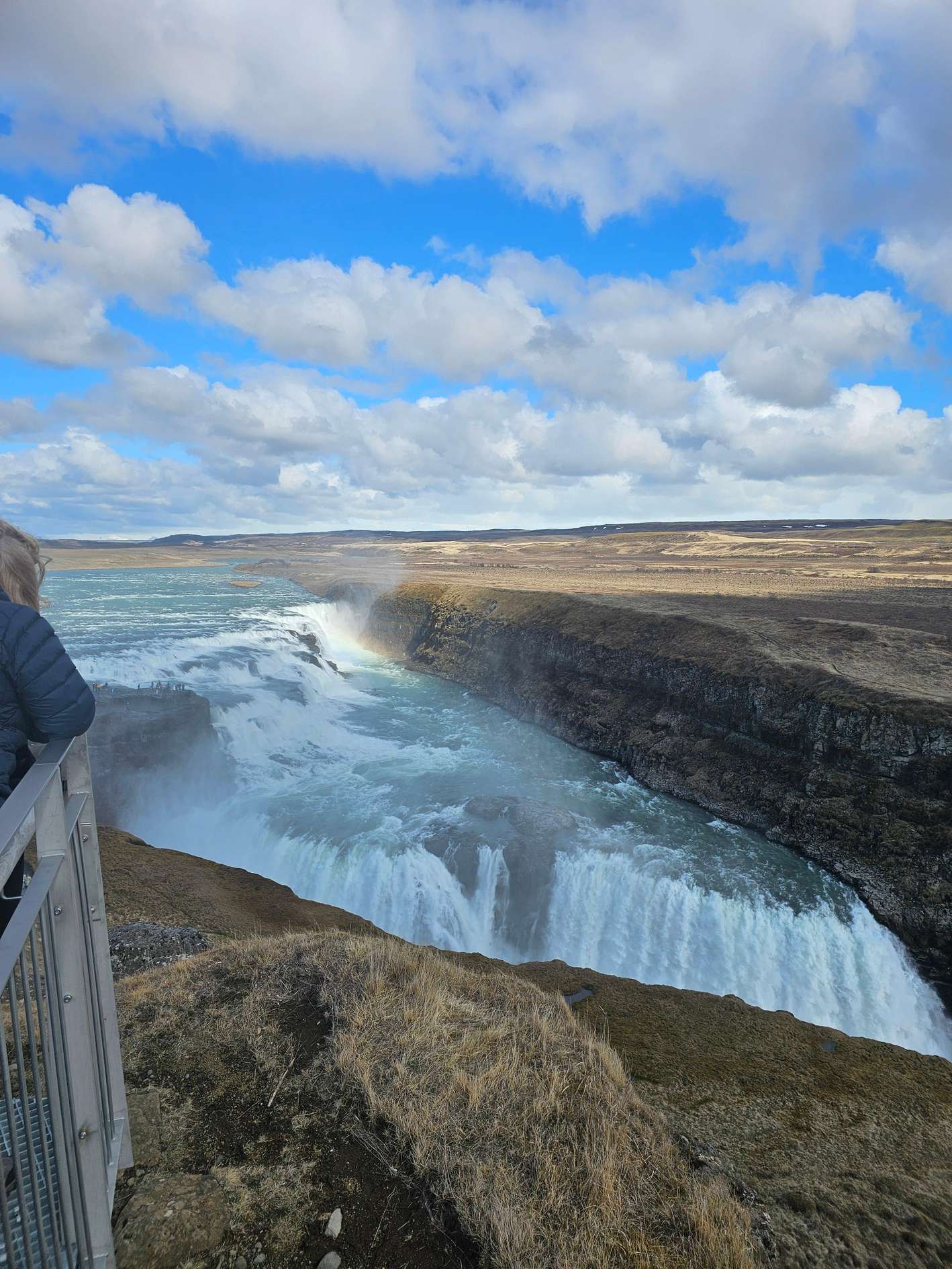
Want to set your own stop times? Private tours follow your map with the driving left to a driver-guide.
Kerið sits on your return leg. See which day trips build the crater into the route for you.

Turn one mapped day into two by pairing the circuit with snowmobiling on Langjökull glacier.
kerið parking is free, entry is not
Distances, directions and stop order on the loop from Reykjavik, in plain numbers.
 Reykjavik2026
The classic circuit from Reykjavik covers about 230 kilometers of paved road, and with the Kerið detour it climbs toward 250 to 300 kilometers. Pure driving time sits around three and a half to four hours.
Plan on six to eight hours door to door. Pure driving takes about 3.5 to 4 hours, and the rest goes to the stops at Þingvellir, Geysir and Gullfoss, where a visit typically runs 40 to 70 minutes each.
Clockwise from Reykjavik works without backtracking: Þingvellir first (51 km, about 49 minutes), then Geysir (56 km, 52 minutes), Gullfoss (a short 10 minutes on), Kerið (56 km, 48 minutes), and back to the city (69 km, about an hour).
Yes. Running the loop counterclockwise, Kerið first, then Gullfoss, Geysir and Þingvellir, gives you a clean circuit with no backtracking either. Most tour buses run clockwise, so going the other way can also mean thinner queues.
The first main stop, Þingvellir National Park, sits 49 to 52 kilometers from central Reykjavik, roughly 45 to 50 minutes without traffic. From Keflavik Airport it is about 90 kilometers, or 72 minutes.
No. The whole main loop is paved, and a standard rental car handles it. In winter a 4x4 is not legally required either, but many drivers like the extra traction on snow and ice.
In summer the route is well paved, clearly signposted and simple to follow back to Reykjavik, with little traffic outside the city. From October through April, skip self-driving if you have no experience with snow, ice and sudden gales.
Þingvellir charges for parking by vehicle, payable at a machine or online. Geysir, Brúarfoss and Faxi use the Parka app. Kerið charges an entry fee at the kiosk but parking there is free.
Friðheimar, the tomato greenhouse farm in Reykholt between the early stops, is a favorite for its fresh soup and bread, and tours that stop there reserve tables. Cafeterias at Geysir and Gullfoss also sell food and drinks.
Between November and February you get roughly 4 to 10 hours of daylight along the route. Book the earliest departure you can so the main stops fall in daylight.
One or two detours work well. Brúarfoss sits between Þingvellir and Geysir with a short walk from the car park, and Faxi is a 15 to 20 minute stop. Too many side trips, travelers say, makes the day feel rushed.
Driving yourself gives you control over pace and works well in summer. A guided tour suits you if you are short on time, unsure about driving in Iceland, or visiting in winter, since a guide handles the roads and adds the geology and history as you go.
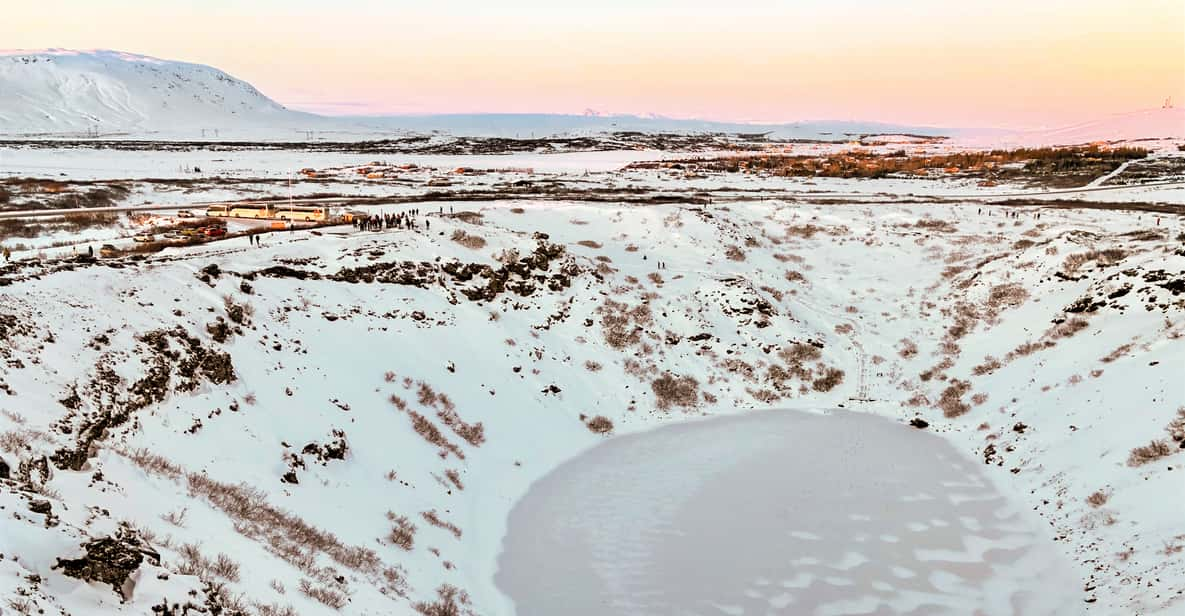
morning departures include the crater stop
This full-day Golden Circle tour with Kerið Crater follows the mapped loop, with pickup in Reykjavik and free cancellation up to 24 hours ahead.