Golden Circle Tour with Silfra Snorkeling - Tectonic Adventures
Snorkel between two continents in one clear day. Certified PADI guides, a drysuit, and the Golden Circle's waterfalls and geysers, all handled for you in a single minibus trip from Reykjavík.
Every tour here does the same two things in one day: sightseeing on the Golden Circle and snorkeling the Silfra fissure in Thingvellir National Park. The choice comes down to group size and what the booking includes. One small-group minibus covers everything, while the private versions trade shared transport for a vehicle and driver-guide of your own.
SwimmingYou must be able to swim and stay comfortable in the water; non-swimmers cannot join.
AgeThe small-group tour takes ages 12 to 69, and children must be with a parent or guardian on the same tour.
Doctor's noteAnyone aged 60 or older needs a signed medical approval from a doctor before snorkeling.
HealthHeart or lung conditions, epilepsy, a recent head injury, and some blood disorders rule out participation under national park rules.
Size limitsStandard drysuits fit people between 150 and 200 cm tall and between 45 and 120 kg.
FitnessExpect moderate exercise, including walking about 600 meters and swimming up to 500 meters in the current.
Separate ticketOne private tour leaves the Silfra snorkeling ticket out of its price, so you book that slot directly or have the operator arrange it.
WeatherSnorkeling is canceled on well under one percent of bookings; extreme wind or winter storms, not the water, cause the rare cancellations.
FoodLunch is on you at the Geysir stop, and the small-group tour adds hot chocolate after your swim.
LanguageYou must be able to understand instructions in English on the small-group tour.
importantSilfra snorkeling has strict limits: participants must be 12 to 69, able to swim and physically fit, and anyone 60 or older needs a doctor's signed approval; heart, lung, and chest conditions, epilepsy, and recent head injuries rule you out.
Check the full medical screening list before booking, and if you are 60 or older, get your doctor's signed clearance in advance so it is ready on the day of your Golden Circle tour with Silfra snorkeling.
Compare Silfra snorkeling tours on the Golden Circle
silfra entry slots are fixed, the day is built around them
Cheapest guided combo
10 hours·English
4.8(306)
From Reykjavík: Golden Circle Tour and Silfra Snorkeling
The only option with the PADI guide, drysuit and photos all included, and the lowest starting price of the three.
Free cancellationHotel pickup includedPickup from designated locations in Reykjavik
What you see and get on a Silfra Snorkeling Golden Circle Tour
visibility over 100 m in the water
6 stopsabout 4.5 h8 places
The water is the first thing worth talking about. Langjökull meltwater filters through porous lava for decades before it wells up in the Silfra fissure, which is why visibility tops 100 metres.
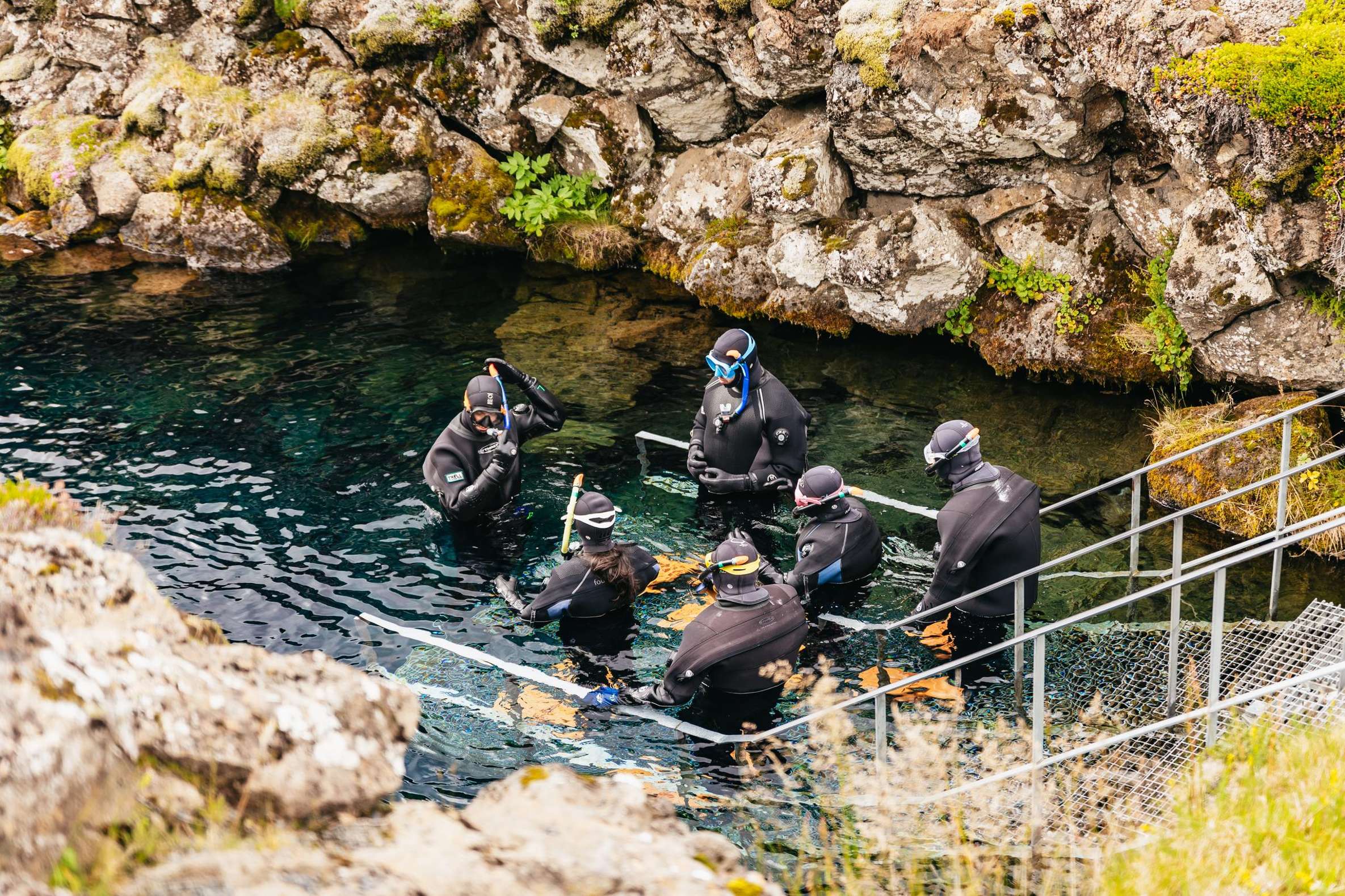
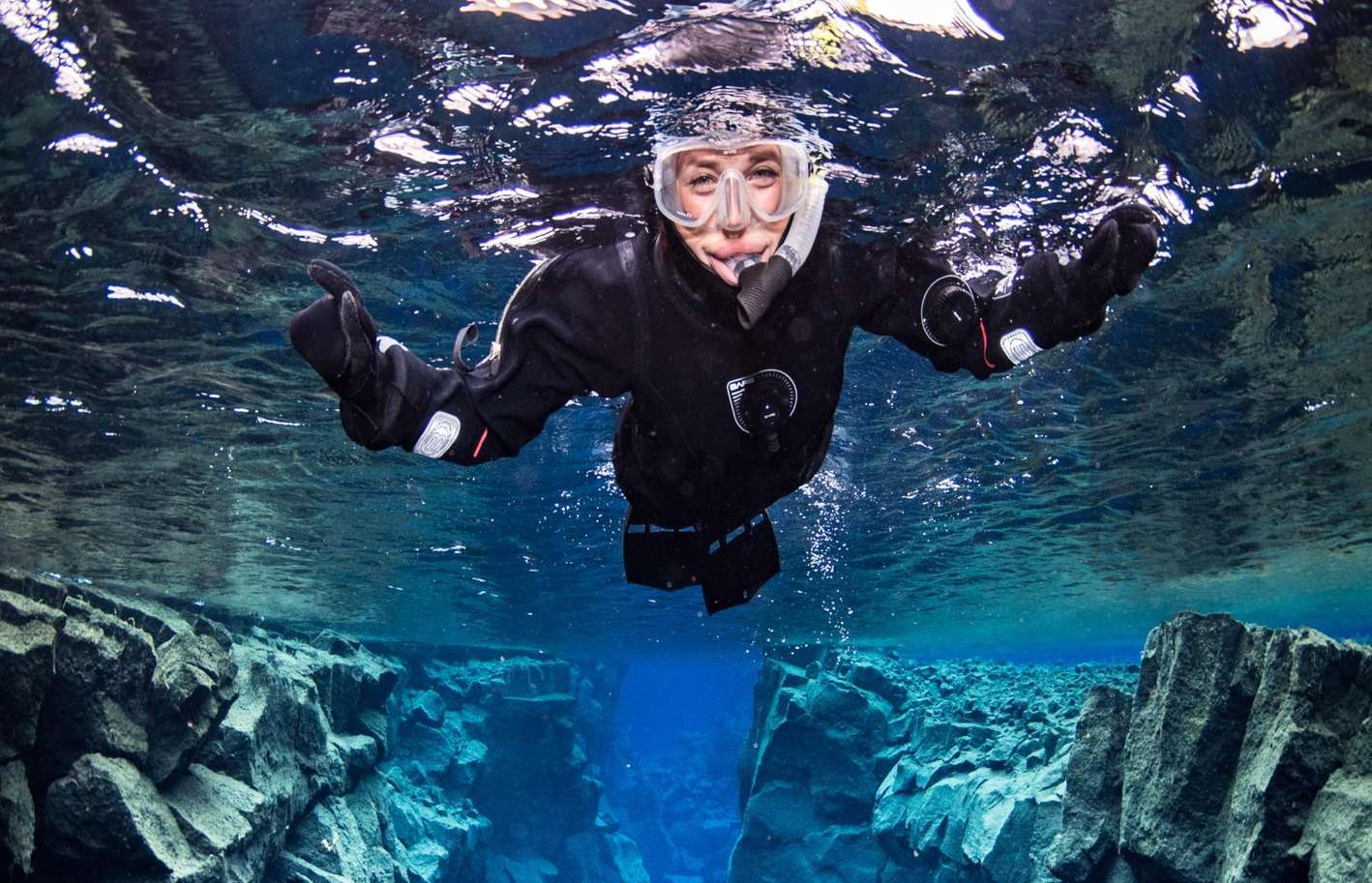
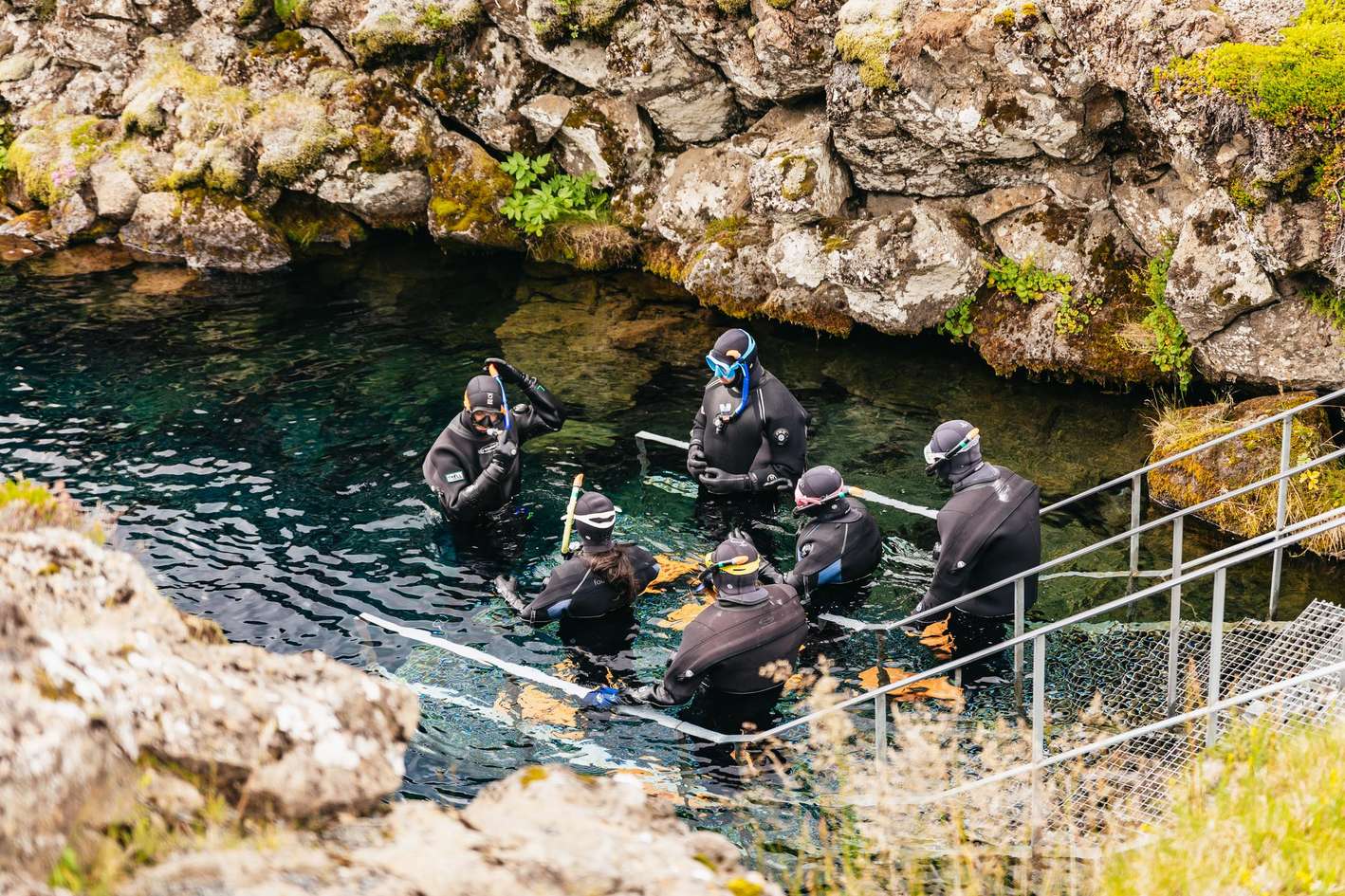
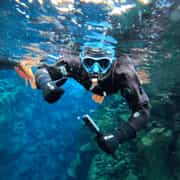
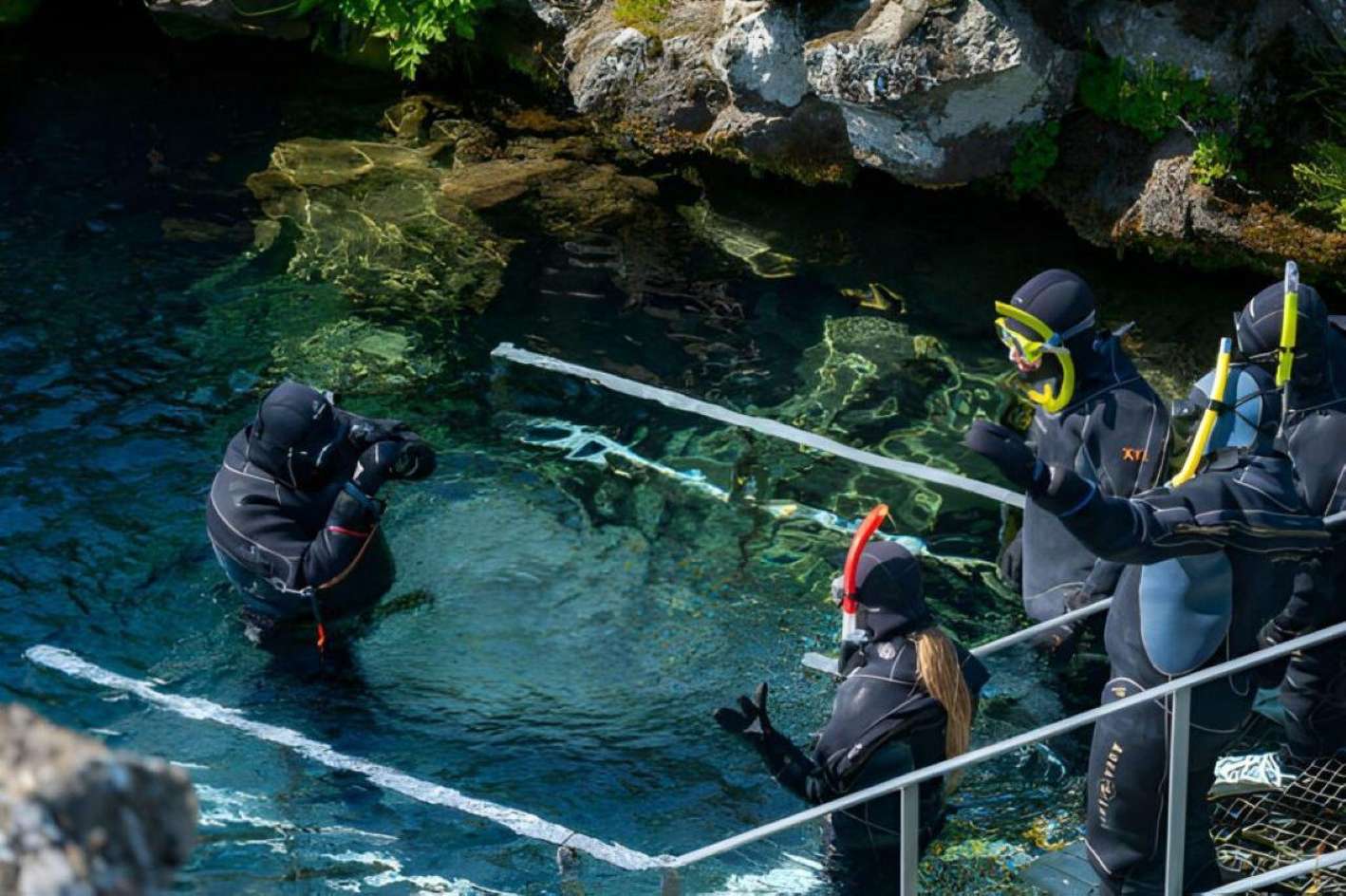
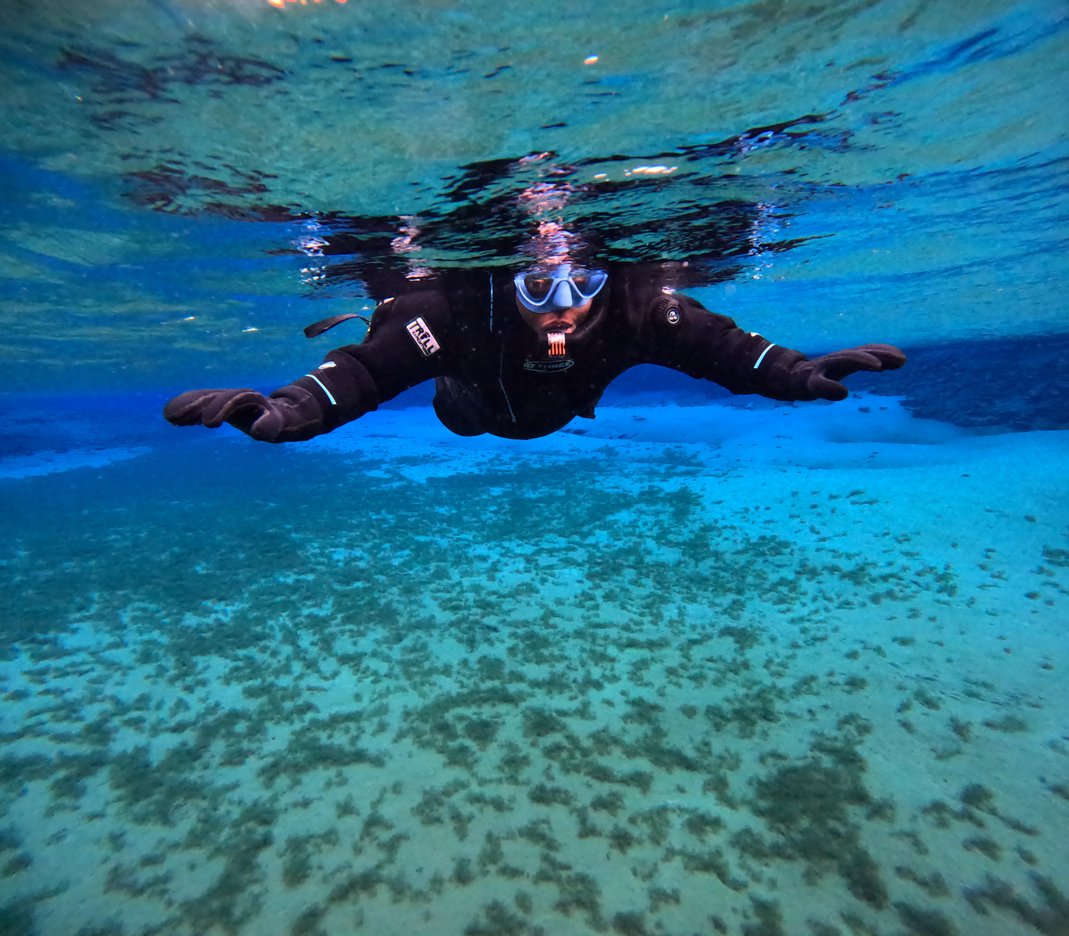
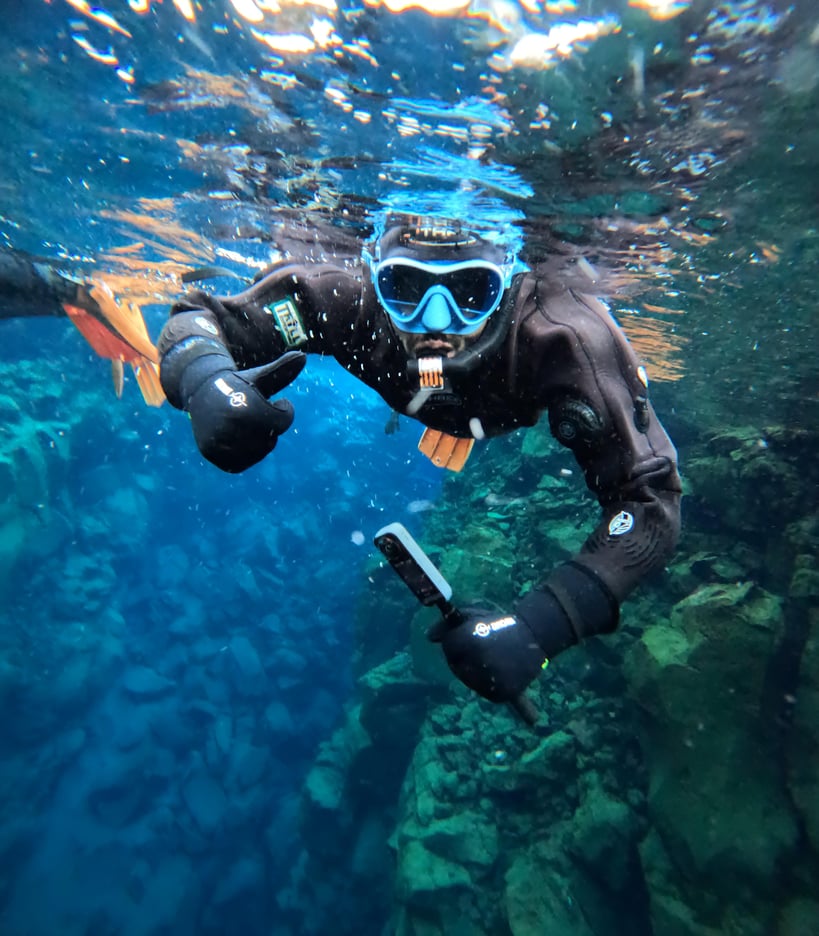
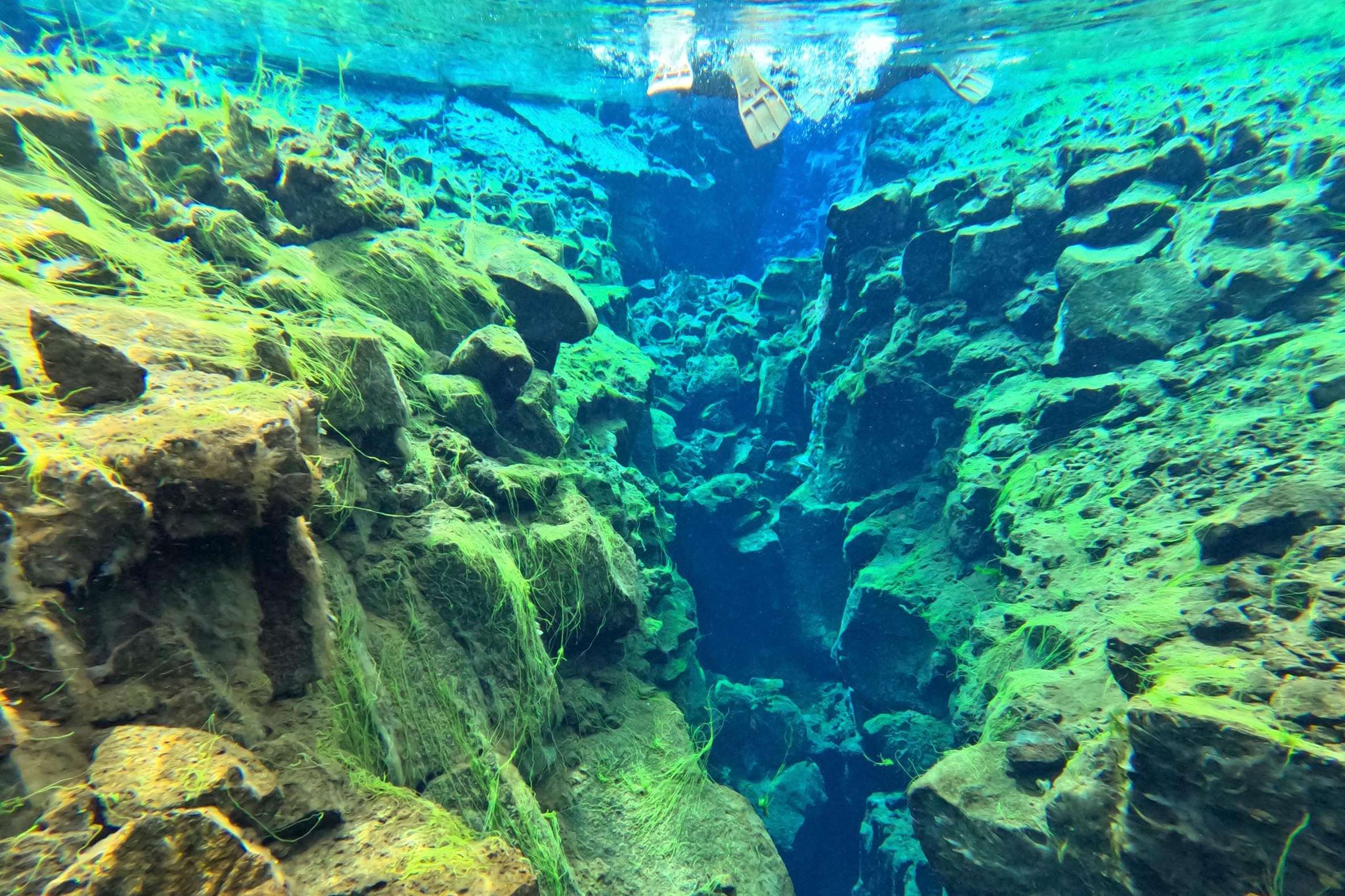
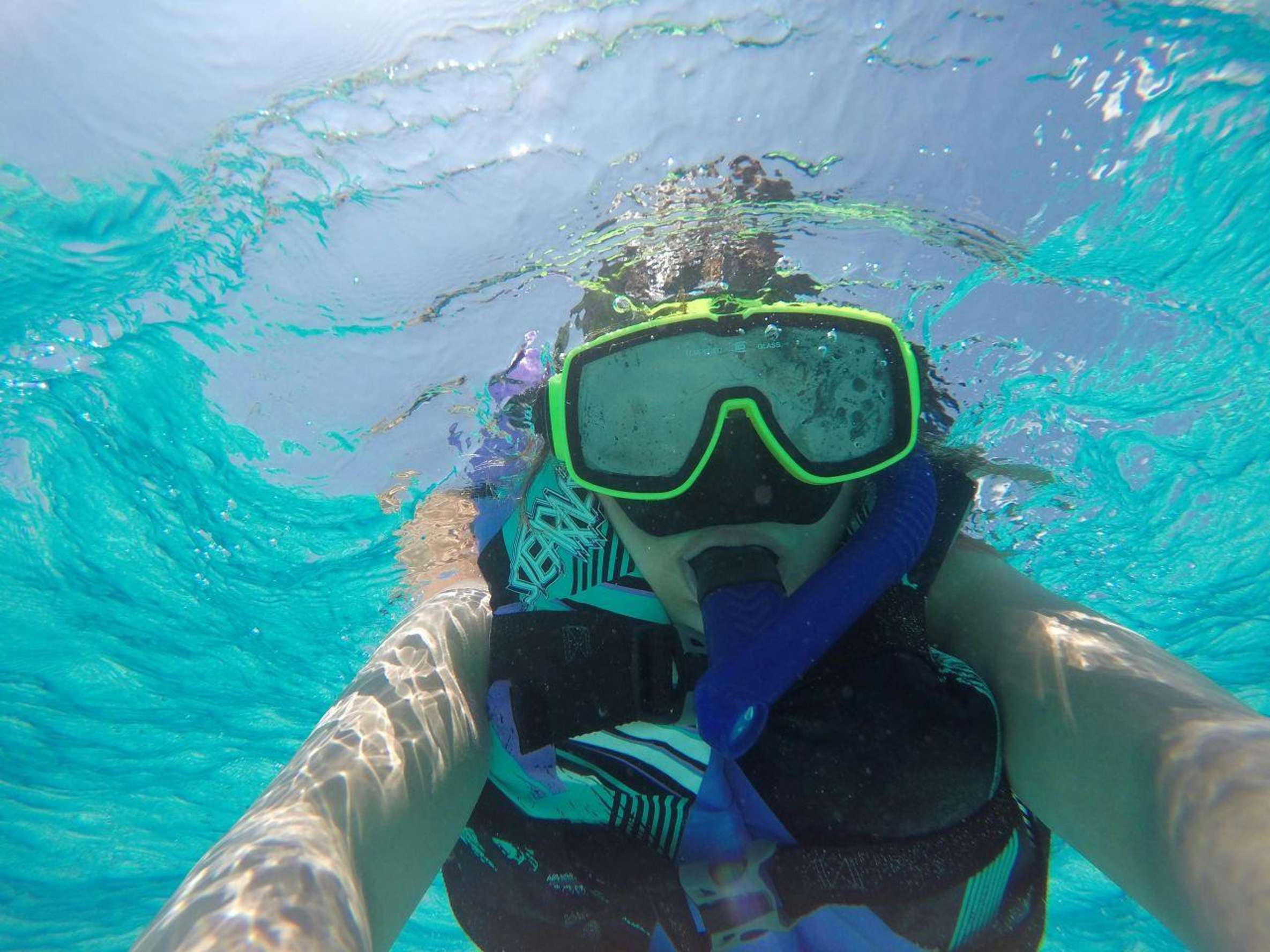
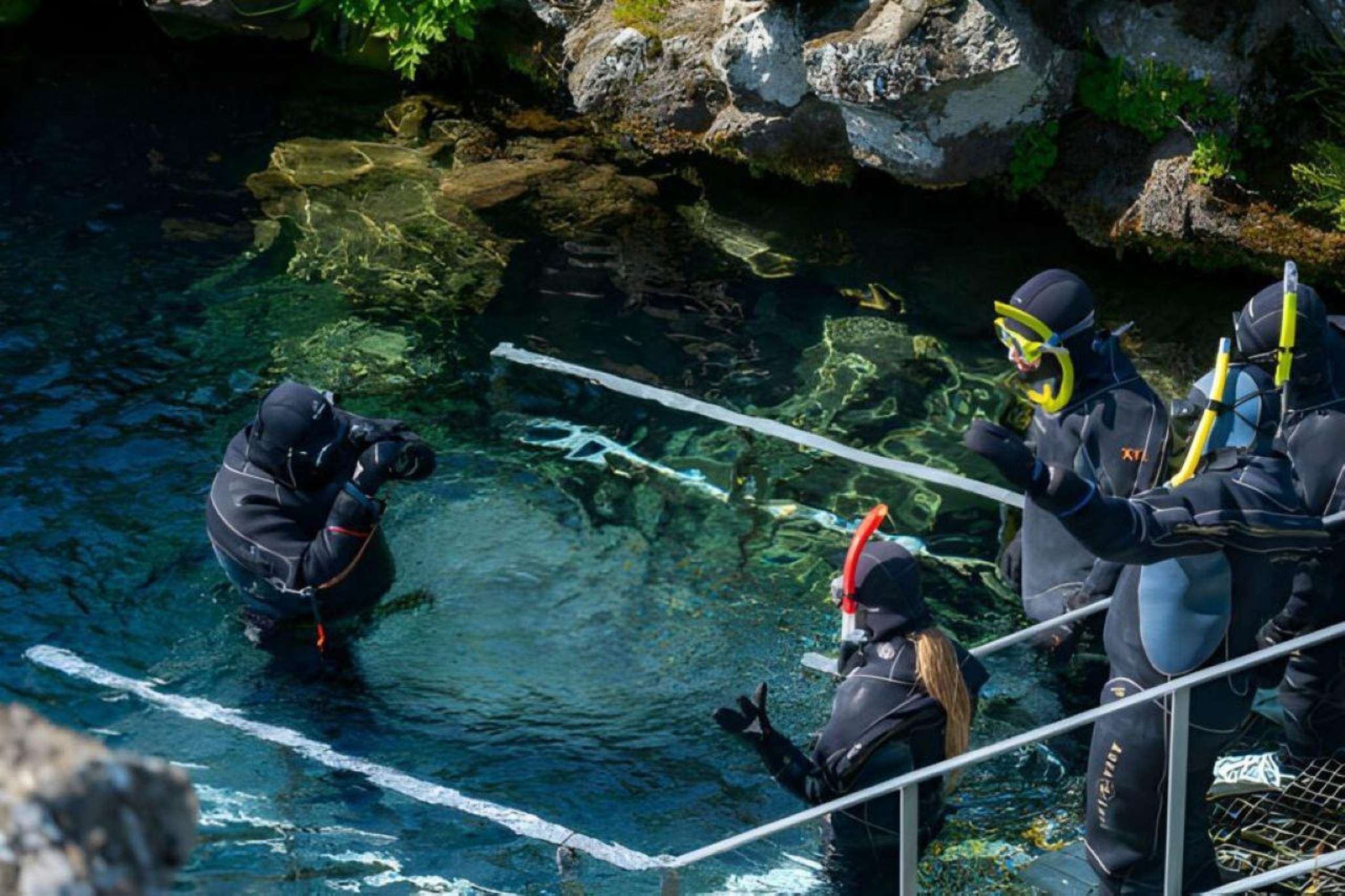
In a drysuit you float along the crack between the North American and Eurasian plates, past bright green algae on dark rock, in water that stays between 2 and 4 degrees all year.
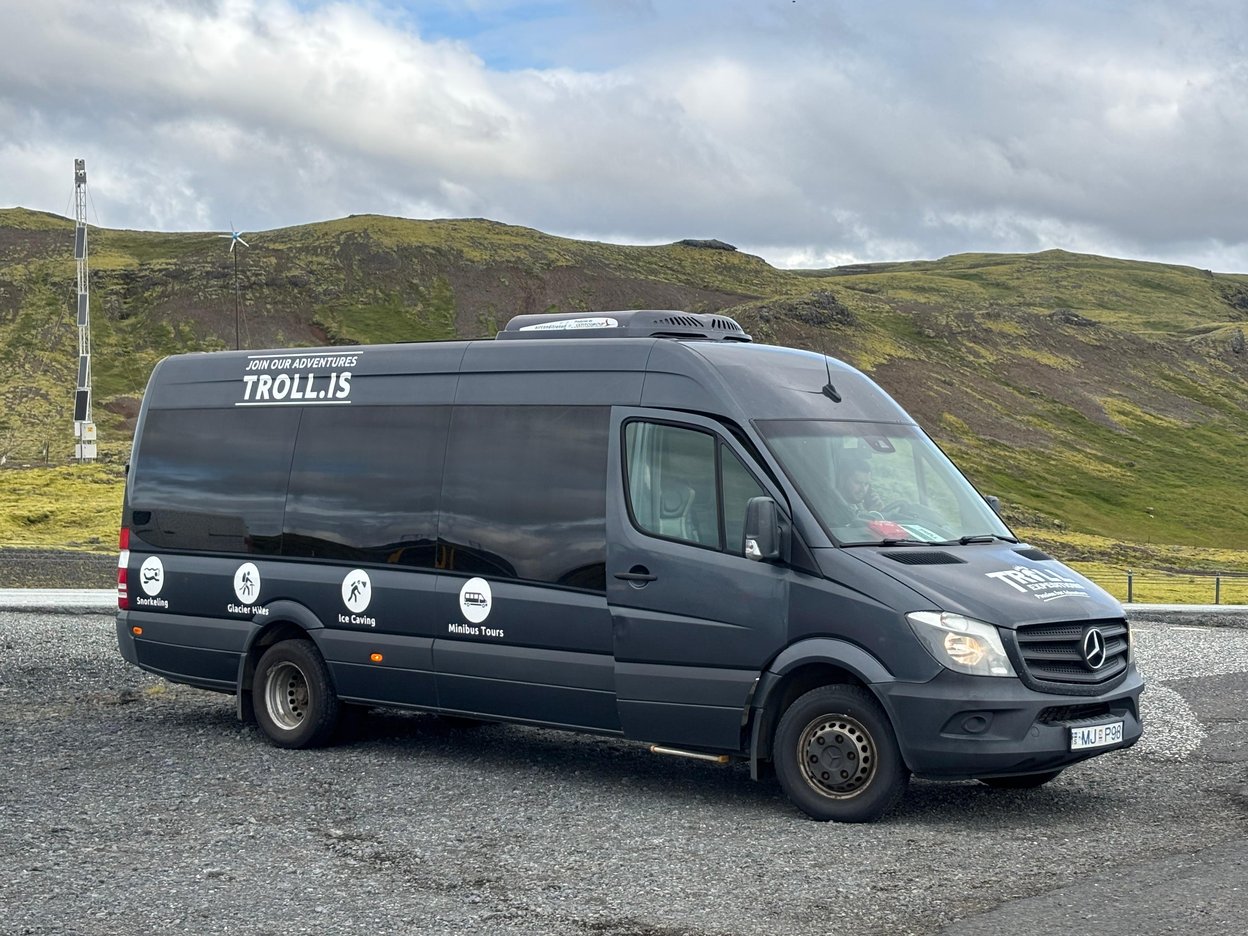
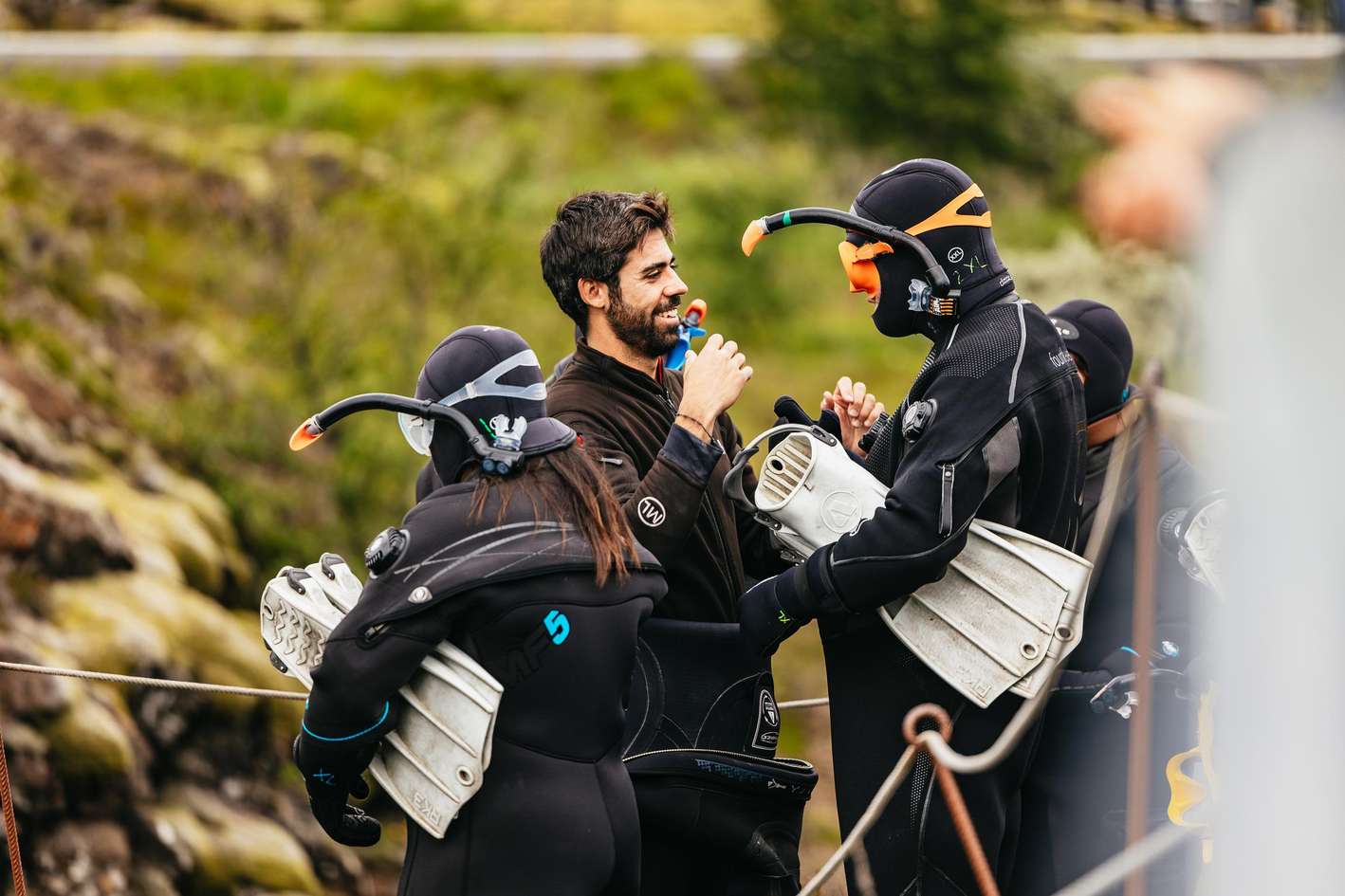
A small-group day runs about ten hours: pickup in central Reykjavik, snorkeling with a certified PADI guide, then Thingvellir, Gullfoss and the Geysir geothermal area before the drive back. Drysuit, all snorkeling gear, hot drinks, chocolate bars and tour photos come included. You buy your own lunch at the Geysir stop.
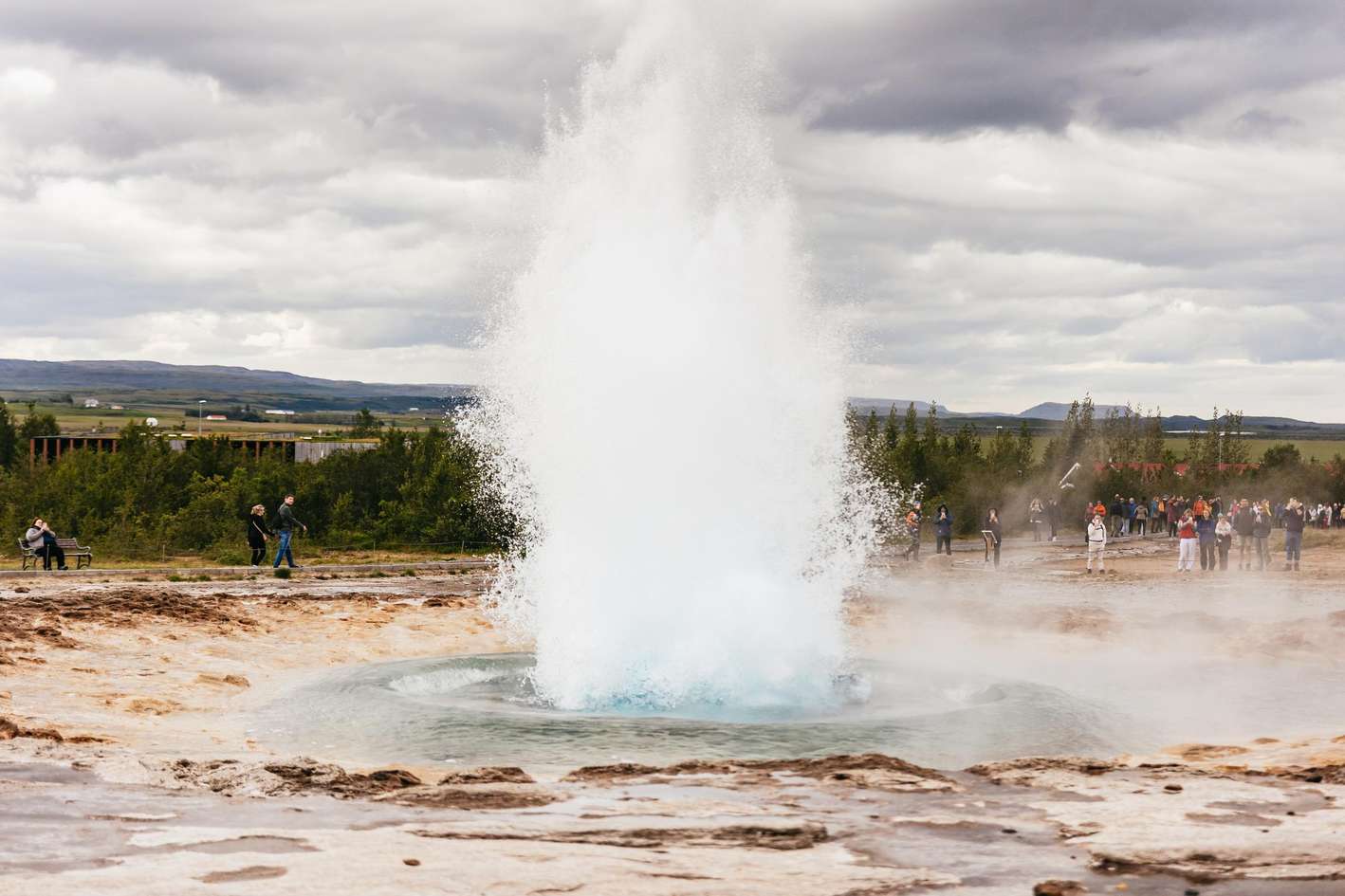
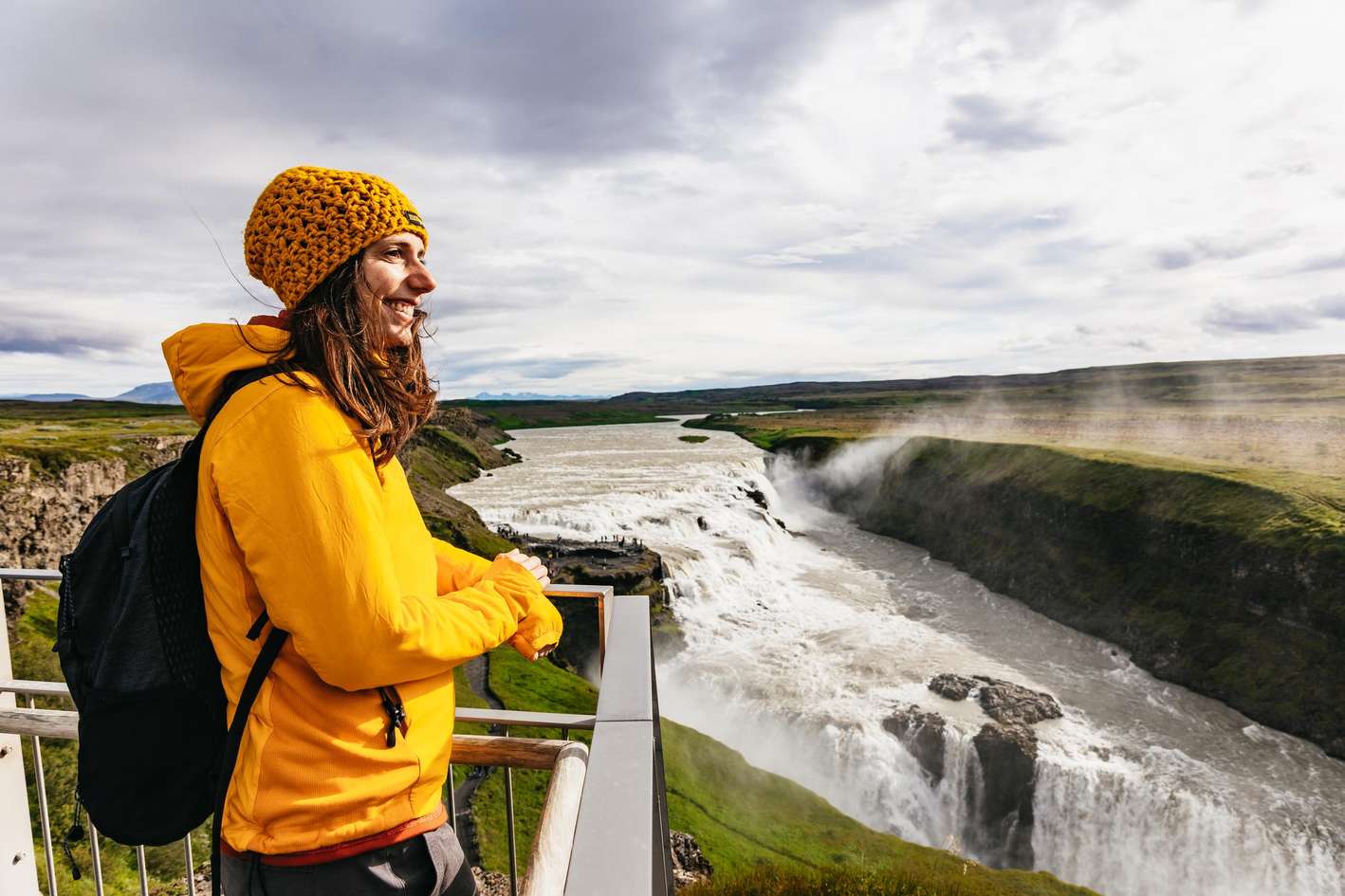
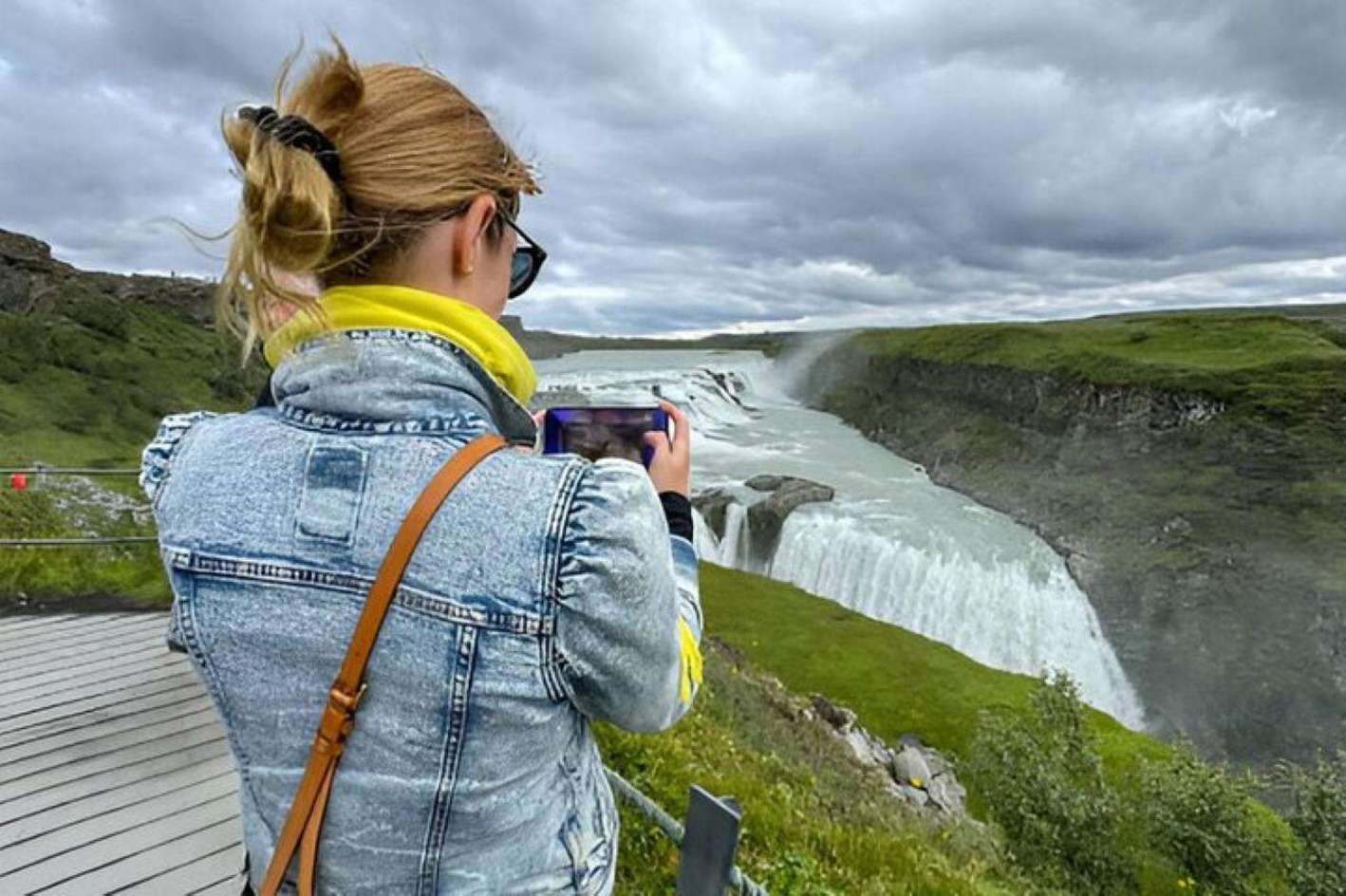
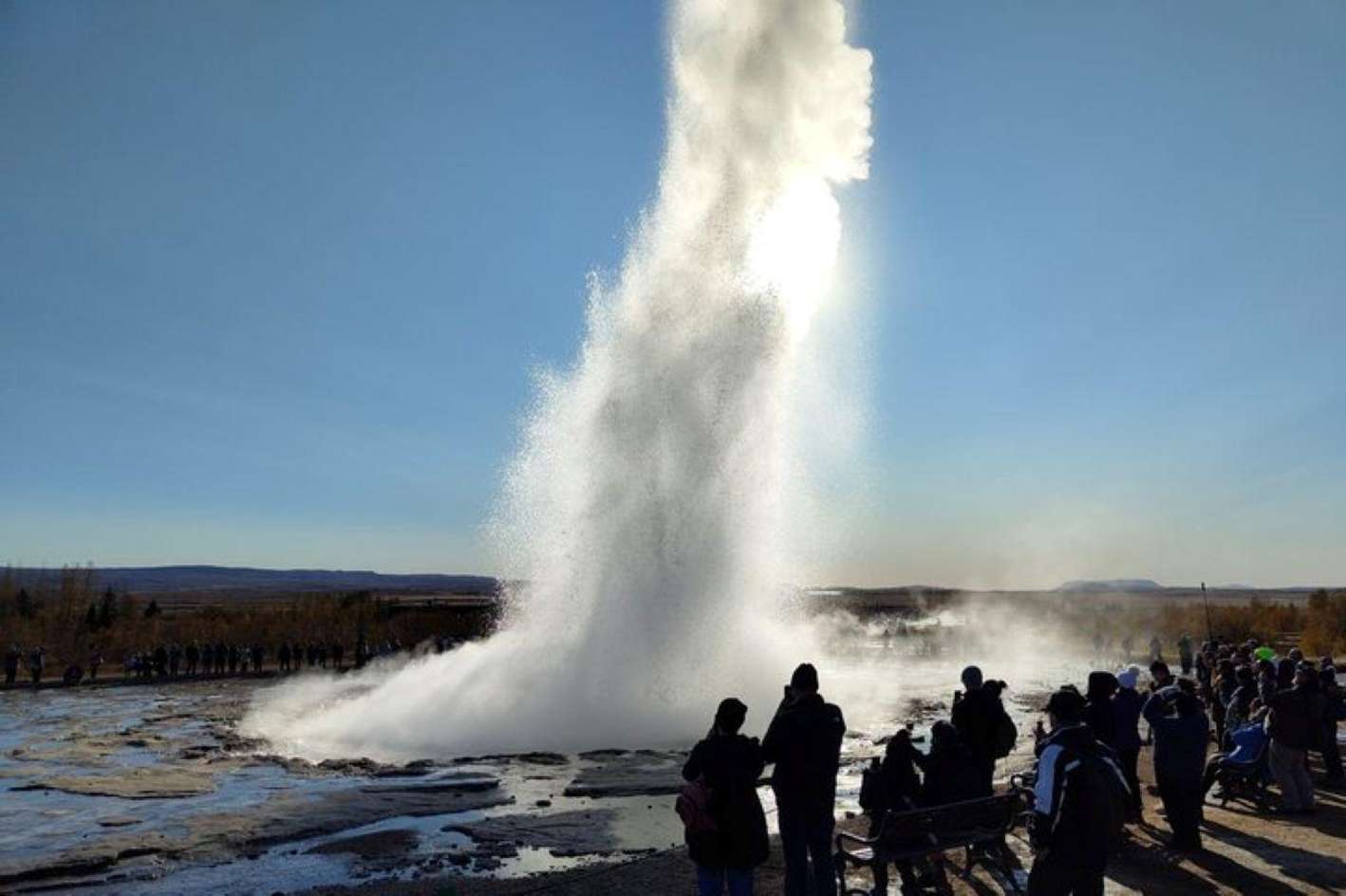
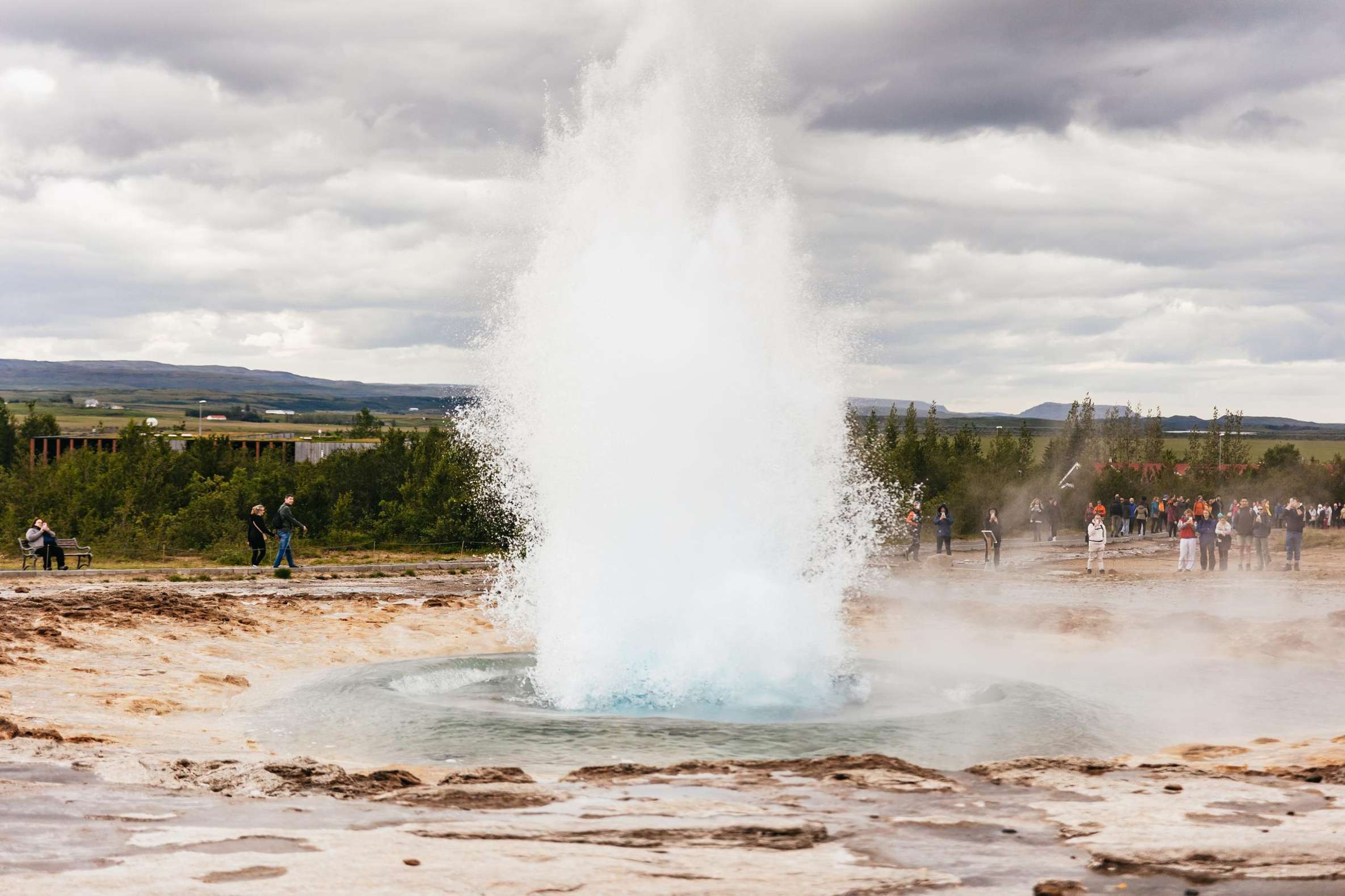
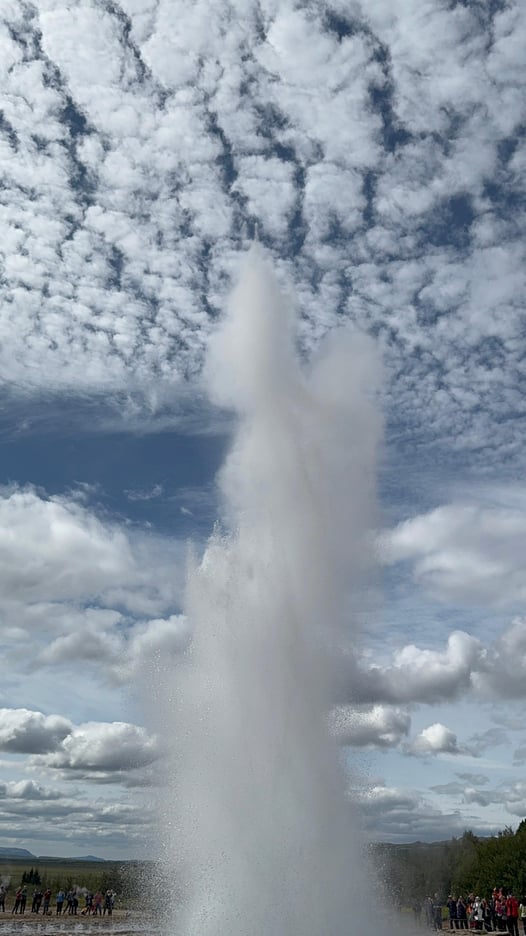
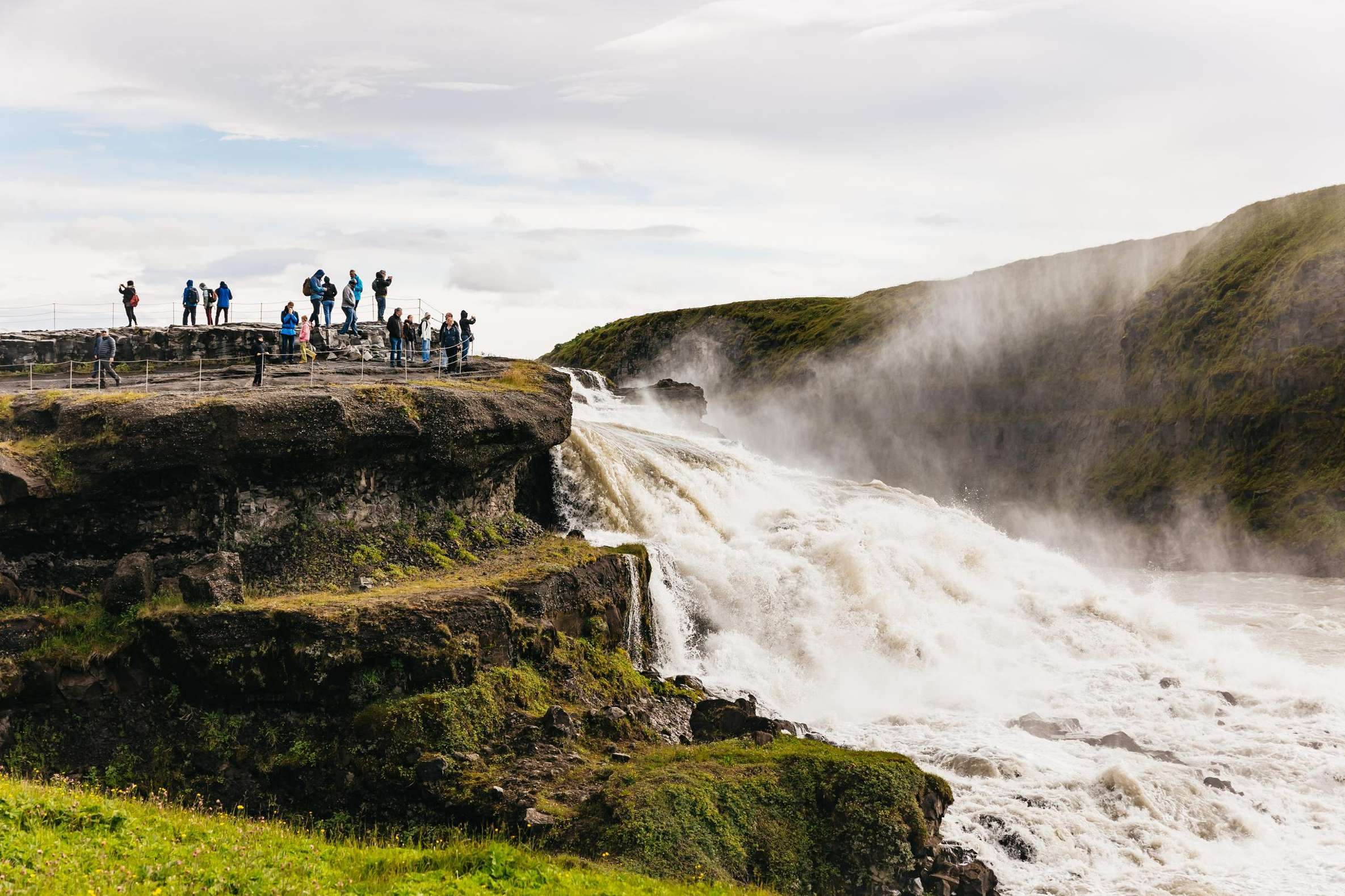
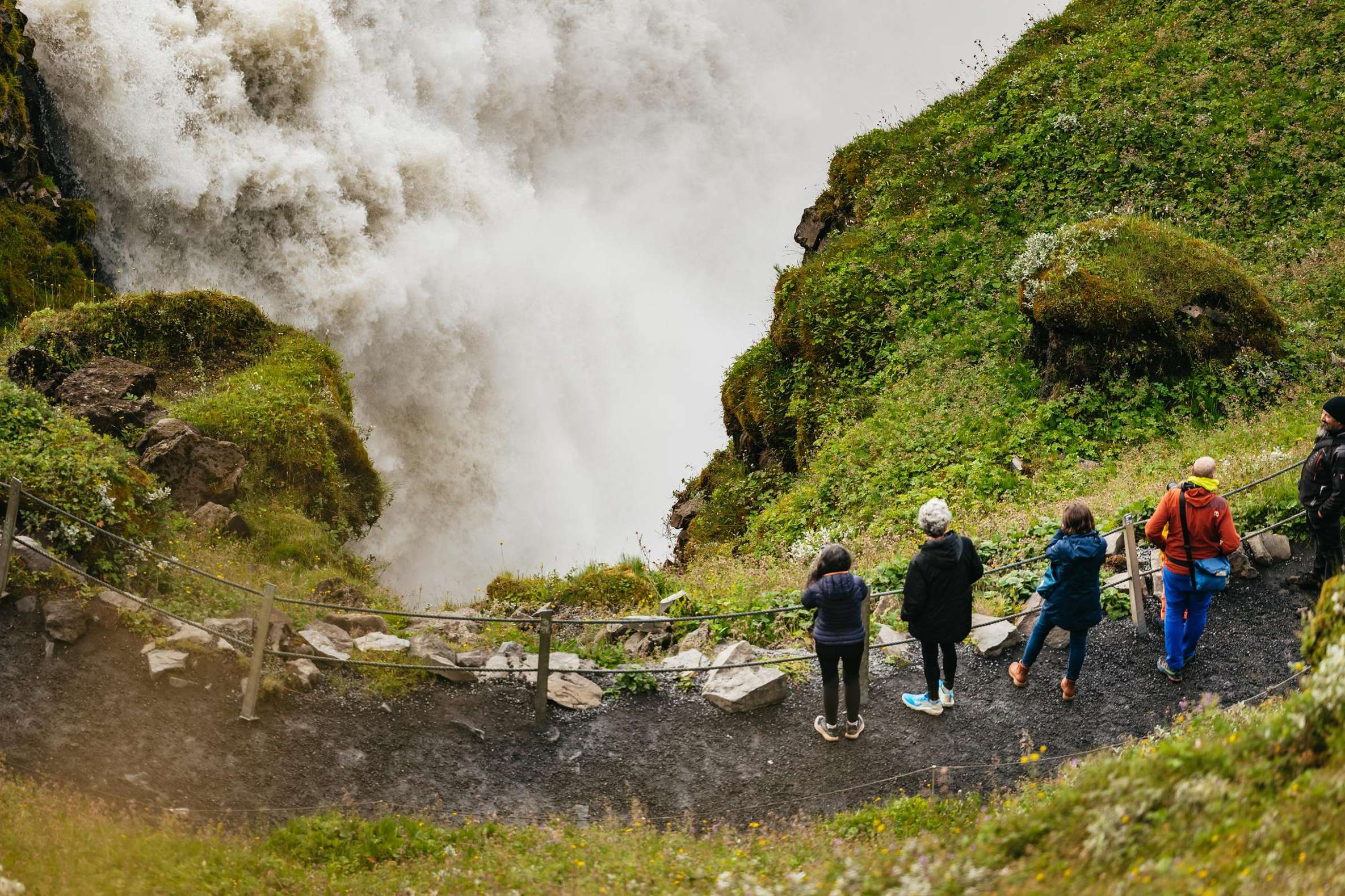
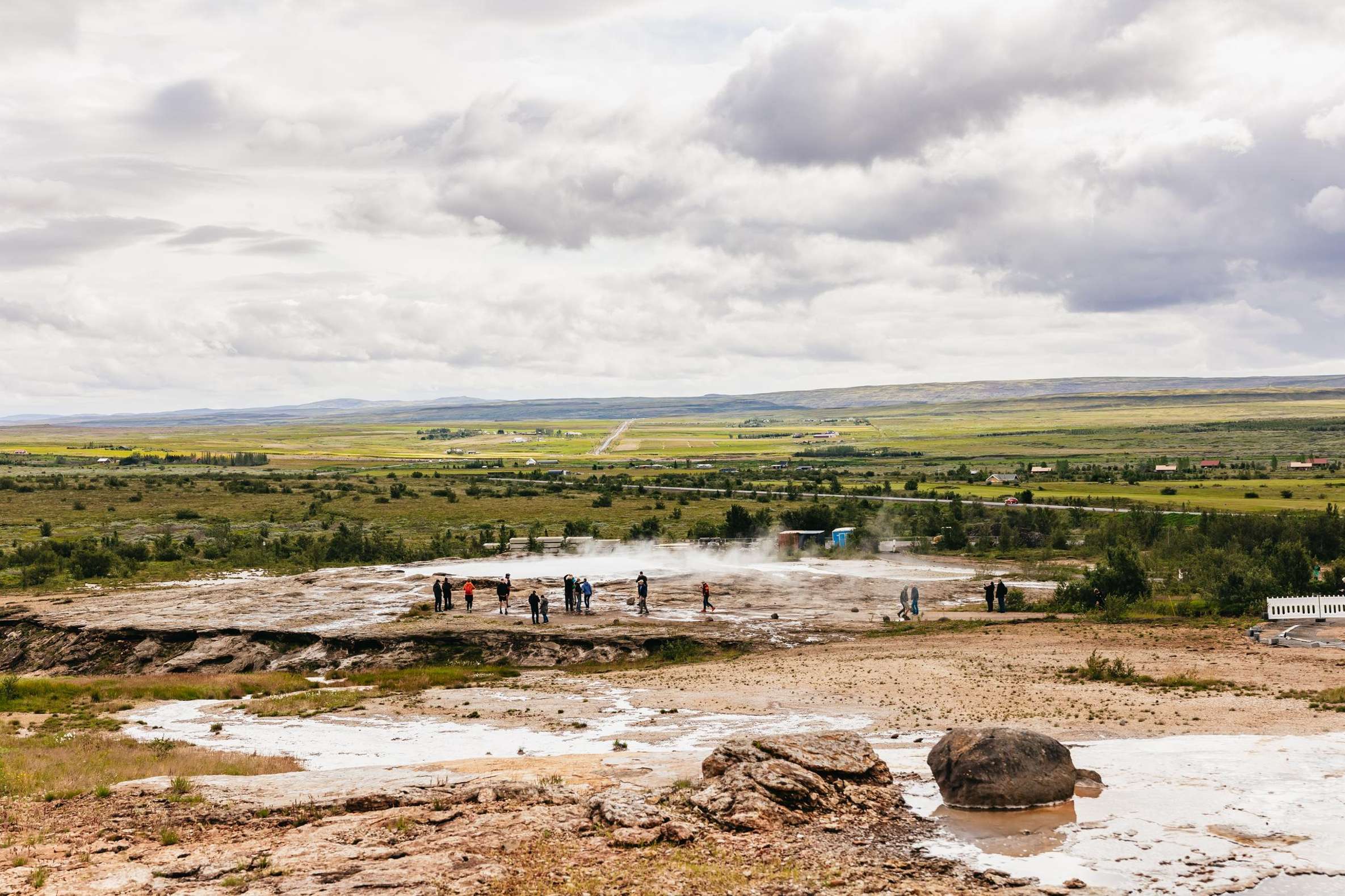
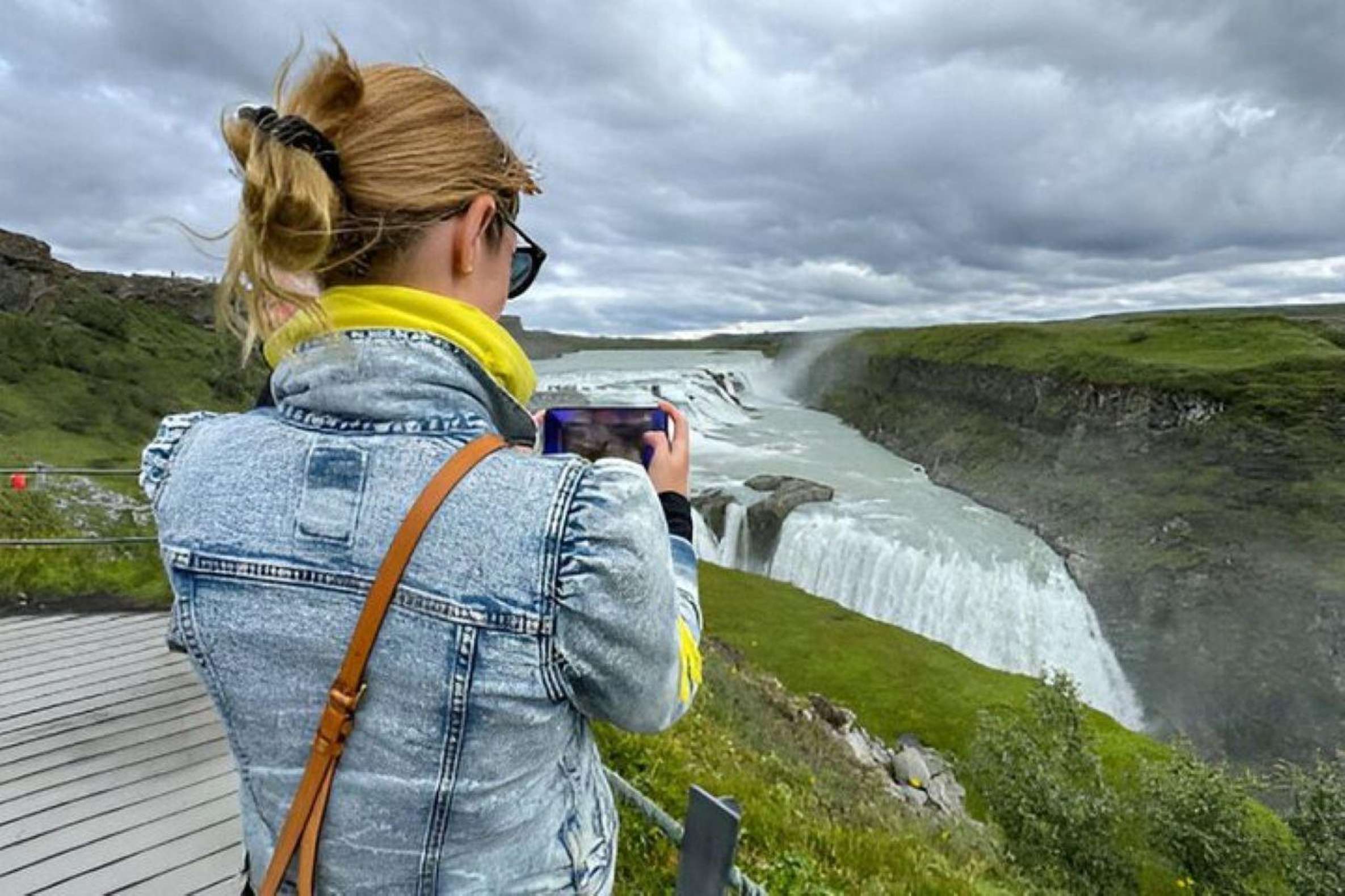
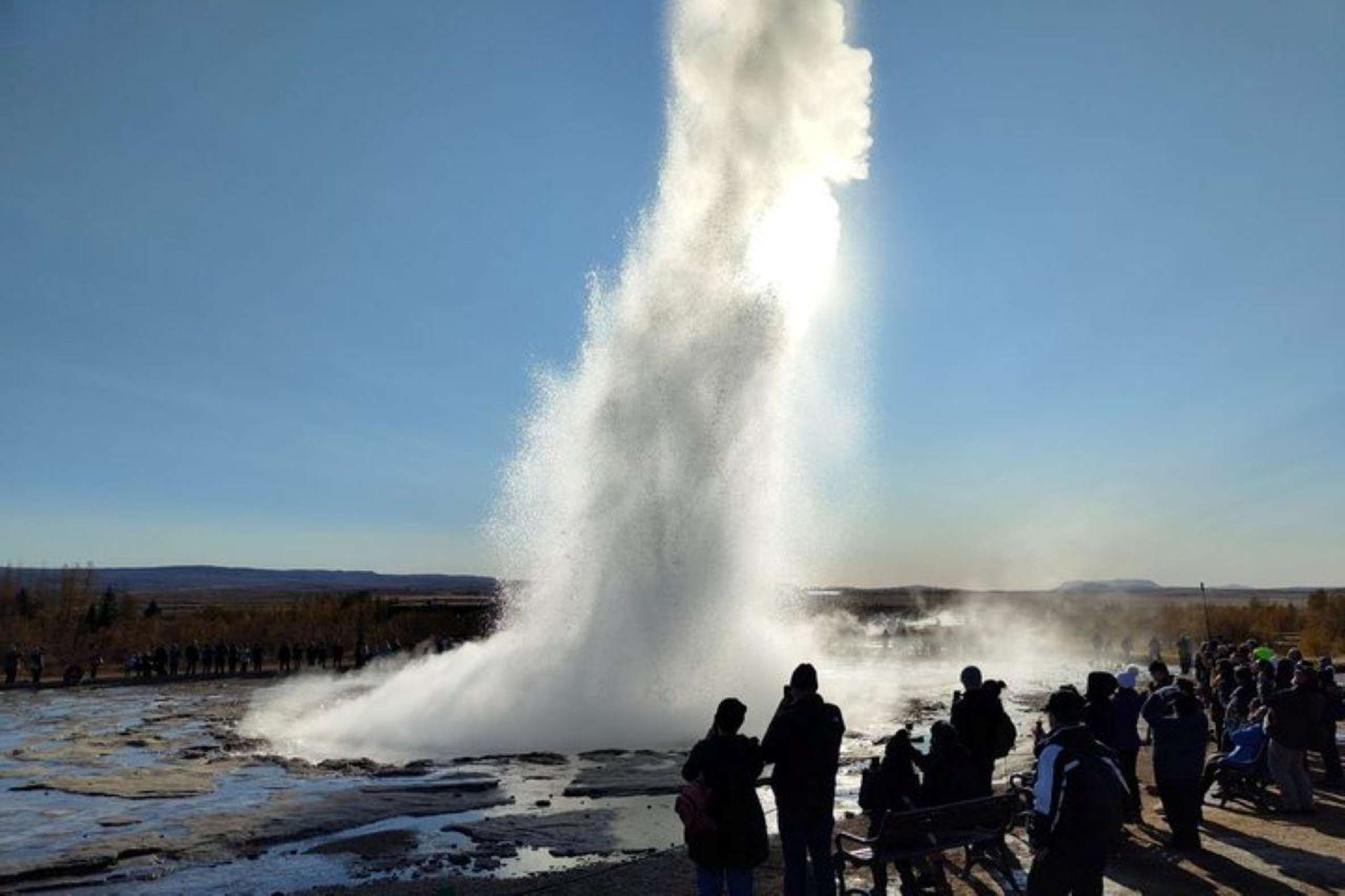
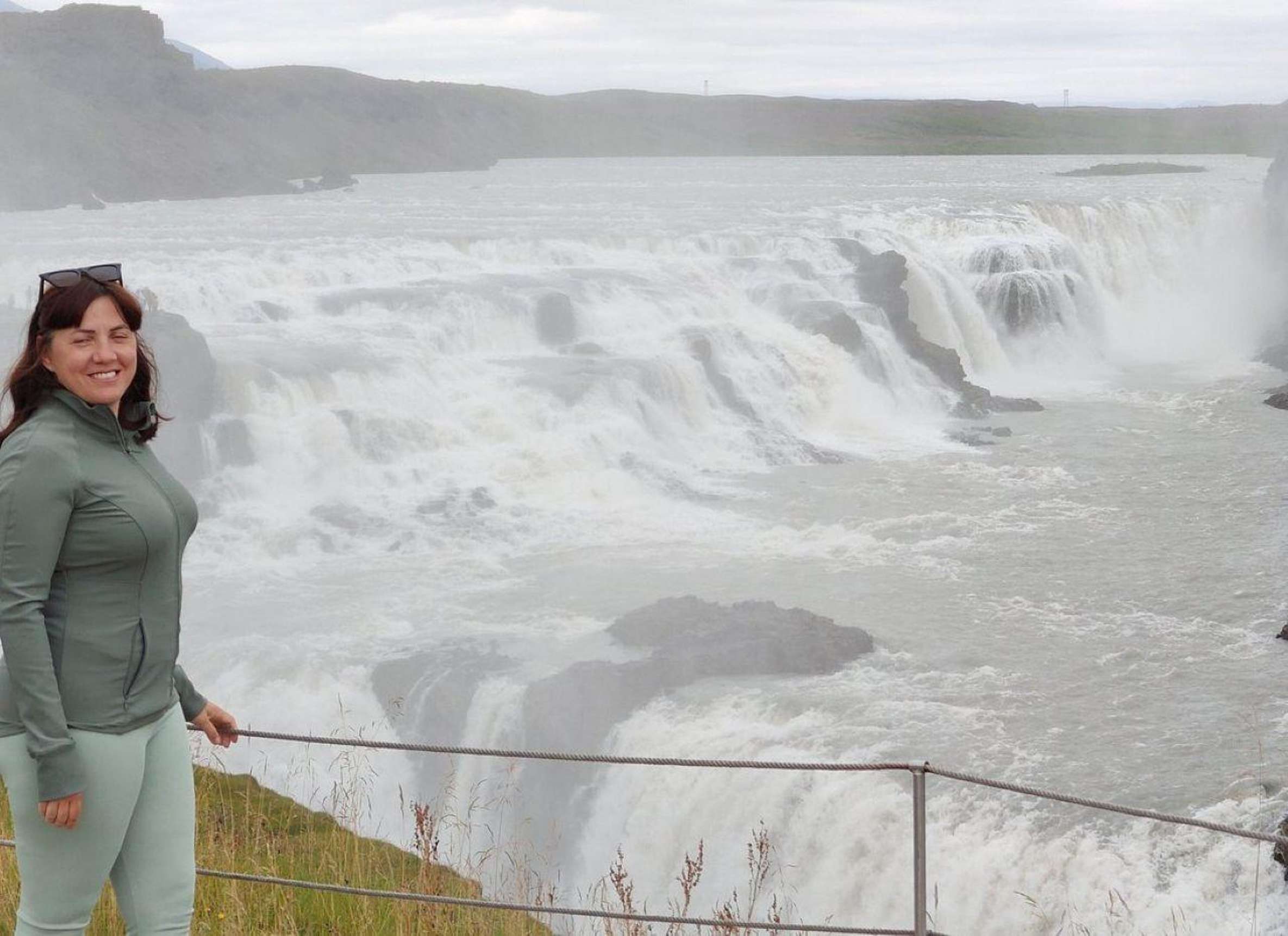
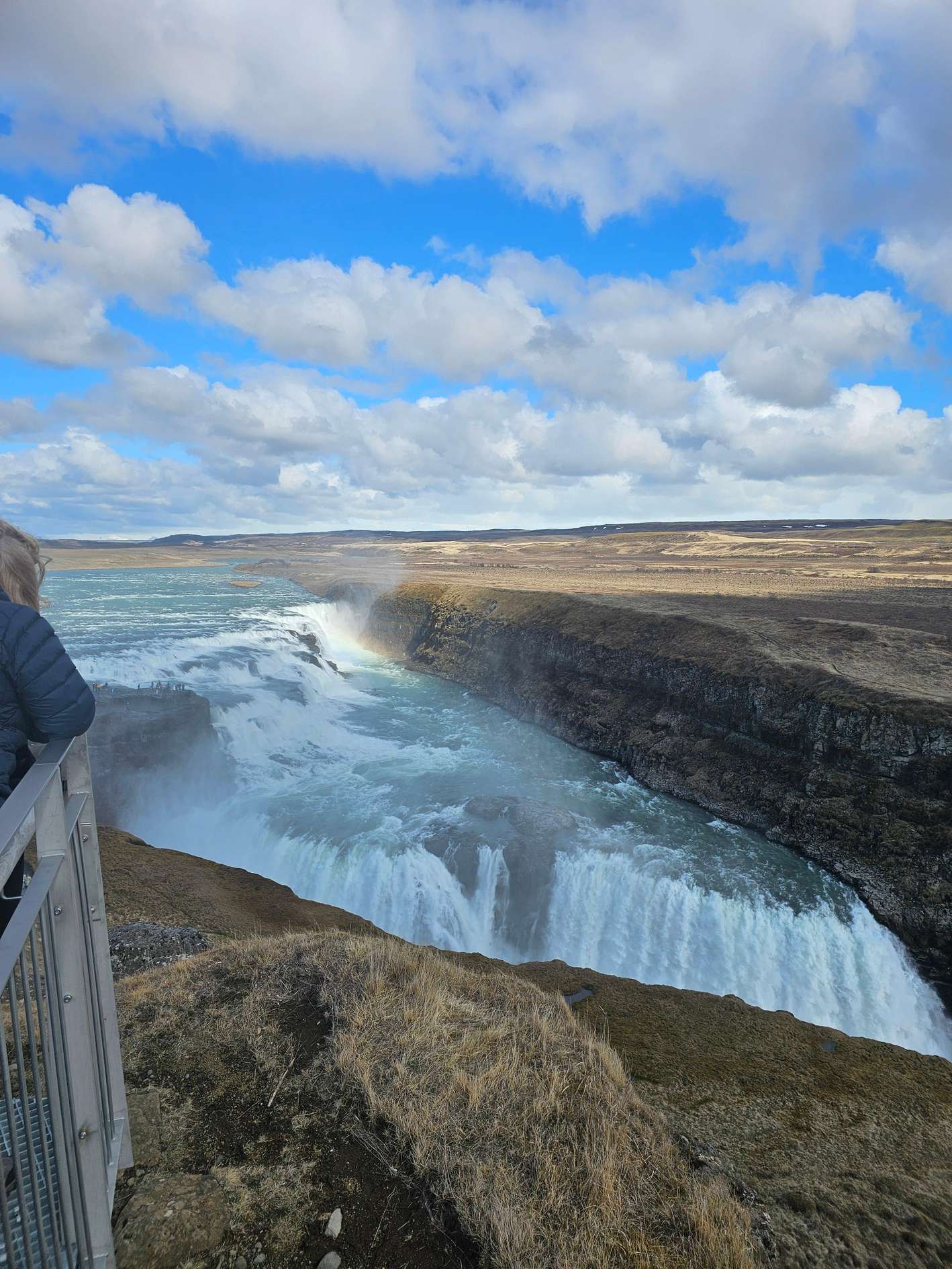
PickupMiðborgFrom this tourStop 2Silfra· 150 minSuit up in a drysuit and neoprene hood and snorkel about 30 to 45 minutes through four sections, from the narrow Big Crack to the deep blue Silfra Cathedral and the calm Real Lagoon.Stop 3Thingvellir National Park· 30 minWalk the rift valley where the tectonic plates pull apart. On land you can stand between the two continents and touch both at once, a UNESCO World Heritage Site.Stop 4Gullfoss Waterfall· 30 minA two-tiered fall where the river turns sharply and seems to vanish into a canyon. Watch the power of it from the walkway and take your photos.Stop 5Geysir· 60 minHot springs erupt here in powerful jets. You get an hour for the geothermal area, and lunch is on you at the visitor center while you're there.Drop-offMiðborgFrom this tour
Included
Pickup from designated locations in ReykjavikTransportation by minibus with Wi-Fi and musicGuided snorkeling in the Silfra FissureCertified PADI dive guideDrysuit and all snorkeling equipmentHot drinks and chocolate bars
Not included
LunchHotel pickup and drop-off
The Silfra snorkeling Golden Circle tour, as travelers rated it
Choose your date first, because the snorkeling slot is the part that sells out. In June through August, Silfra permits go two to three weeks in advance, and in December and January about a week out.
Pro tipBook a morning snorkeling slot around 8:30 or 9 am, when the entry platform is quiet and the tour coaches have not arrived yet.
RecommendedAn early to mid-afternoon slot gives brighter light in the fissure, though it lands in the busiest hours of the day.
2. Choose the right option
On the small-group minibus tour, one option covers everything: drysuit, gear, the PADI guide and transport. On the private tours, the vehicle and driver-guide are included, and the snorkeling tickets are either added on or booked separately.
Pro tipRead what each option includes before you pay. Two private tours look similar, and one leaves the Silfra tickets to you.
Common mistakeAssuming snorkeling is always in the price. On one private tour you book it directly with the snorkeling operator after reserving.
3. Check the fine print before paying
Read the age, height and weight rules while you are still on the booking page. You must be 12 to 69, between 150 and 200 cm tall and between 45 and 120 kg, and able to swim.
ImportantAnyone over 60 needs medical clearance from a doctor before taking part. Arrange it before you book, not the night before.
Common mistakeForgetting a physical driver's licence is not needed here, but a signed doctor's note is, for older participants.
4. Confirm pickup and the meeting point
After payment you get a confirmation, and the operator sends the pickup details. Designated pickup locations in Reykjavik are standard; downtown stays use the numbered tourist bus stops, so check which one applies to you.
Pro tipHotel front-door pickup works outside the city centre. In postcodes 101 and 105, expect a walk to your assigned bus stop.
RecommendedBe ready outside, not in the lobby, if your accommodation gets doorstep pickup.
5. Prepare for the day itself
Pack warm layers to wear under the thermal undersuit, and no cotton. The Silfra entry slot is fixed, so arrive on time; the rest of the day, Geysir, Gullfoss and the lagoon or crater stops, is built around it.
Pro tipHigh winds or icy roads can push the finish time later, so keep your evening plans loose.
RecommendedFree cancellation up to 24 hours ahead means you can hold a date now and adjust if weather turns.
What to know before you book a Silfra snorkeling day
your face goes numb first, not your body
Can stop the dayGood to knowGood news
01
ChoosingWhat it is, who it suits, when to go
7
Height and weightCan stop the day
The drysuits set hard limits: at least 150 cm (4 ft 11 in) and at most 200 cm (6 ft 7 in) tall, and between 45 kg (99 lbs) and 120 kg (264 lbs). You must also be able to communicate in English with the guide.
Drysuit fit
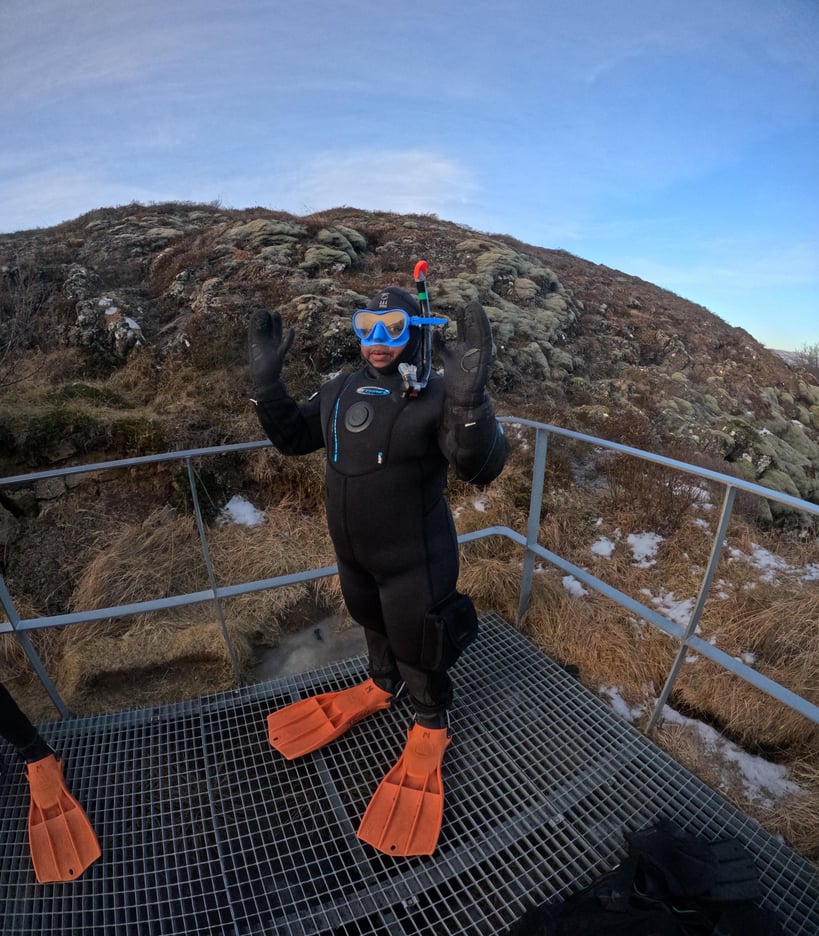
The suit seals tightly at the neck and wrists to keep the icy water out, and some travelers find that grip uncomfortable at first. Minor leaks can happen. Warm thermal layers go underneath, and a neoprene hood and gloves cover the rest.
The cold
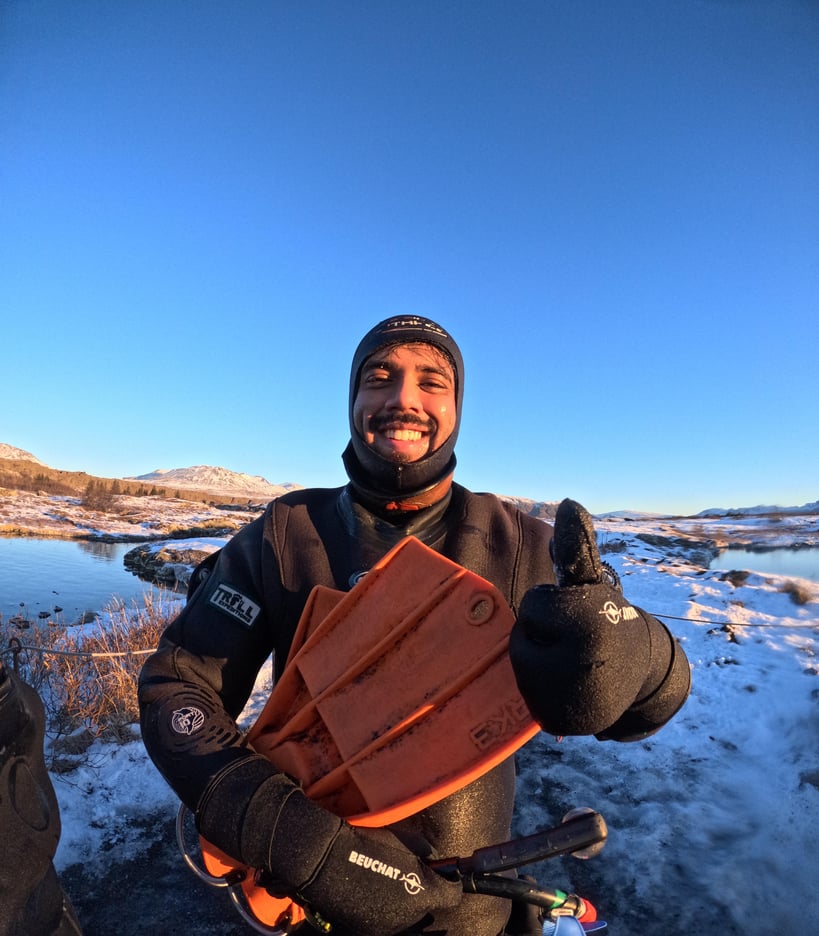
The water stays between 2°C and 4°C all year, and your body stays dry and warm inside the suit. Your face and hands are the exposed parts: lips, cheeks and nose can go numb, and fingers lose strength quickly. Keeping your hands still lets water inside the gloves warm up against your skin.
Walking in gear
In full drysuit gear you walk about 100 to 150 meters from the vans to the entry platform, and roughly 250 to 400 meters back after the exit ladder. The water portion itself lasts about 30 to 45 minutes, part of it against a gentle current.
What is included
On the small-group tour the guided snorkeling comes with a certified PADI dive guide, drysuit and all equipment, photos, and hot drinks with chocolate bars afterward. Lunch is extra. Private tours work differently: snorkeling tickets are bought separately.
Timing
Plan a full day: the small-group tour runs about 10 hours, the private one up to 11. High winds or icy roads can push the finish time later, so leave slack in your evening plans.
Timing
Plan on a 10 to 11-hour day, with roughly an hour at Geysir including your lunch stop and about 30 minutes at Gullfoss. Morning snorkeling slots meet fewer lines at the entry platform, while afternoon slots get better light in the water as the sun sits higher.
02
BookingHow far ahead, and what happens if plans change
1
Pickup
Both tours include pickup in Reykjavik, though private versions collect you directly outside your accommodation. The small-group minibus uses designated pickup locations in the city. Cancel up to 24 hours in advance for a full refund.
03
Before you goPapers, health, what to bring
4
Age and healthCan stop the day
You must be between 12 and 69 years old, able to swim, and physically fit. Anyone over 60 needs signed medical clearance from a doctor before joining. Children must be accompanied by a parent or guardian booked on the same tour.
Glasses
Eyeglasses cannot be worn inside the snorkeling mask. One operator recommends contact lenses instead, so bring those if you need vision correction underwater.
Food
Lunch happens at the Geysir geothermal area, where cafes sell snacks and hot meals during the sightseeing stop. Bring warm layers and expect to pay for your own food on any version of the day.
Walking
Expect a walk of 100 to 150 meters from the gearing area to the entry platform and up to 400 meters back from the exit ladder, all in full gear. Afterward there is hot chocolate waiting, and lunch is bought at your own expense at the Geysir stop.
Silfra Snorkeling on the Golden Circle - what the day is really like
hot chocolate right after the snorkel
The water in the Silfra fissure sits a few degrees above freezing, and visibility runs past 100 metres. Whether the combo day feels rushed or brilliant comes down to a handful of decisions this guide walks you through.
Reykjavik· 64.13° N, 21.94° W
If you only remember three things
1
Book 2 to 3 weeks ahead for June through August, when Silfra snorkeling slots sell out first.
2
The water stays between 2 and 4 degrees all year, so your body stays dry and warm; only your face and hands get cold.
3
Leave Reykjavik by 6 am: Silfra's fixed three-hour slot anchors the whole day, and the stops still get real time.
Is Silfra snorkeling with the Golden Circle worth it?
Gullfoss roars, Strokkur erupts, the coach idles in the car park. A standard Golden Circle day gives you all of that from dry land, and for many travelers it is enough.
Snorkeling at Silfra changes the shape of the day. The water portion itself runs only about 30 to 45 minutes, but getting there means walking in restrictive clothing and, for part of the drift, swimming against a gentle current. It is a rugged Arctic adventure, and people who go say exactly that.
What you get back is the thing a coach can never give you: floating in water so pure your eyes reach 100 metres down, between two continents.
Travelers who value that call it the highlight of the trip. Silfra snorkeling is worth it if clear water and strange geology excite you, and skip it if you dislike cold or hoped to see fish.
Here is the practical part: Silfra sits inside Thingvellir National Park, on the same driving route as the rest of the Golden Circle. Splitting them across two days wastes a day of your trip for no reason.
The people who loved it say it plainly:
A traveler's note
Fun way to see another part of Iceland! The drysuit worked well with fleece underneath, visibility was great even cloudy. The geyser was amazing, Gullfoss spectacular, and our guide explained the history wonderfully.
How does the Silfra snorkeling day run, hour by hour?
The whole day hangs on one fixed thing: Silfra's entry slot, which takes about three hours from suit-up to the exit ladder. Guides build everything else around it, and that works as long as the bus leaves Reykjavik at 6 am.
Silfra sits inside Thingvellir National Park, so the tectonic snorkel happens during the park stop itself, between the boardwalk above and the drive on to Geysir. Regulars suggest walking the outdoor park paths before you get in the water, so you can head straight inside to warm up and eat afterward.
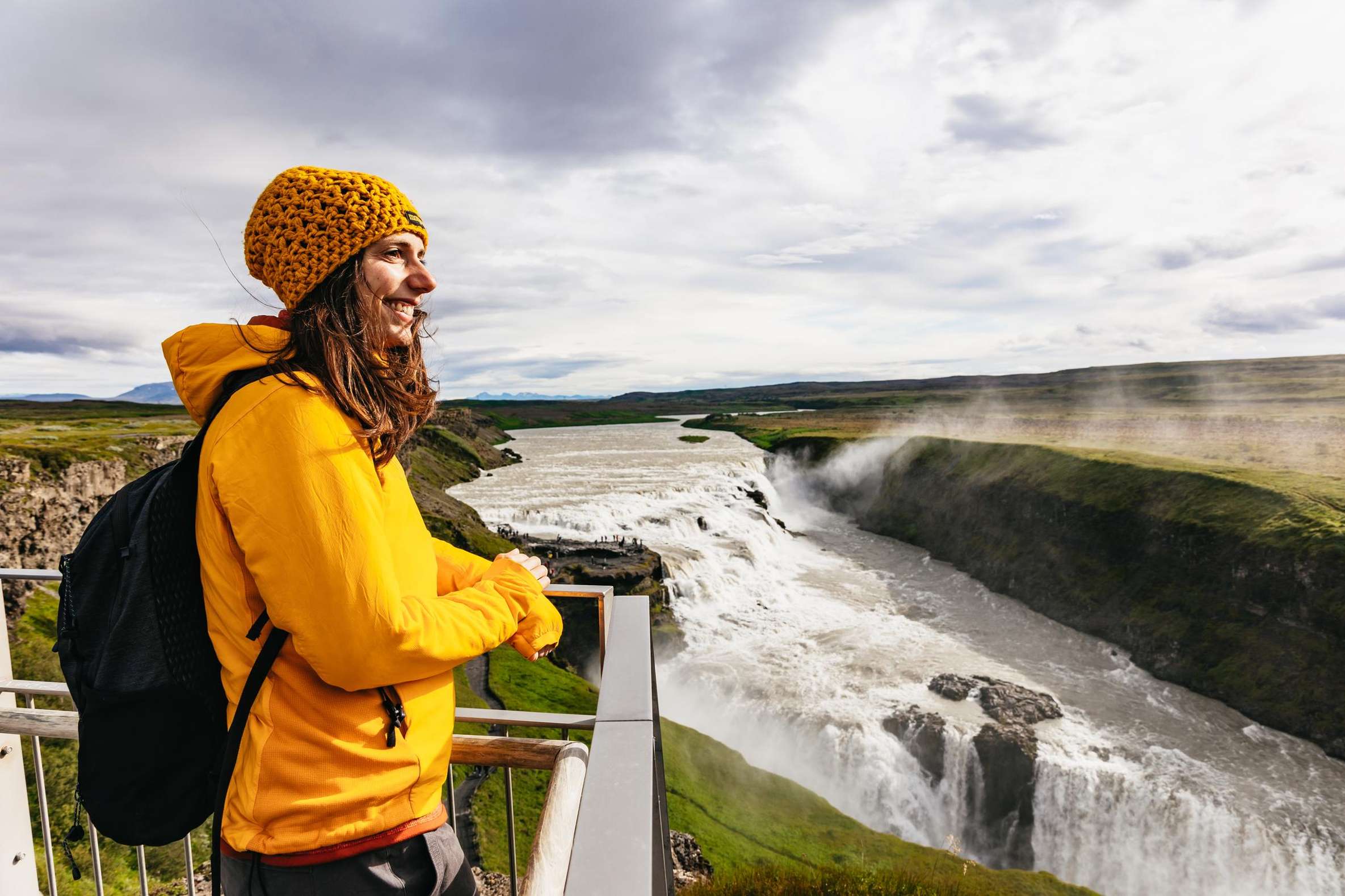
Once the snorkel is done, the route moves on: roughly an hour at the Geysir geothermal area, where the lunch stop falls, and about half an hour at Gullfoss for viewing and photos. Regulars say those allocations feel realistic rather than rushed.
Time allocated to Gullfoss and Geysir
1 hrat Geysir geothermal area
30 minat Gullfoss waterfall
That is less than a slow independent visit would give you, and enough to see both properly if you keep moving. Hot chocolate comes right after you climb out of the water.
The full trip runs about 10 hours pickup to drop-off, and high winds or road ice can push the finish later, so keep your evening loose.
From Reykjavík: Golden Circle Tour and Silfra Snorkeling is the tour that runs this shape: a minibus with Wi-Fi, a certified PADI dive guide, drysuits and gear all included, with lunch as your own expense.
The day from pickup
1
6 am
Pickup in Reykjavik and the drive out to Thingvellir
Leave early enough that the Silfra slot still anchors the day
2
Morning
Drysuit outfitting and the Silfra snorkel at Thingvellir National Park
About three hours from suit-up to exit, though the water itself takes 30 to 45 minutes
3
Midday
Lunch and about an hour at the Geysir geothermal area
Lunch is bought at the visitor center with your own money
4
Afternoon
Roughly 30 minutes at Gullfoss waterfall
Time for viewing and photos from the platforms
5
Evening
Hot chocolate after the snorkel, then the drive back
About 10 hours door to door in total
Tour for this
Reykjavik: Private Golden Circle & Silfra Fissure Snorkeling10 hours · Hotel pickup · Free cancellation
Silfra snorkeling underwater - floating between two continents
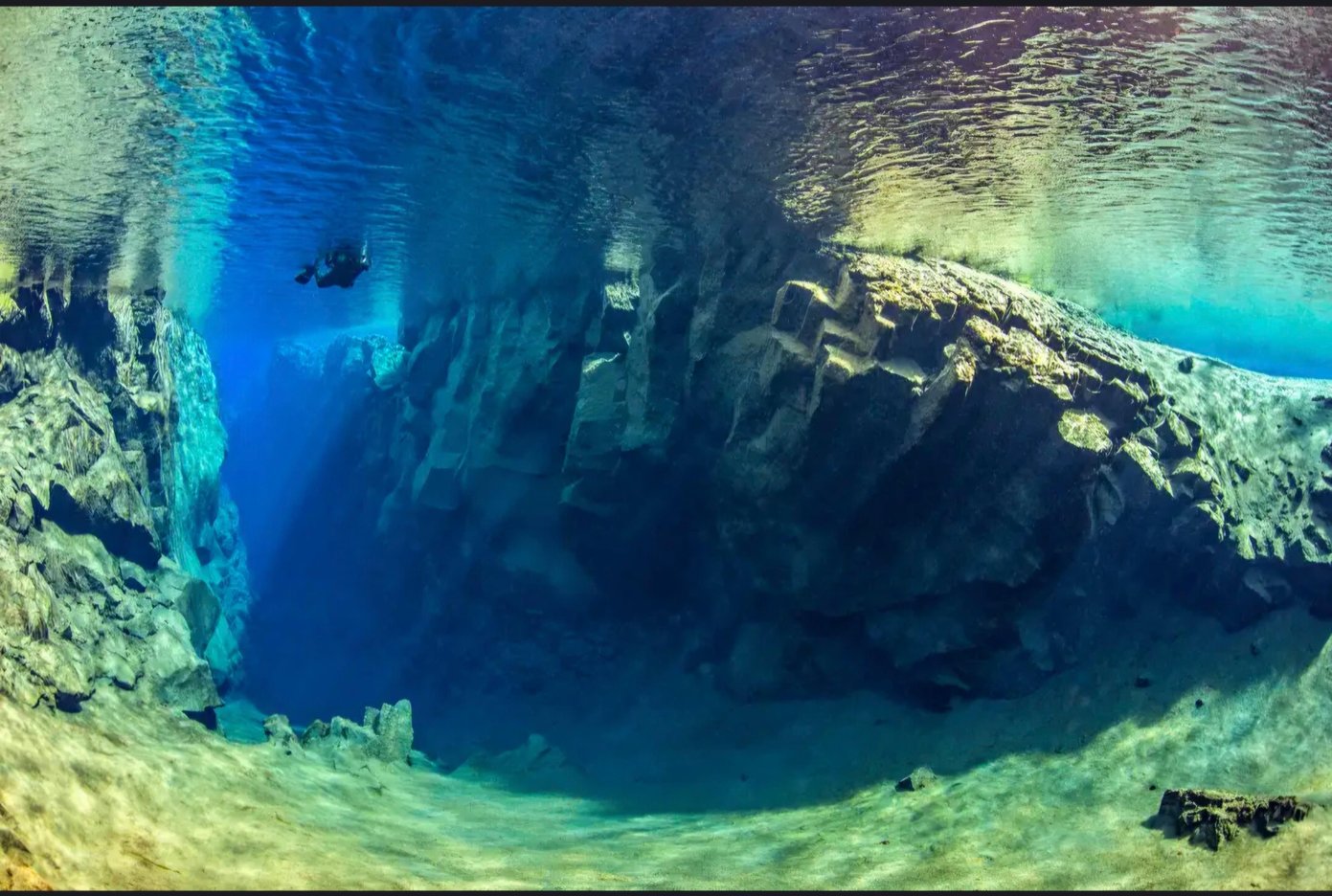
The route through the fissure has four sections, and each one looks nothing like the last. The Big Crack is the narrowest corridor, vertical rock walls close enough to touch on both sides. Silfra Hall opens into a chamber 8 metres wide, boulders across the floor, light falling in from above.
Then comes Silfra Cathedral. It runs 100 metres long and drops 20 to 23 metres deep, walled by dark lava, and the water there is the deep blue people photograph. The Real Lagoon ends the drift: broad, calm, shallow, sunlight straight through to the algae on the bottom.
Visibility runs past 100 metres, and the reason is patient geology. Langjökull's meltwater spends 30 to 100 years filtering through porous lava before it wells up here, which leaves it extraordinarily pure.
The feeling people remember is weightlessness. The drysuit makes floating so buoyant that bending at the waist or diving down is essentially impossible, and you simply drift along the designated corridor.
Green algae on jagged rock, orange and pink plant life, dark mossy stone: there are no fish, no turtles, no marine life of any kind. You never swim out into open Thingvallavatn either. The scenery is rock and water, and that is the whole point.
Tour for this
Private Golden Circle with Silfra Snorkeling Tour11 hours · Hotel pickup · Free cancellation
How cold is Silfra snorkeling, and does the drysuit keep you warm?
The water holds at 2 to 4 degrees all year, winter and summer alike, because it wells up from deep springs that never freeze. That sounds alarming. Inside a drysuit it is manageable, and the suit is the reason.
Seals at the neck and wrists keep water out, thermal undergarments underneath keep your body warm and dry, and a neoprene hood and gloves cover what the suit cannot.
Neoprene works by letting a thin layer of water seep against your skin, which your body then warms. The trick with gloves is to keep your hands relatively still, so that trapped water warms up against you.
Your face takes the brunt. Lips, cheeks and nose go numb in the water, and the first moments feel, in the words of people who have done it, like an electric shock. It passes. Your body never gets soaked and shivering.
The real cold lives above water. In winter, changing in the parking lot trailers with wind chill pushing the real feel toward minus 10 is the harder part of the day. And once you submerge, the tight suit eases up; it is on land, while gearing up, that it feels most constricting.
When to go Silfra snorkeling and how far ahead to book
Silfra runs all year, through autumn gales and winter, even on New Year's Eve. The water never freezes and never changes, so the season only changes the crowds and the light.
Booking windows are the real constraint. June through August slots sell out two to three weeks ahead, and popular morning times fill first. Over the December and January holidays, book about a week out. Regular off-peak winter dates rarely sell out more than a few days in advance.
Silfra snorkeling demand and daylight by month
March sees rising visitor interest and balanced daylight, with crisp subzero temperatures and clear underwater visibility.
HighestMar4,981 readers a month
LowestApr to Feb1,376 to 2,416 readers a month
Darker: more planning interest, from 1,376 to 4,981 readers a month
Tap a month to read it.
Planning interest spikes in March and runs high right through the summer, which is the pattern the sell-out windows reflect.
Then there is the morning-versus-afternoon trade: early slots around 8:30 am to 9 am mean short lines at the entry platform, before the tour coaches arrive from mid-morning, while early and mid-afternoon slots get better light from the higher sun at the cost of peak traffic.
One reassurance for gray days: overcast weather does nothing to underwater visibility. The water is filtered glacial melt regardless of the sky above it.
Silfra snorkeling small group or private tour - which fits you?
Two ways to run this day, and the difference comes down to who handles the snorkel.
The small-group version, on a minibus, bundles everything: guided snorkeling with a certified PADI dive guide, drysuits, and all the equipment in the tour price. You show up, get fitted, get in the water. That is the option most people want.
The private versions work differently. You get the vehicle, the licensed driver-guide, and the flexible pacing, but the Silfra snorkeling tickets are booked separately from the tour price.
One private option tells you to book directly with the snorkeling operator; another arranges it for you after you book. You pay for the snorkel on top either way.
Small-group combo vs private tour
Small-group minibus
Private vehicle
Snorkeling
Included, with PADI dive guide and all gear
Tickets booked separately, paid on top
Pace
Fixed route and slot times
Flexible stops at your pace
Duration
About 10 hours
About 10 to 11 hours
Suits
Couples, small parties, first-timers
Families and groups up to 8 who want the day shaped around them
Small-group minibus
Snorkeling
Included, with PADI dive guide and all gear
Pace
Fixed route and slot times
Duration
About 10 hours
Suits
Couples, small parties, first-timers
Private vehicle
Snorkeling
Tickets booked separately, paid on top
Pace
Flexible stops at your pace
Duration
About 10 to 11 hours
Suits
Families and groups up to 8 who want the day shaped around them
A small detail from people who have gone often: snorkel groups that do not share the site with scuba divers move through gear-up much faster, which protects the rest of your schedule.
Private Golden Circle with Silfra Snorkeling Tour is the flexible one: pickup and drop-off at your accommodation, free Wi-Fi onboard, and stops added for snacks and lunch along the route.
Tour for this
Private Golden Circle with Silfra Snorkeling Tour11 hours · Hotel pickup · Free cancellation
Silfra snorkeling rules - age, health and fitness gates
The checks happen before you book, and a few of them end plans outright.
Age comes first: participants must be between 12 and 69, and children go only with a parent or guardian on the same tour. Everyone must be able to swim and communicate in English. From 60 up, you need a signed doctor's clearance before entering the water.
The drysuits set a hard size envelope: at least 150 centimetres and no more than 200 tall, between 45 and 120 kilograms. Outside those numbers, no suit fits and no snorkel happens.
The medical list is long, and Thingvellir National Park enforces it. Heart conditions, lung disease, epilepsy, recent chest surgery or head injury, and pregnancy all rule participation out. Anyone with a condition should read the screening questions before booking.
The checks that can stop the visit
Medical screening, the 150 to 200 cm height and 45 to 120 kg weight limits, and the ability to swim are all enforced Confirm you meet the requirements before booking; non-swimmers and pregnant travelers cannot take part, and those over 60 need a doctor's signed clearance
Two honest notes from people who have worn the suit. Broad shoulders, heavier builds or thick necks can make the neck seal fight you, so tell your guide early. And anyone prone to claustrophobia should think hard about the sealed, constricting feeling, because it is real on land even if it fades in the water.
Getting there - Silfra snorkeling pickup and meeting points
Reykjavik's city center has its own rules for tour buses, and they shape your morning.
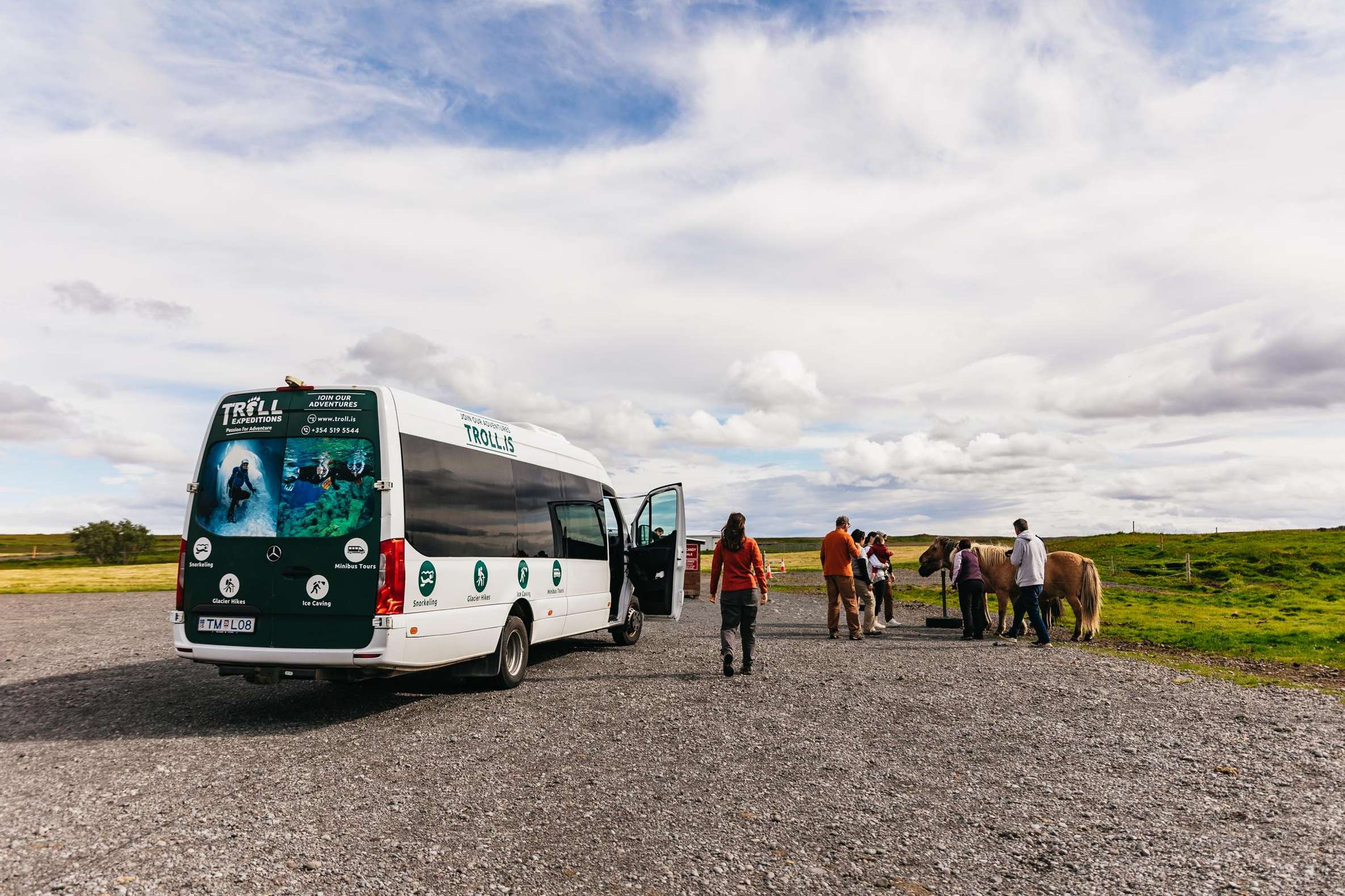
In postcodes 101 and 105, buses cannot collect from hotel front doors, so pickup happens at 12 designated numbered bus stops, placed so that downtown accommodations sit within about a 10-minute walk. Picking a hotel in those postcodes makes the early morning simple.
Stay outside the downtown core, and the picture flips: accommodations without an assigned bus stop number usually get doorstep pickup, with the bus pulling up out front. You wait outside rather than in the lobby, so watch the clock in bad weather.
Getting to the departure
Doorstep pickup outside downtownWait outside your accommodation from the pickup window, not inside
Easy
Walking to a designated bus stopCentral postcodes 101 and 105 sit about a 10-minute walk from a numbered stop
Easy
Driving yourself to a meeting pointYou handle parking and arrival time on a 6 am departure
Moderate
The one thing to pin down before the day is the exact meeting point for your departure, since the combo tour uses the operator's listed pickup locations and the fine detail matters at 6 am. The booking confirmation carries it; check it the night before, from somewhere warm.
The drysuit does the heavy lifting, but what goes underneath decides whether you are warm or miserable.
Wear a full thermal base layer, long-sleeved top and leggings, in merino wool, fleece or synthetic fabric, with thick wool or fleece socks. Cotton is the one real mistake: it absorbs moisture and stops insulating in water a few degrees above freezing.
Keep underlayers soft and close-fitting, with no hoods, bulky collars or thick cuffs, because anything raised under the neck or wrist seals can let water in.
What to wear under the drysuit at Silfra
Thermal base layer topWear a long-sleeved wool or synthetic thermal top. Avoid cotton, which traps sweat and chills you in 2°C to 4°C water.
Thermal base layer bottomsPack close-fitting thermal leggings, long johns, or fleece running tights that slide easily into the undersuit.
Thick wool or fleece socksBring one or two pairs of heavy wool or fleece socks to keep inactive feet insulated inside the drysuit boots.
Moisture-wicking underwearChoose synthetic or merino wool undergarments. Avoid cotton briefs that absorb perspiration under the drysuit.
Spare set of dry clothesBring a full backup change of clothes and extra socks to wear after the tour in case any water enters the suit.
Long hair goes back in a tie before you attempt the neck seal; people who have struggled with it say it makes a noticeable difference. Leave time for the squeeze into all those layers, because underestimating it causes stress before the water.
Glasses stay on shore. One operator does not allow them in the mask and recommends contact lenses instead. For photos, an action camera on a wrist or helmet mount is worth it; cheap disposable waterproofs fail in the rift and only manage shots above the surface.
Start with the number that matters: weather cancels Silfra snorkeling on about 0.73 percent of bookings. The fissure sits sheltered from wind and rain, and the spring-fed water never freezes, so conditions in the water are almost a constant.
What does cause cancellations is the surface: extreme wind storms that make the outdoor site unsafe, or severe winter storms that close the roads across the moor. Lesser weather mostly bends the day rather than breaking it, and high winds or road ice can push the finish time later without ending anything.
When plans change
If this happens
What happens then
Tour canceled for extreme weather or unsafe conditions
A new date or a full refund under the tour's terms
Severe storm closes the access roads
The tour is called off and rebooked or refunded
High winds or road ice during the day
The sightseeing portion slows and the finish time shifts later
Tour departs but weather cuts the route short mid-day
Generally no refund; operators may alter the itinerary
That last row is worth a second look. When an operator does cancel for extreme weather, the terms cover you with another date or a full refund. A tour that departs and gets cut short or rerouted mid-day generally does not entitle you to money back, so a partial-day washout is the risk you carry.
Silfra snorkeling self-drive - driving the Golden Circle instead
The self-drive version of this day works, and you do not need the big vehicle people assume. The whole Golden Circle loop is paved, so a standard two-wheel-drive car handles it in summer without argument.
Winter changes the margins, and the law steps in elsewhere. A 4x4 is never legally required on the paved route, because those roads are ploughed first, though one is strongly recommended for traction in snow and wind. What is compulsory: winter tyres on all rental cars from 1 November to 14 April.
Two things catch self-drivers out. Parking at Thingvellir runs through the Parka app, paid against your plate, so save the receipt screenshot; rental agencies have charged people for parking they did pay for.
And map estimates run about 20 percent short of real driving times between sites, which matters when you have a fixed snorkel slot to meet.
Also remember what the guided version absorbs for you: the drysuit outfitting, the permit slot, and the timing. Driving yourself, you carry all of that, plus an icy parking lot in winter.
Driving yourself
Rent a car in ReykjavíkCompare cars from the rental companies in one search, then pick yours.
Around Thingvellir - what else to see after Silfra snorkeling
You surface from the fissure with daylight left, and Thingvellir rewards the extra hour.
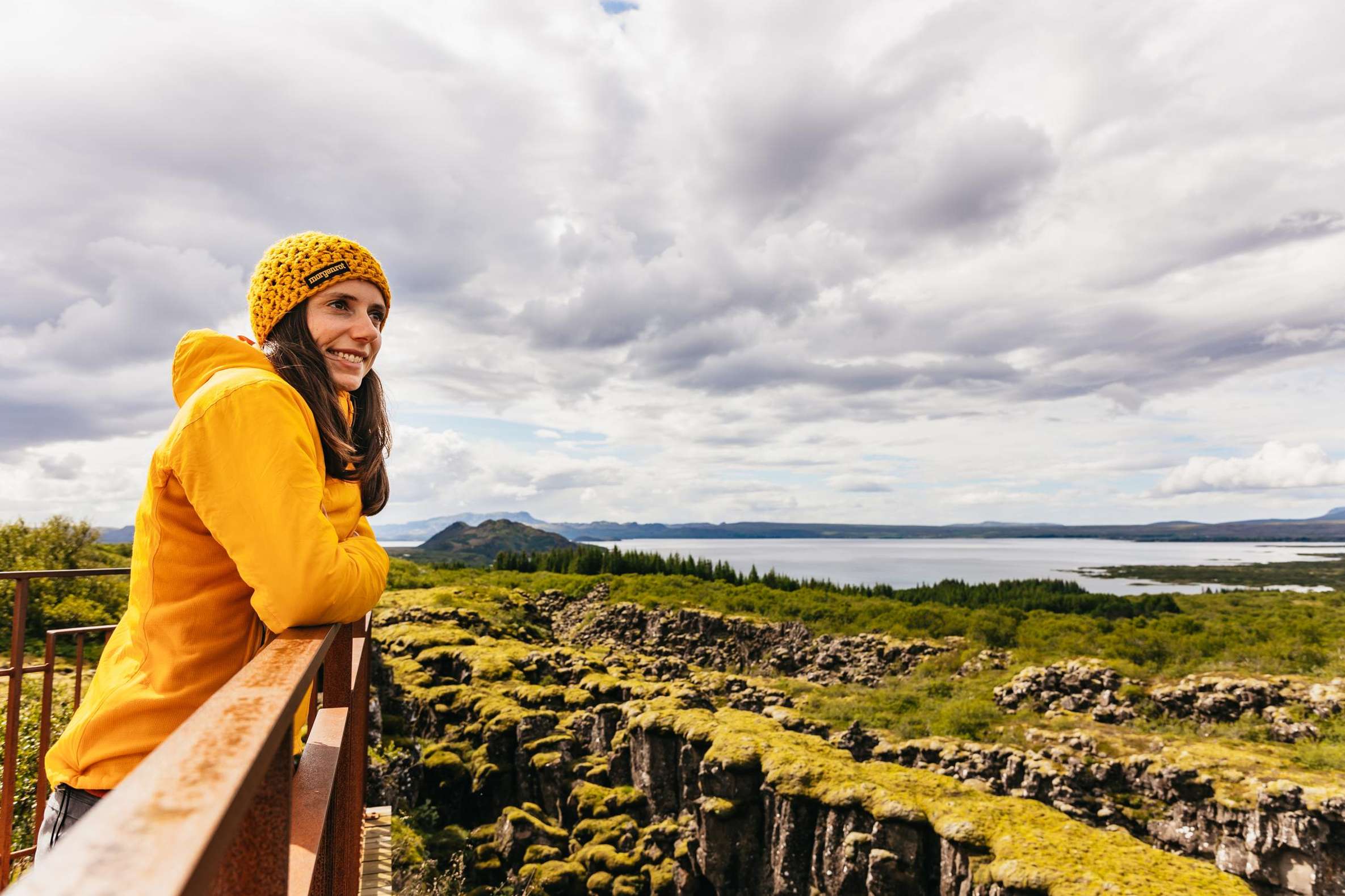
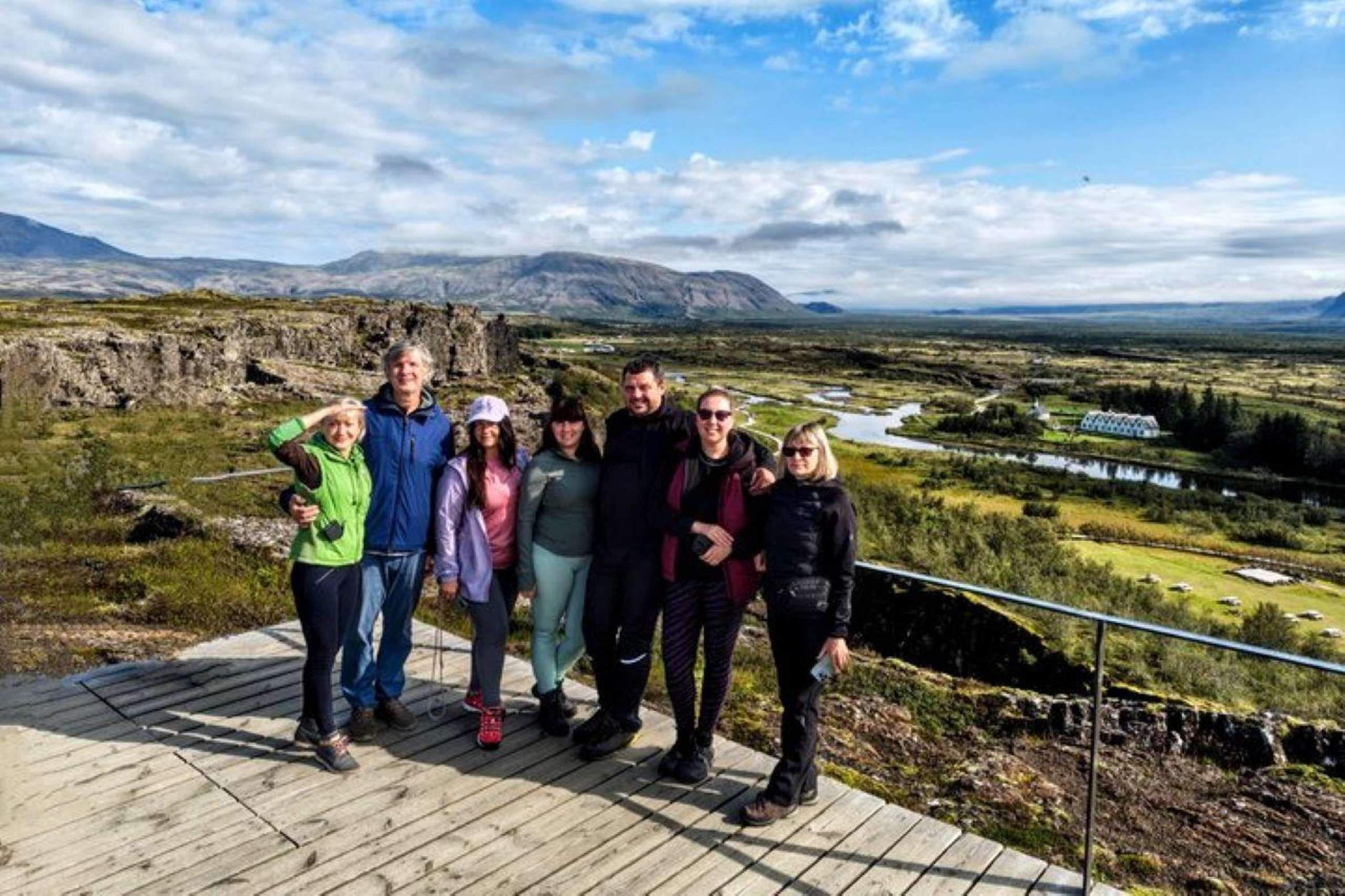
Start on foot. The elevated ramp between the continental plates links the lower car park to the upper viewpoint and visitor center, and walking it gives you the rift-valley view you just floated through, from above.
Within a few minutes of the snorkel site sit the visitor center, the old assembly grounds and the viewing platforms, so the park stop earns its name even before you get wet.
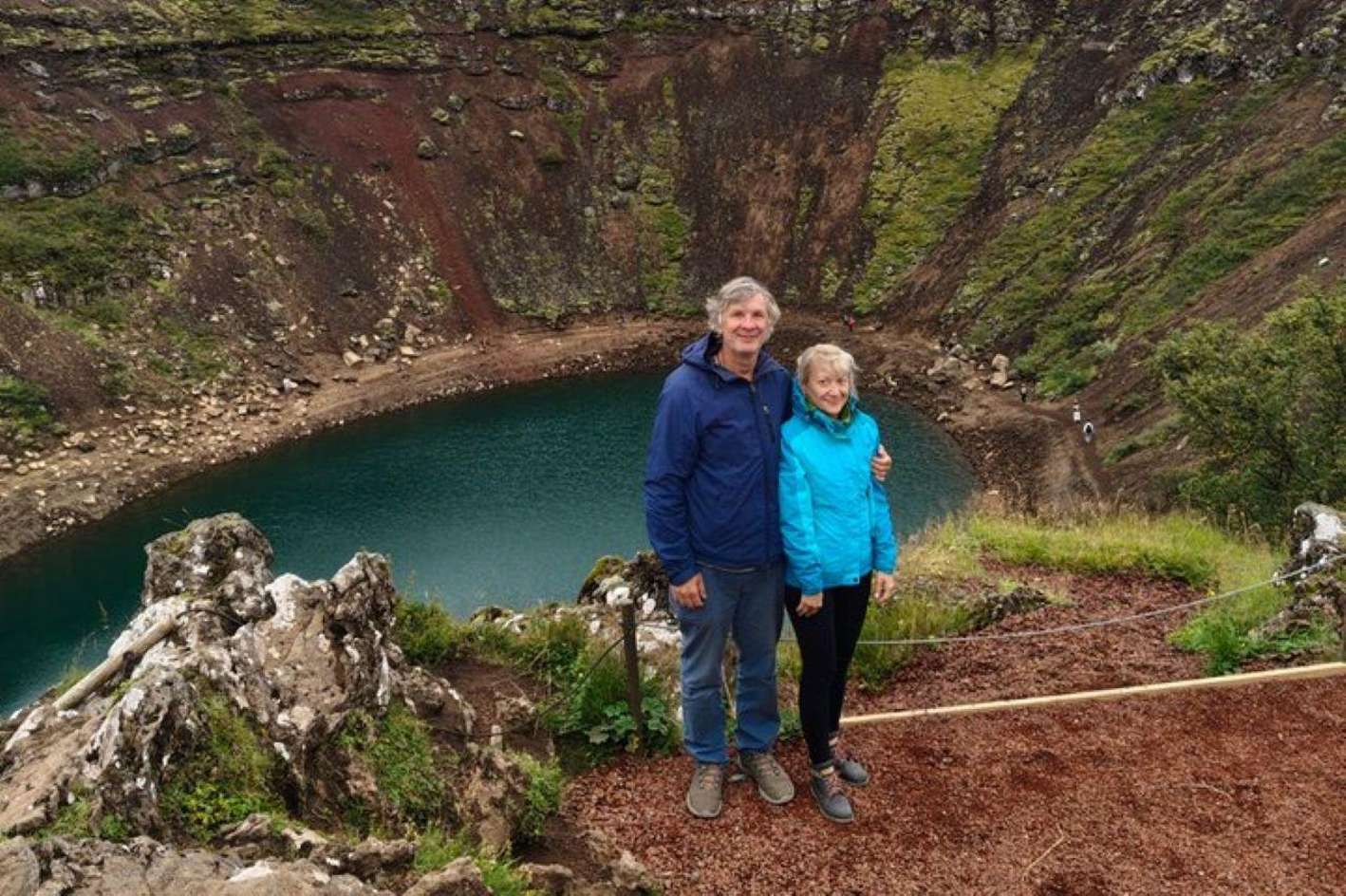
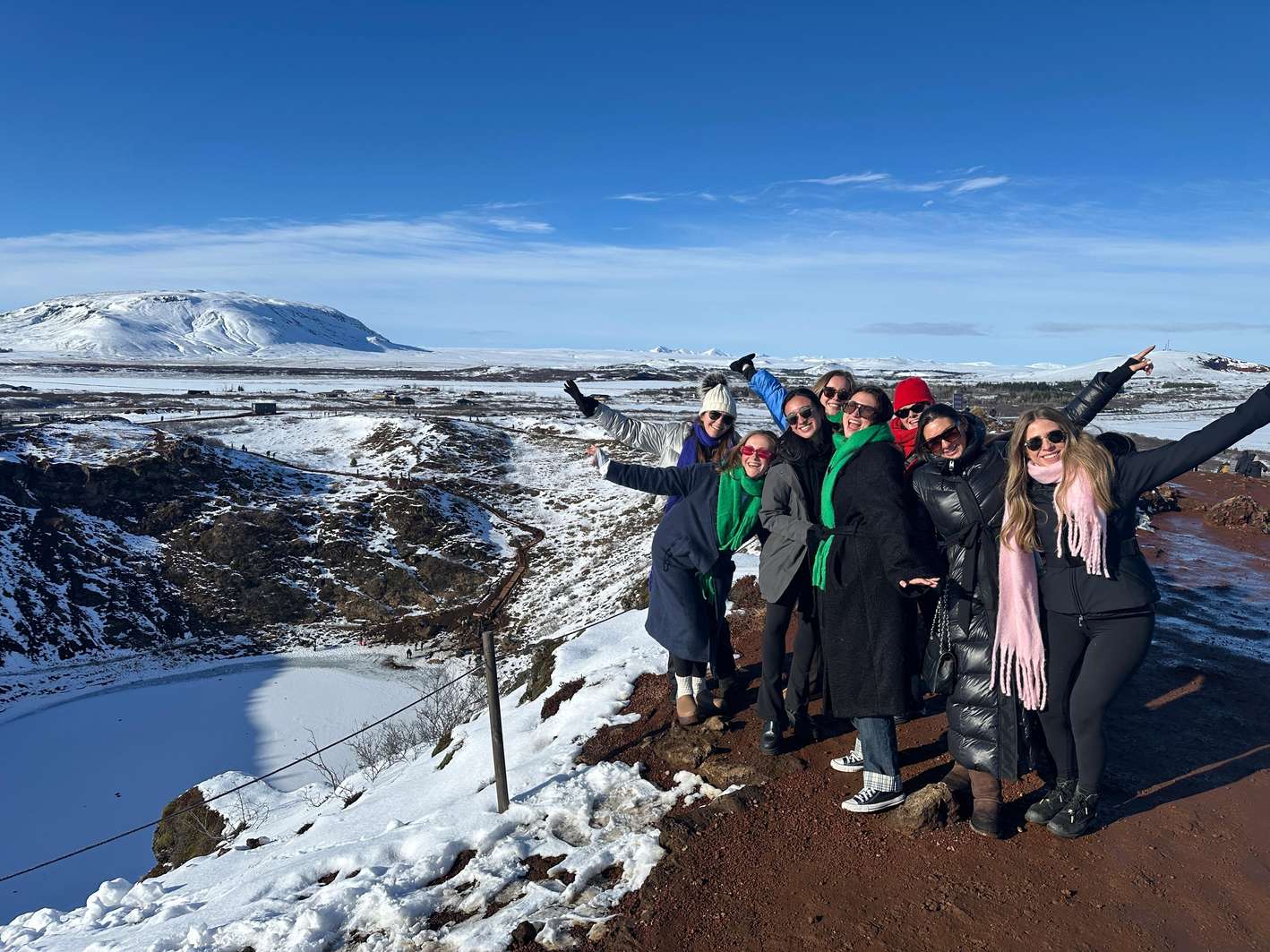
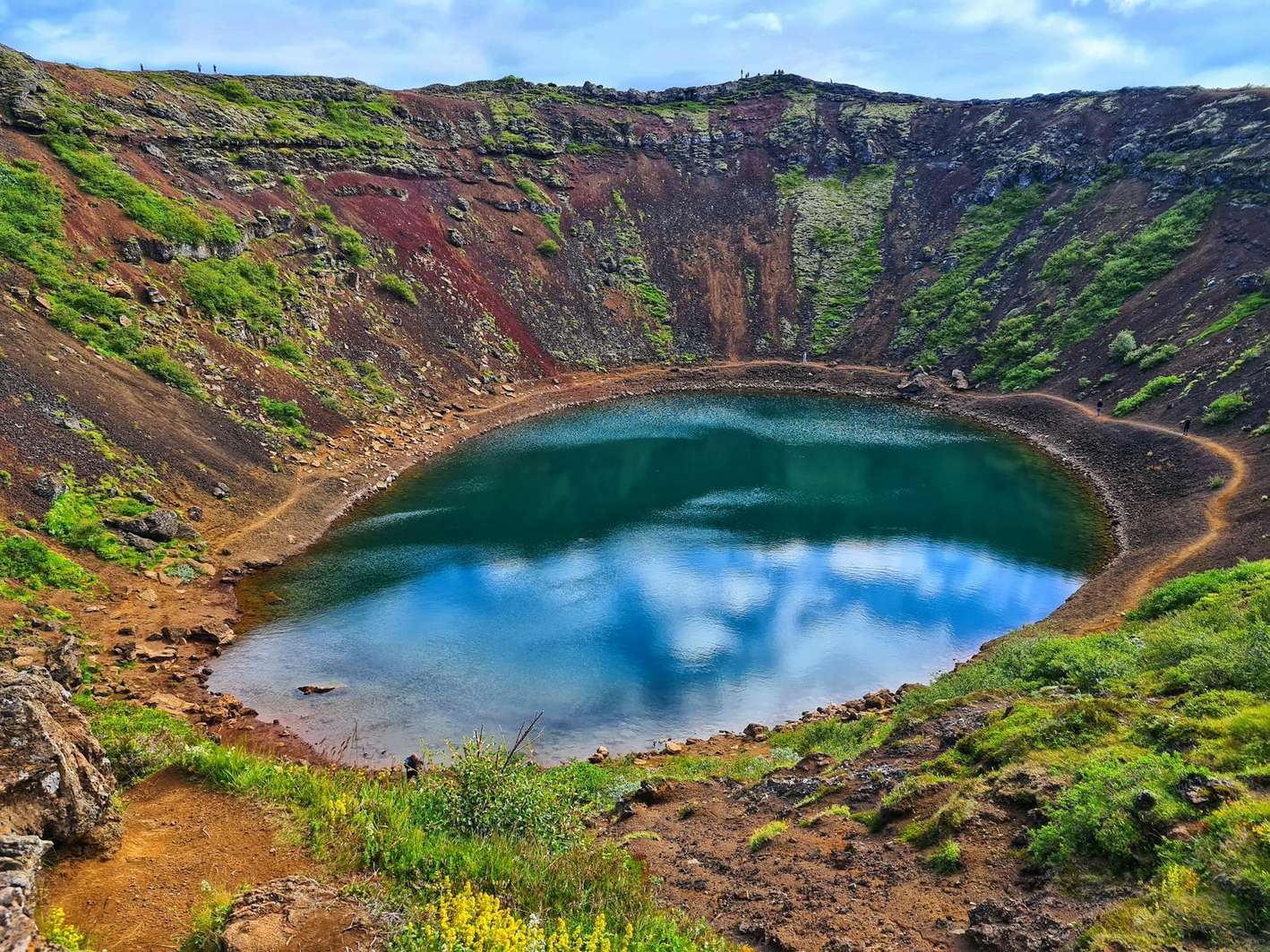
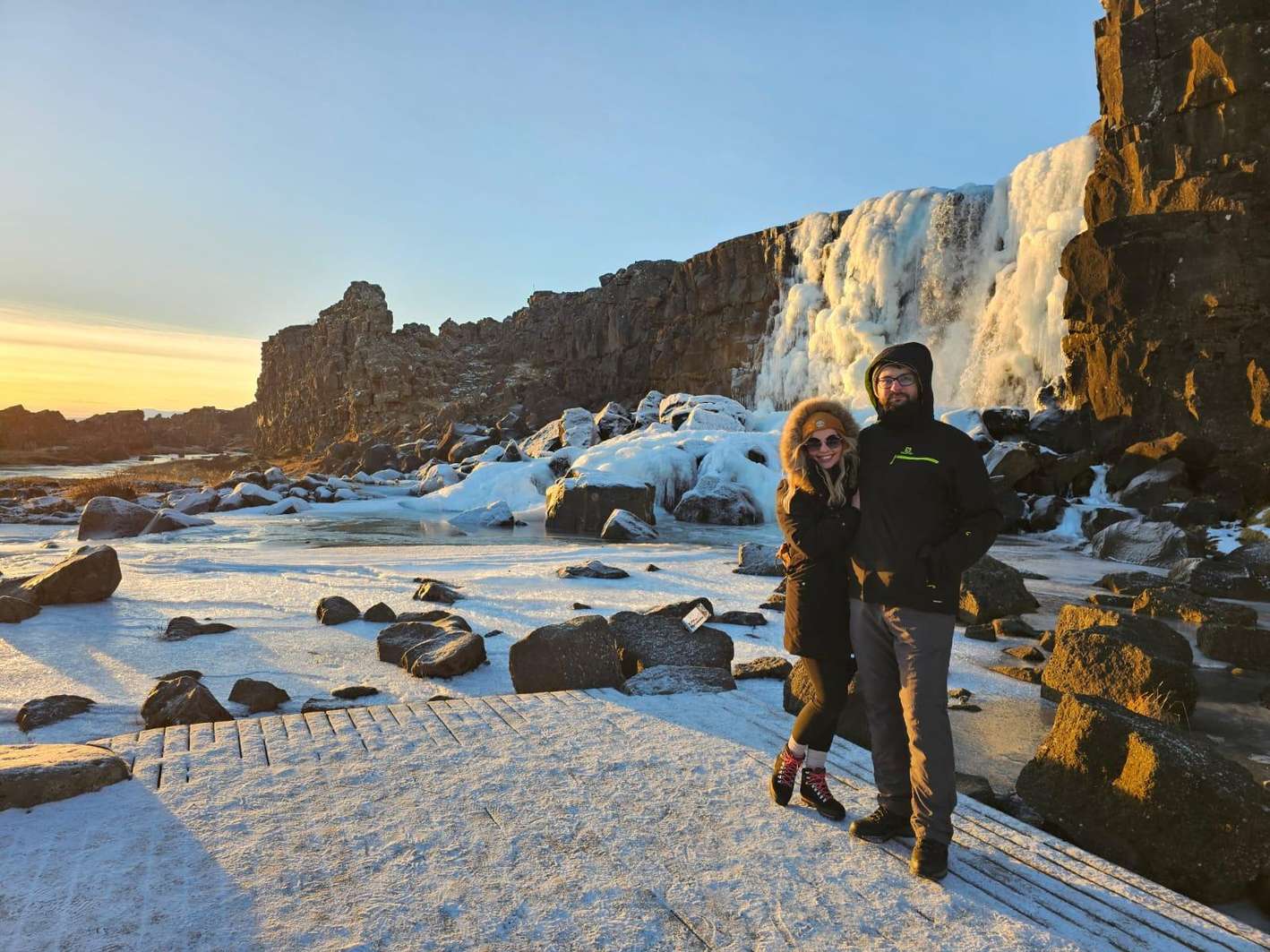
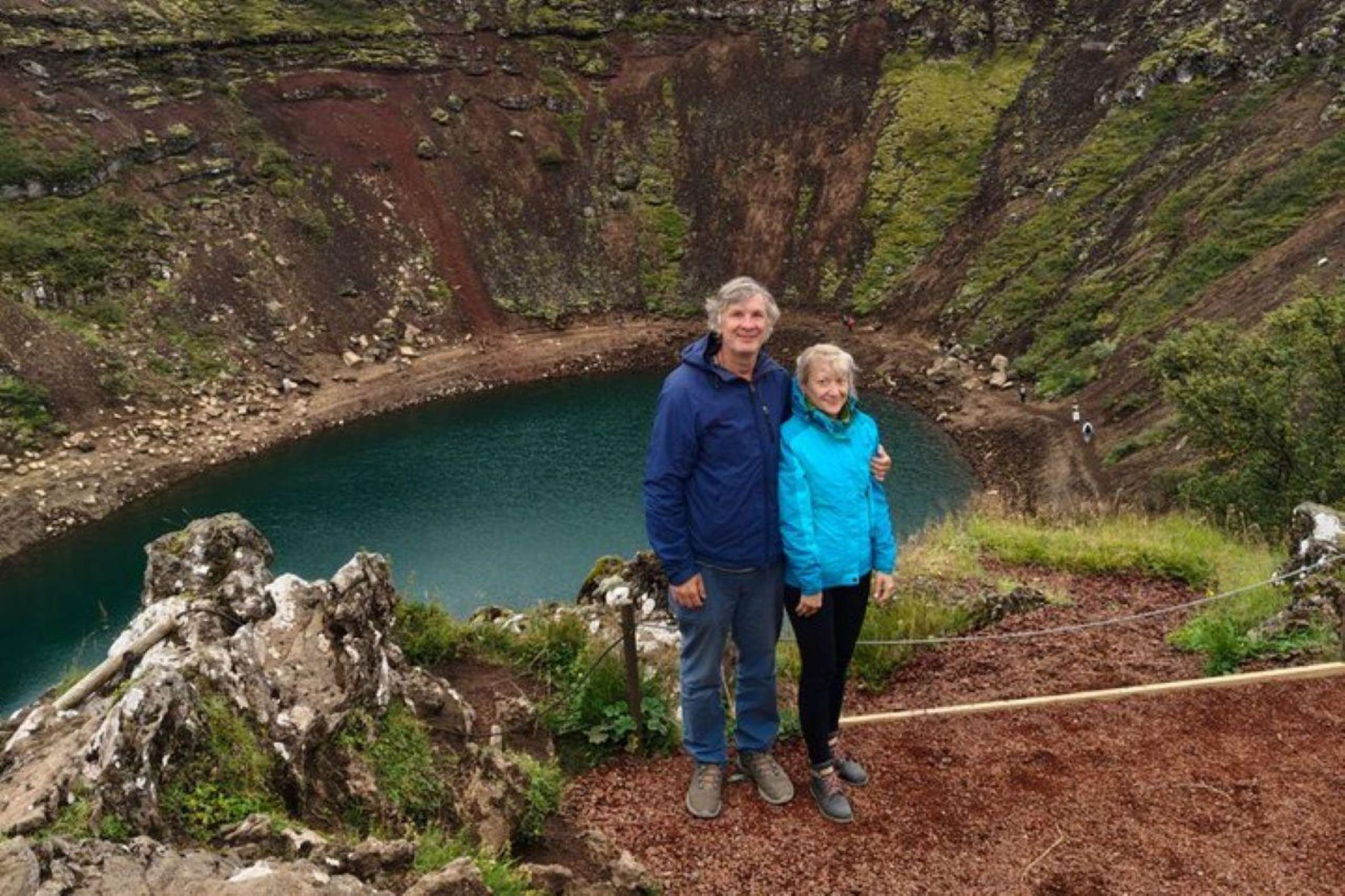
Private tours weave in extras on request: Öxarárfoss waterfall inside the park when weather and roads allow, and the red volcanic slopes of Kerið Crater at the day's end. The small-group itinerary sticks to the classic three, which is its own argument for the private version if extras matter to you.
The move people who have done it recommend: an evening lagoon soak after the drive. Thingvellir, the Geysir area and Gullfoss first, then 90 minutes in warm geothermal water before returning to Reykjavik. After a morning numb-faced in a fissure, it is the ending the day wants.
Silfra snorkeling earns its reputation: clear water, strange geology, a day more physical and more memorable than a coach tour. It asks for a tight drysuit and numb cheeks in exchange for the clearest water you will ever float in.
Go if the cold excites rather than deters you, book early for summer, and leave yourself a loose evening.
Go ifYou want to float between tectonic plates in water with visibility past 100 metresYou meet the 12 to 69 age range, the height and weight limits, and the medical screeningYou are booking 2 to 3 weeks ahead for a June to August slot
Skip ifYou dislike cold water or hoped to see marine lifeYou are a non-swimmer, pregnant, or outside the 150 to 200 cm and 45 to 120 kg limitsYou are prone to claustrophobia and the idea of a sealed neck seal troubles you
Our pick to book
MIÐMiðborg
SILSilfra
Length10 hours
At Silfra2 h 30 min
PickupHotel pickup
Rating4.8★
From Reykjavík: Golden Circle Tour and Silfra Snorkeling$290/personCheck availability →Free cancellation
Silfra snorkeling FAQ - your Golden Circle questions answered
water sits at 2-4°C all year, even in winter
Quick answers about cold, fitness, and how the snorkeling fits into the Golden Circle day.
Reykjavik2026
Water so clear you can see 100 metres down the lava walls, and your face goes numb the second it dips in. Book your Silfra slot weeks ahead for summer, the good morning times fill first.
Where do you snorkel between tectonic plates?
In the Silfra fissure, inside Þingvellir National Park. The crack sits in the rift where the North American and Eurasian plates are pulling apart, and the tour covers it as part of the Golden Circle day.
How cold is the water at Silfra?
The water stays between 2°C and 4°C all year because it wells up from underground springs and never freezes. A drysuit with thermal undergarments keeps your body dry and warm; only your face and hands feel the cold, and your lips and cheeks can go numb for a few minutes.
Do I need to be a strong swimmer?
You must be able to swim and feel comfortable in the water. Non-swimmers cannot take part. The water portion lasts about 30 to 45 minutes, and the drysuit keeps you floating with little effort.
What are the age, height, and weight limits?
Participants must be 12 to 69 years old, at least 150 cm and no more than 200 cm tall, and weigh between 45 and 120 kg. Anyone over 60 needs medical clearance from a doctor before joining.
What health conditions rule out Silfra snorkeling?
Park regulations prohibit participation for people with heart conditions or heart surgery, lung disease, a history of pneumothorax or chest surgery, epilepsy or other conditions causing sudden loss of consciousness, recent head injury, certain blood disorders, and stomas. You also need to manage moderate exercise, such as walking 600 meters and swimming 500 meters.
How cold will my face and hands actually get?
Your exposed face can feel numb within moments of entering, which is normal. Neoprene gloves let a thin layer of water in that your body warms, so keep your hands relatively still and they stay comfortable.
Can I wear my glasses in the mask?
Glasses will not fit inside the snorkeling mask, so wear contact lenses instead. Bring a spare pair, since a mask can let in a little water.
Will the drysuit be uncomfortable?
The neck and wrist seals fit tightly to keep icy water out, and some visitors find them snug at first. Wear thin, close-fitting thermal underwear under the provided undersuit, in wool or synthetic fabric, and avoid cotton and bulky layers that bunch up.
Can I bring a GoPro underwater?
Yes, operators allow GoPros and underwater cameras. Attach yours to a short wrist mount so both hands stay free, and skip cheap disposable waterproof cameras, which only shoot well above the surface.
How much time do Geysir and Gullfoss get on a combo day?
On the described combo day, Geysir gets about an hour, which covers sightseeing and a lunch stop, and Gullfoss gets roughly 30 minutes for viewing and photos. The Silfra slot is the fixed point the rest of the schedule is built around.
Where do I eat during the day?
You stop for lunch at the Geysir geothermal area, where food and drinks are available to buy, and hot chocolate is served after your snorkel. Lunch is not included in the tour price, so budget for it or pack something.
Is snorkeling Silfra worth it compared to a standard bus tour?
Travelers who value the water clarity and the geology call it a highlight of the day. It does make the trip more physical, with walking in a restrictive suit and some swimming against the current, so skip it if cold water holds no appeal.
Snorkel Silfra and see the Golden Circle - a full day of snorkeling
water holds at 2-4°C all year
Snorkel between the tectonic plates in water clear for over 100 meters, then meet Gullfoss and Geysir, all in one guided 10-hour day with free cancellation up to 24 hours ahead.