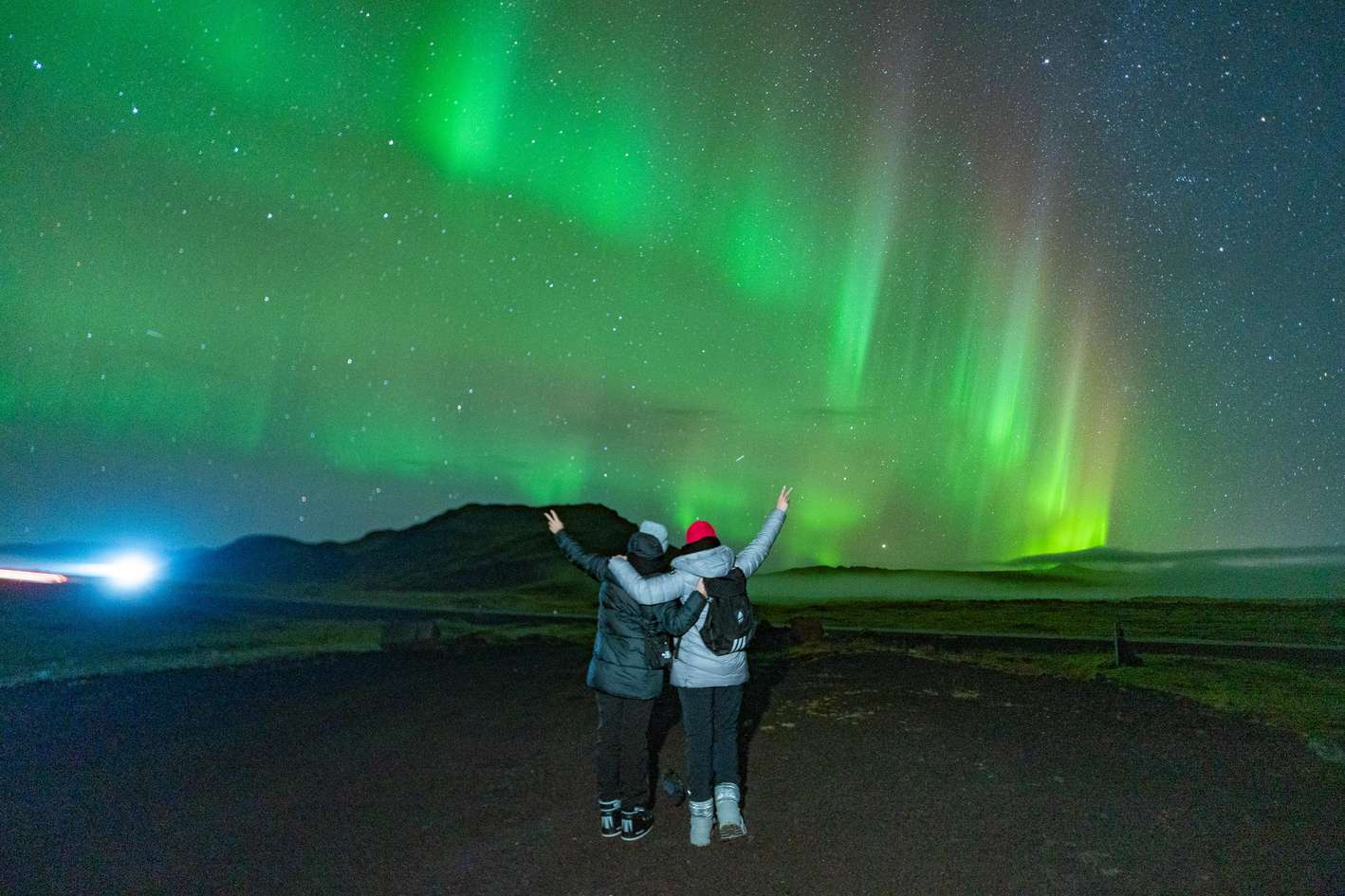
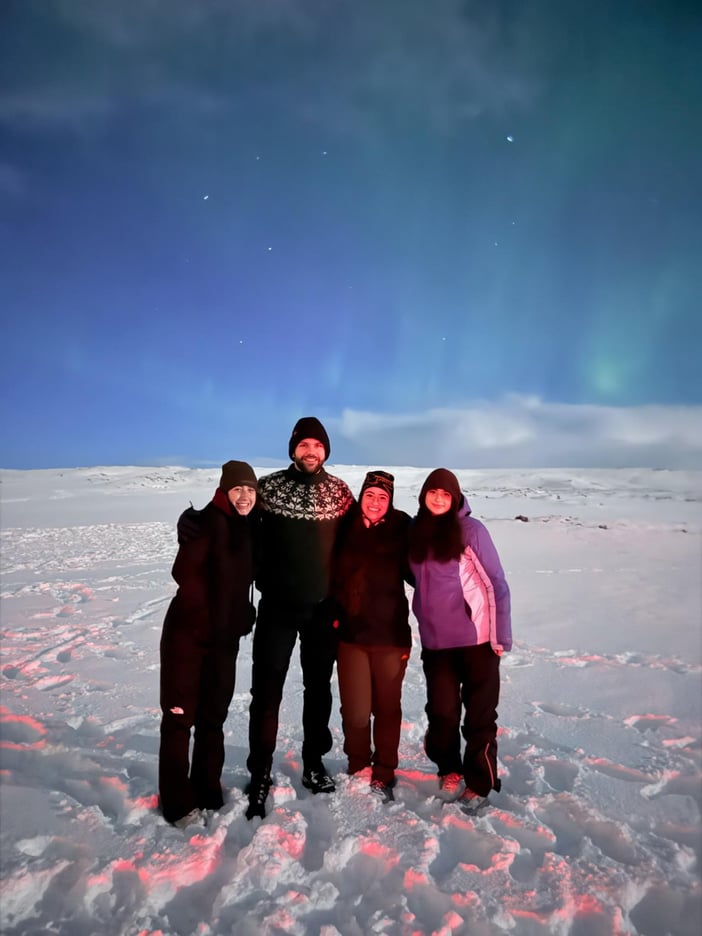
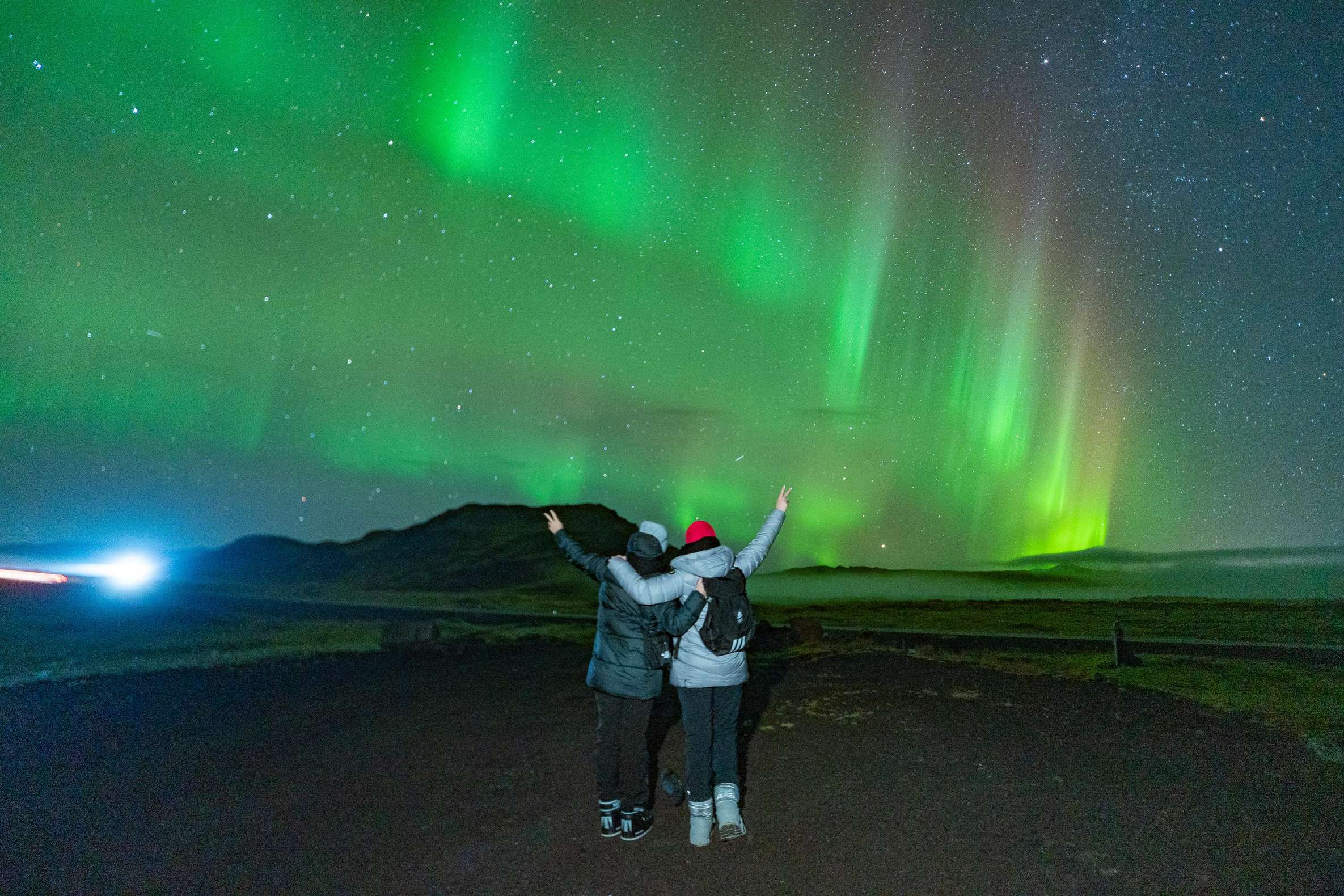
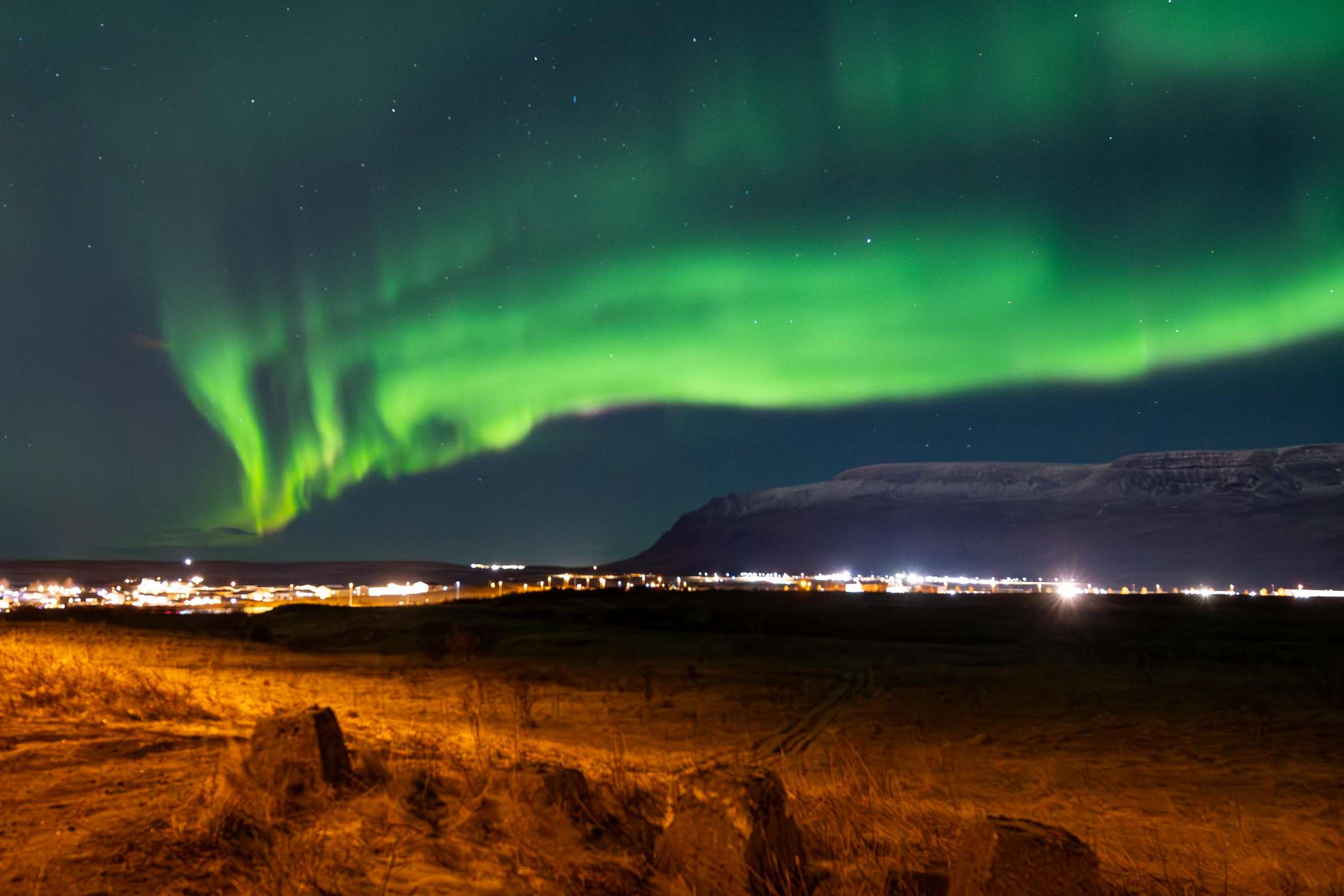
1,443 travelers watched the sky light up over Þingvellir
Golden Circle and Northern Lights Tour from Reykjavik
geysers & waterfalls by day, aurora hunt by night, hot cocoa on board
See Iceland's waterfalls, geysers and rift valleys by day, then chase the aurora by night, all from Reykjavik in one trip. Guides track cloud gaps and solar activity for you, and if the lights stay hidden you ride again another night free. Pick your tour and lock in your evening under the Arctic sky.
Northern Lights tours from Reykjavik - which combo fits you
book the first night of your trip, free rebooking covers cloudy ones
Reykjavik sells Golden Circle and Northern Lights days in a few shapes: a plain coach that does both halves, a small group with hot cocoa, and versions that add a soak at the Secret Lagoon or the Blue Lagoon between sights and night. The one difference that decides it is what happens in the gap between the daytime loop and the aurora chase.
SeasonCombined day-and-night tours run from 25 August to 15 April. May through July has no true darkness, so no aurora tours then.
TimingThe aurora chase leaves around 9 pm from October to mid-March and around 10 pm at the season's edges, with most buses back in Reykjavik near midnight.
BreakSame-day combos give you roughly 1.5 to 3 hours in Reykjavik between returning from the Golden Circle and the evening departure, enough for dinner and warmer layers.
Second chanceSightings cannot be guaranteed. If the lights fail to show or weather cancels the night, most operators let you join another aurora tour free of charge.
PickupDowntown Reykjavik hotels in postcodes 101 and 105 use 12 designated numbered bus stops within a 10-minute walk, because city rules keep tour buses out of central streets.
AgesThe plain 9-hour combos exclude the youngest children, a 15-hour Blue Lagoon combo is not suitable for children under 14, and lagoon combos run from age 2 or older depending on the tour.
FootwearNothing is legally required at Gullfoss or Þingvellir, but waterproof boots with grip, plus slip-on microspikes, are strongly recommended from mid-October to mid-April.
ClothingDress in warm, waterproof layers with hat and gloves. Winter lows near Thingvellir reach about minus 6 °C in January, and you stand still outdoors for long stretches.
BookingPick your first night in Reykjavik for the combo, so a free rebooking evening stays available if clouds or a storm interfere.
importantA Northern Lights chase from Reykjavik only runs between late August and mid-April, because May, June, and July have no real darkness in Iceland.
Book your combined Golden Circle and Northern Lights tour between August 25 and April 15, and schedule it on your first night so a free second-chance departure fits later in your trip if clouds roll in.
Pick your Reykjavik Golden Circle and northern lights combo
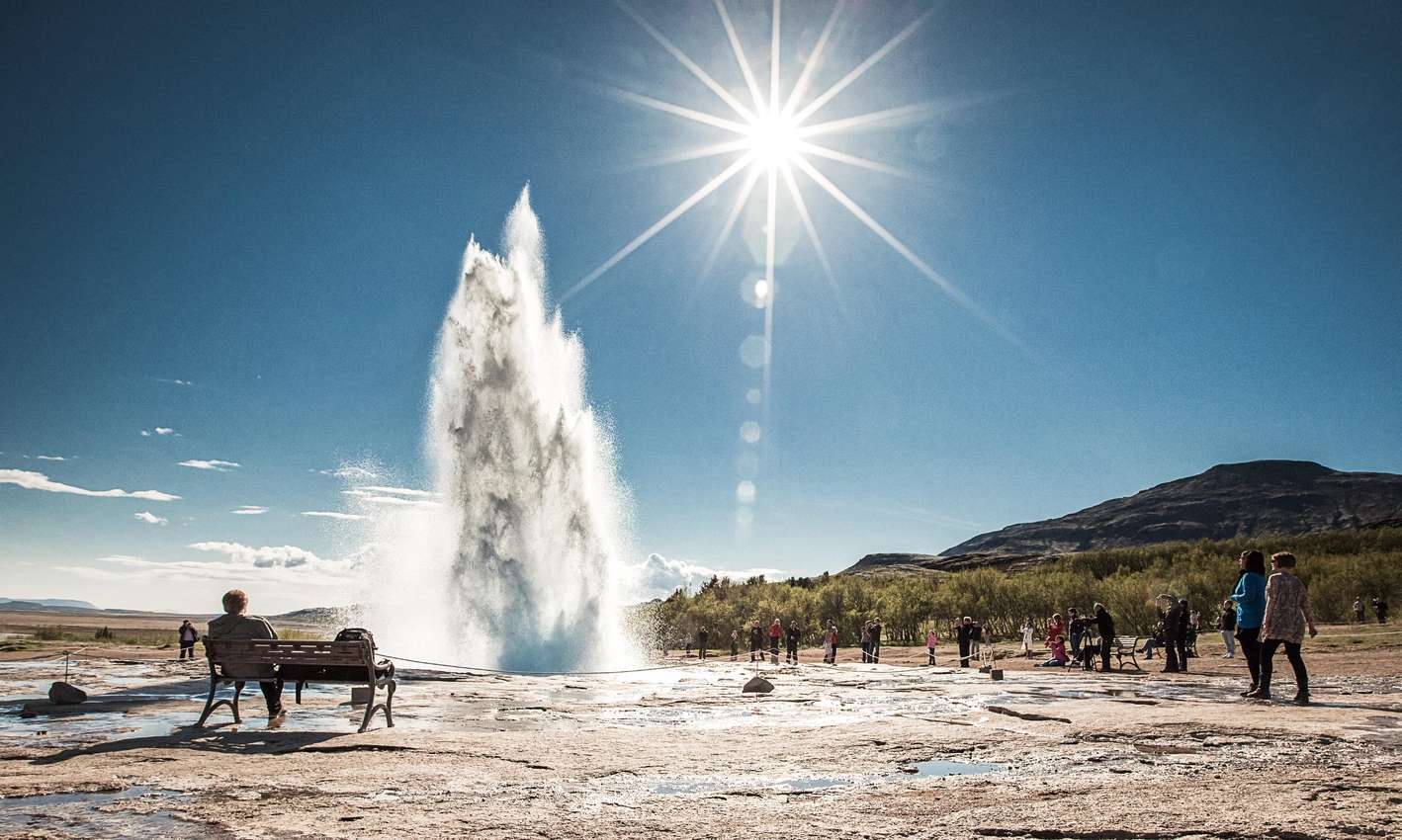
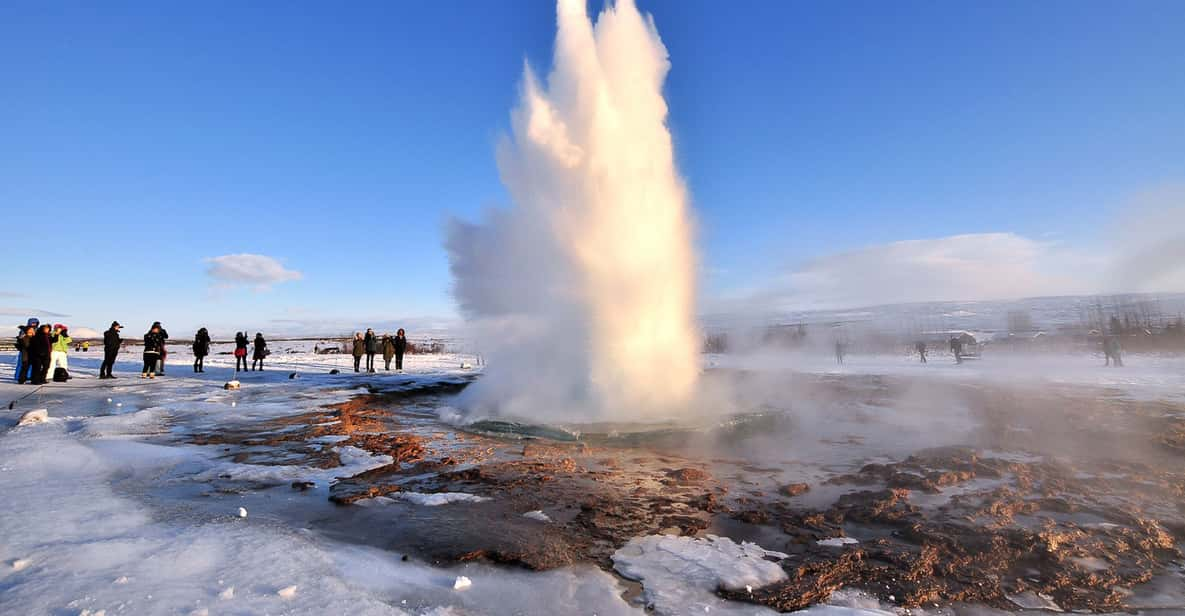
strokkur erupts every 4 to 10 minutes
Cheapest combo
9 hours·English
4.4(398)
From Reykjavik: Golden Circle and Northern Lights Combo
The lowest starting fare of the four, and a free second chase on another night if clouds hide the lights.
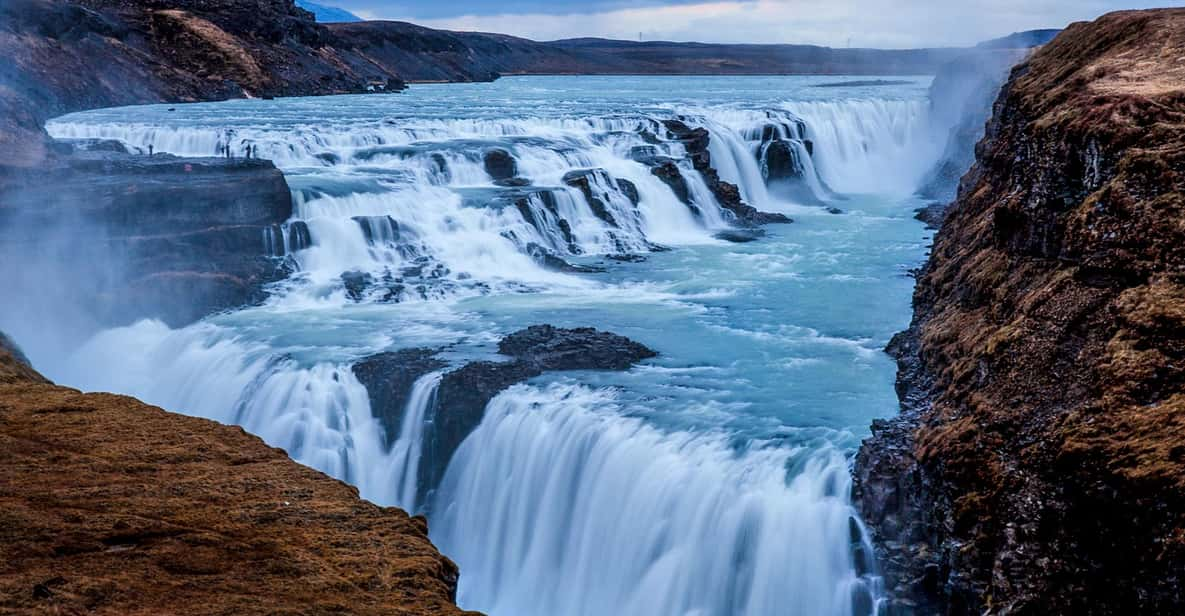
See the magnificent Gullfoss waterfallGet back to nature in Þingvellir National Park
What you see on a Northern Lights and Golden Circle tour from Reykjavik
strokkur erupts every 4 to 10 minutes
7 stopsabout 6 h12 places
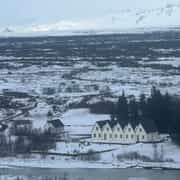
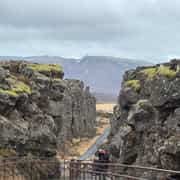
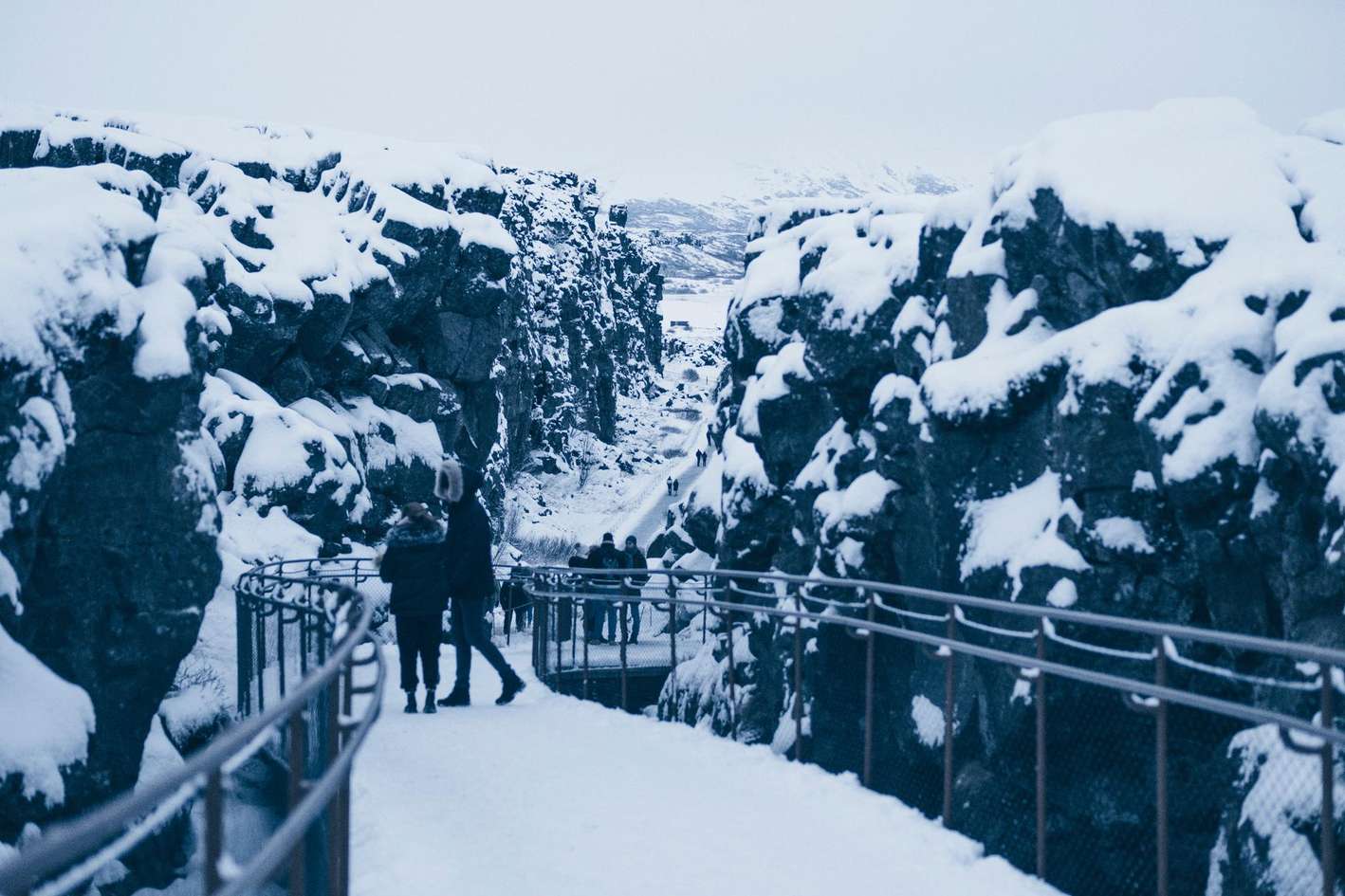
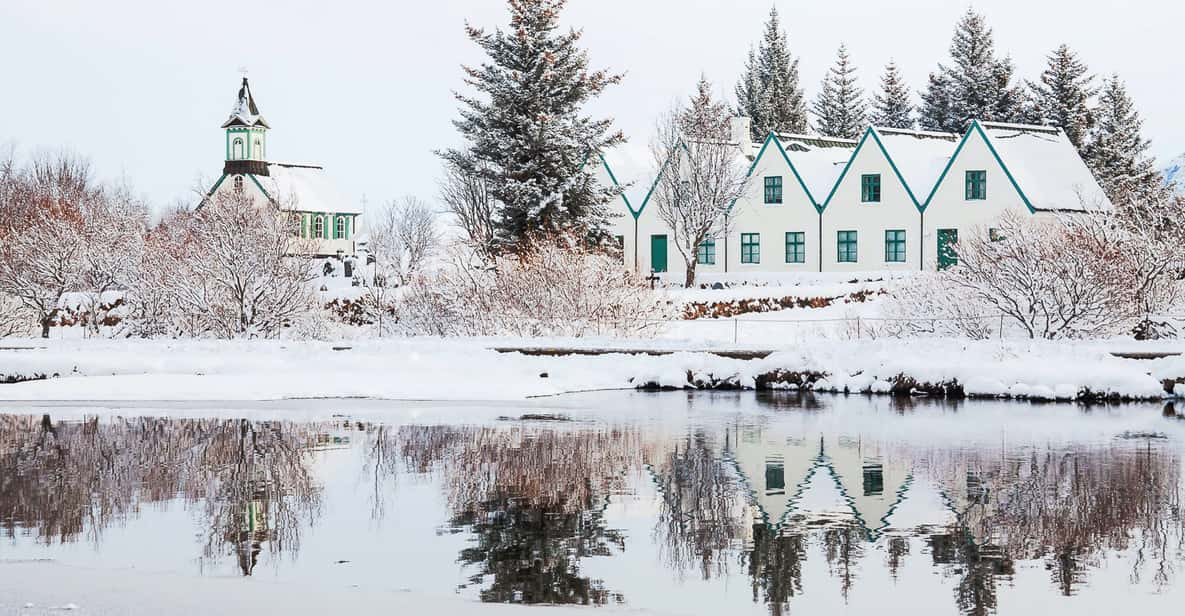
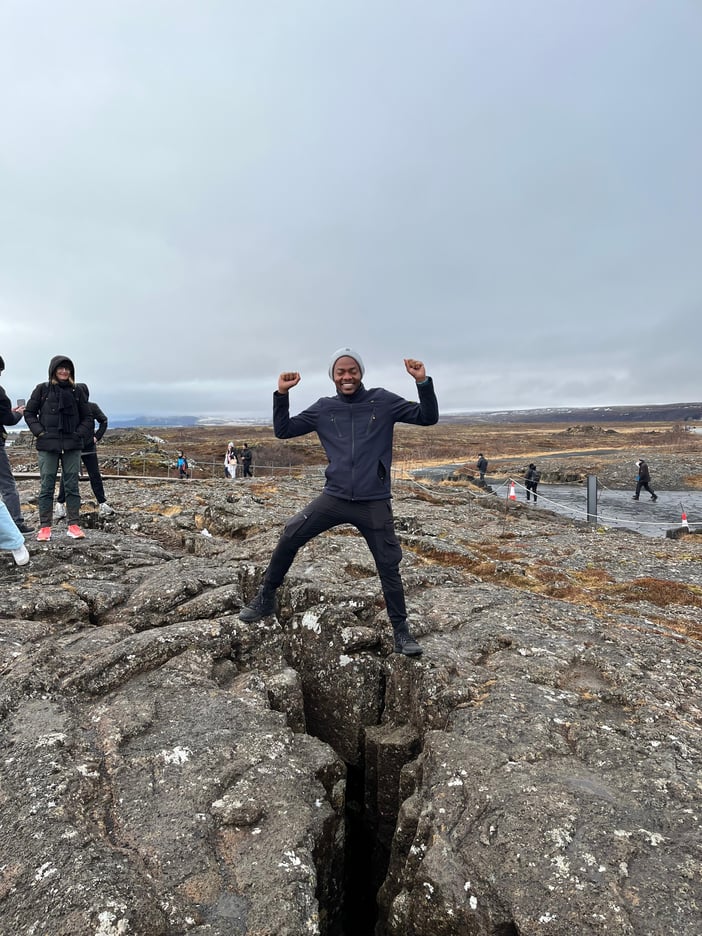
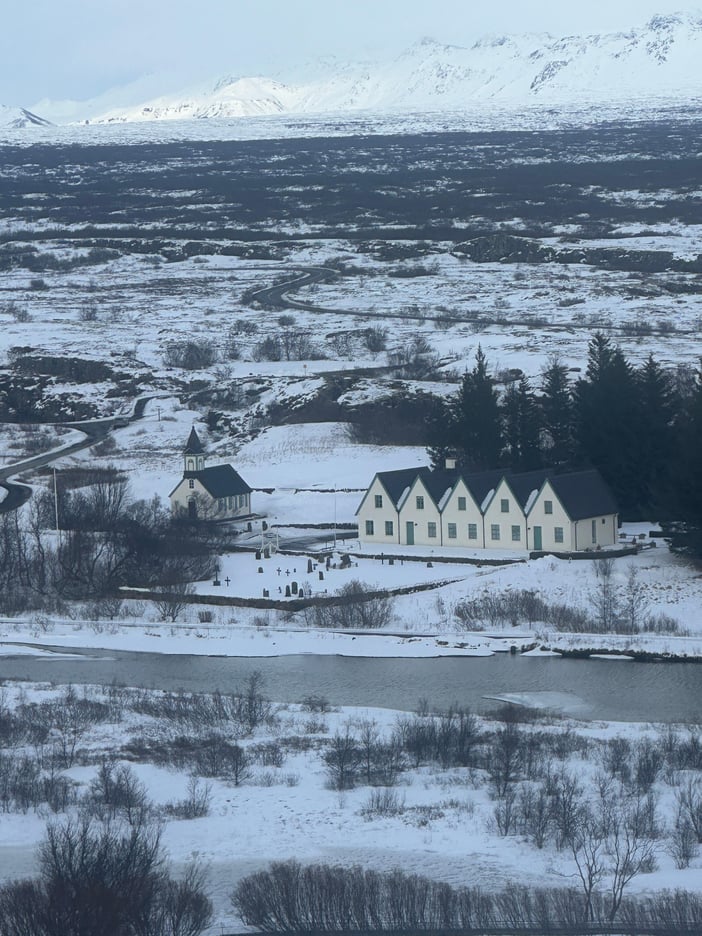
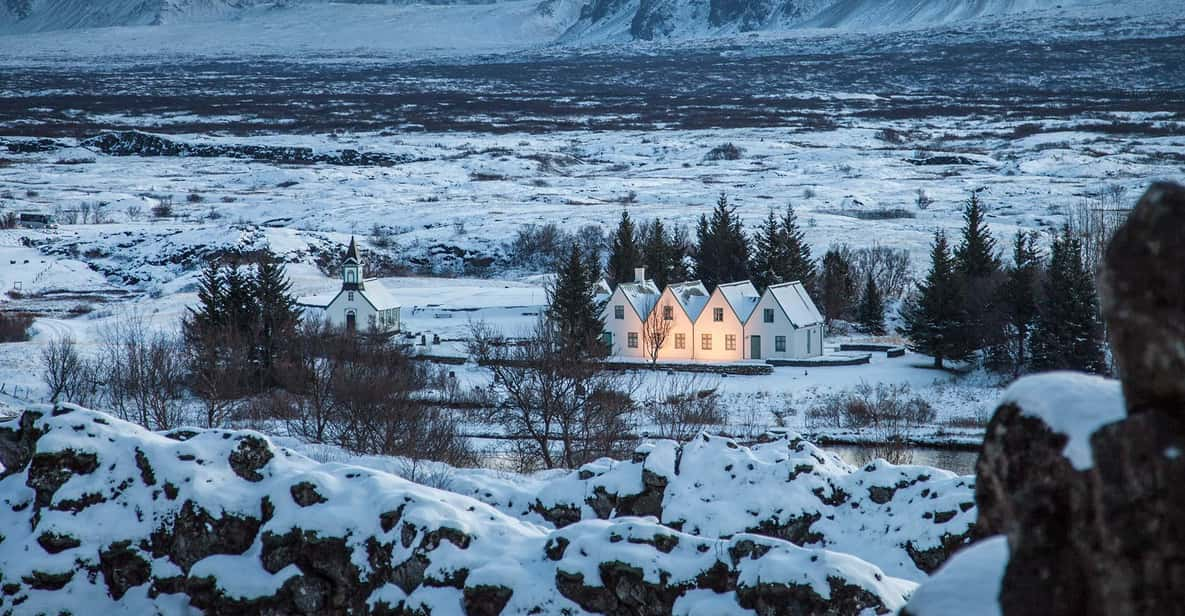
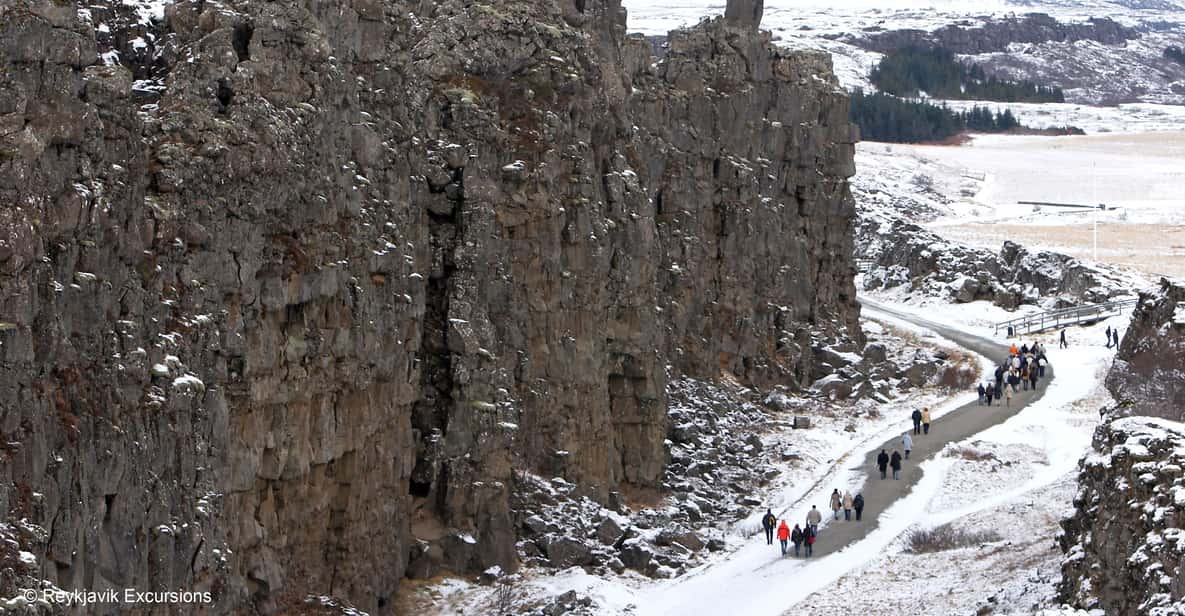
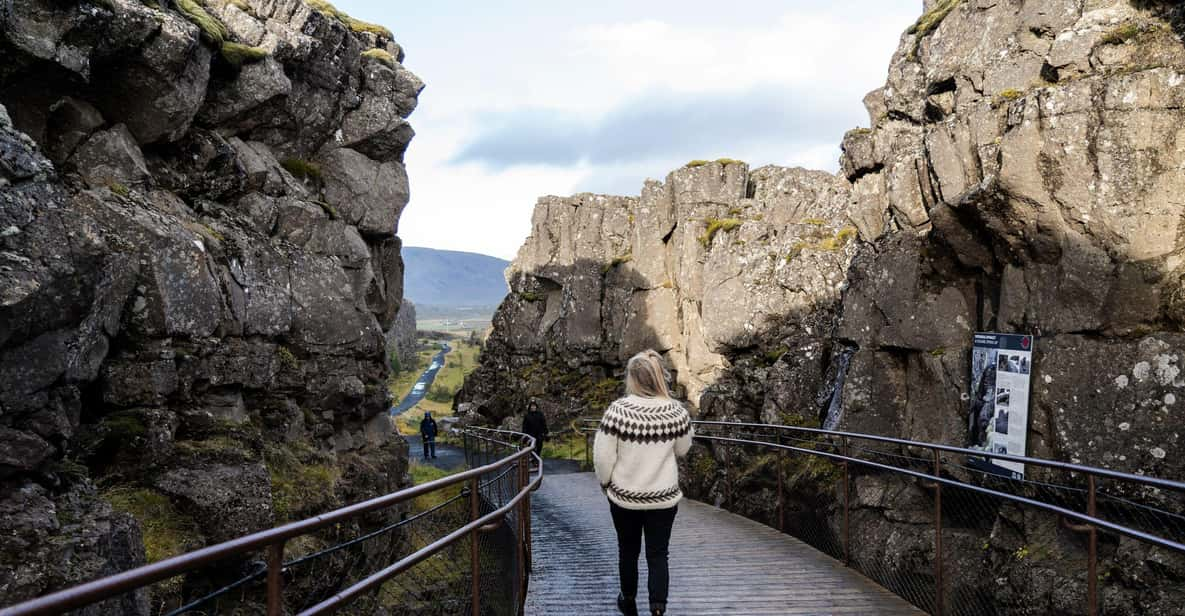
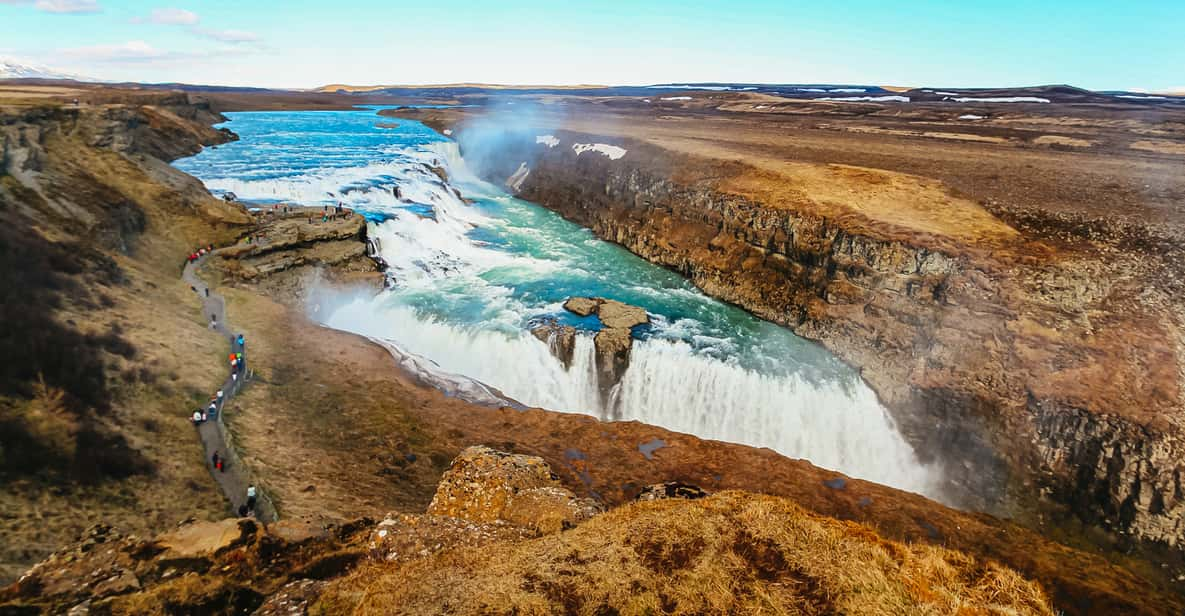
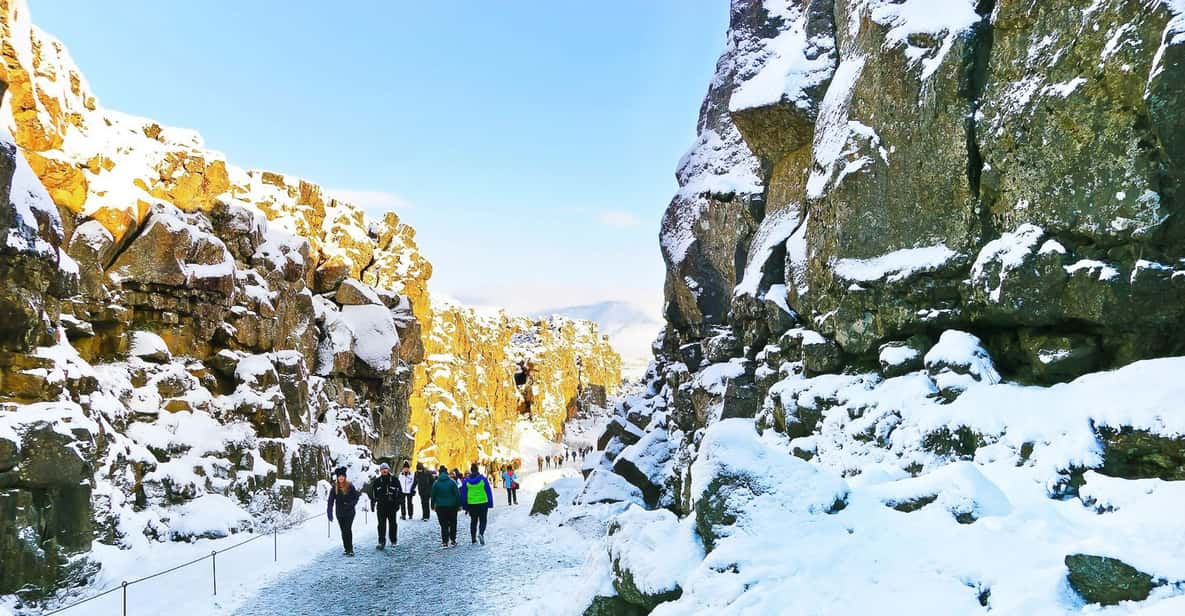
Þingvellir National Park opens the loop: you walk the Almannagjá canyon where the North American and Eurasian plates pull apart, then ride on to the Geysir geothermal area and Gullfoss.
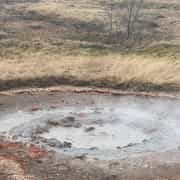
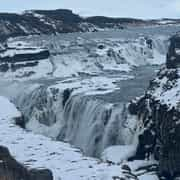
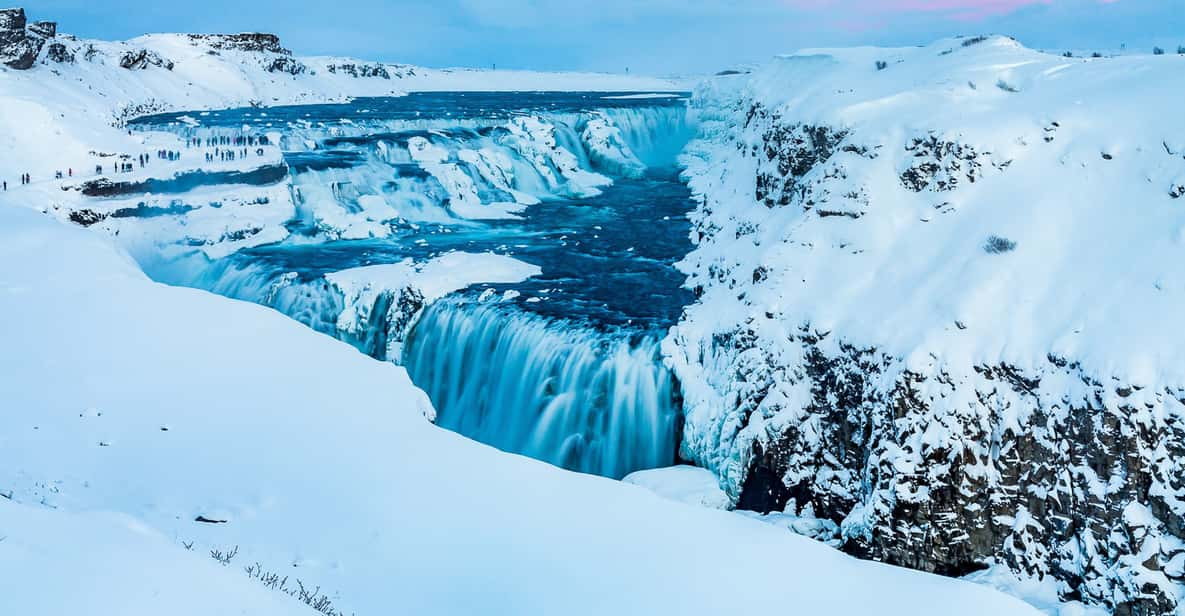
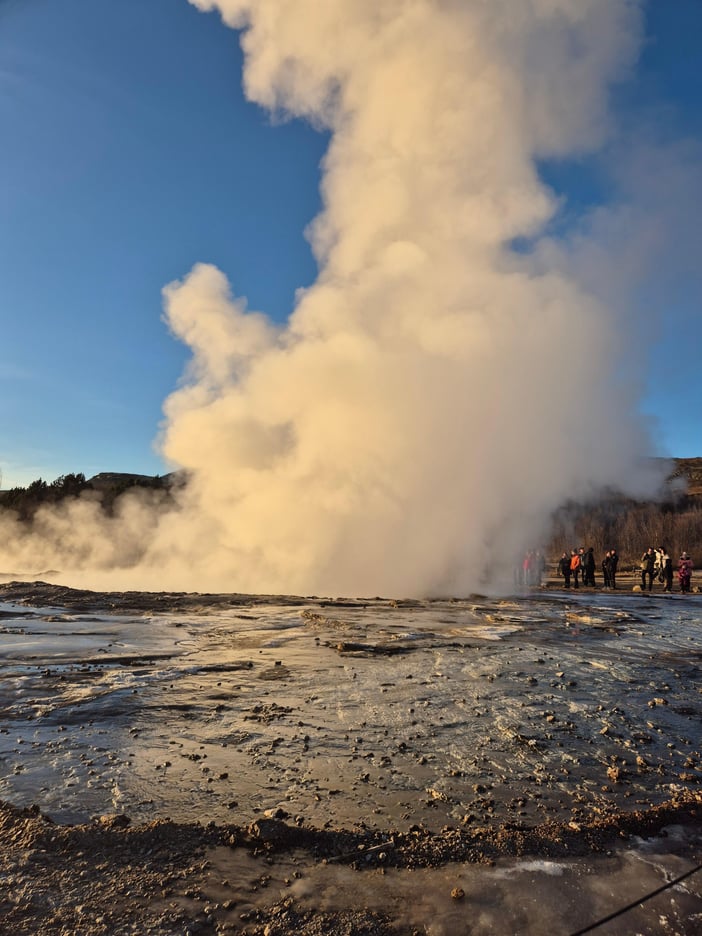
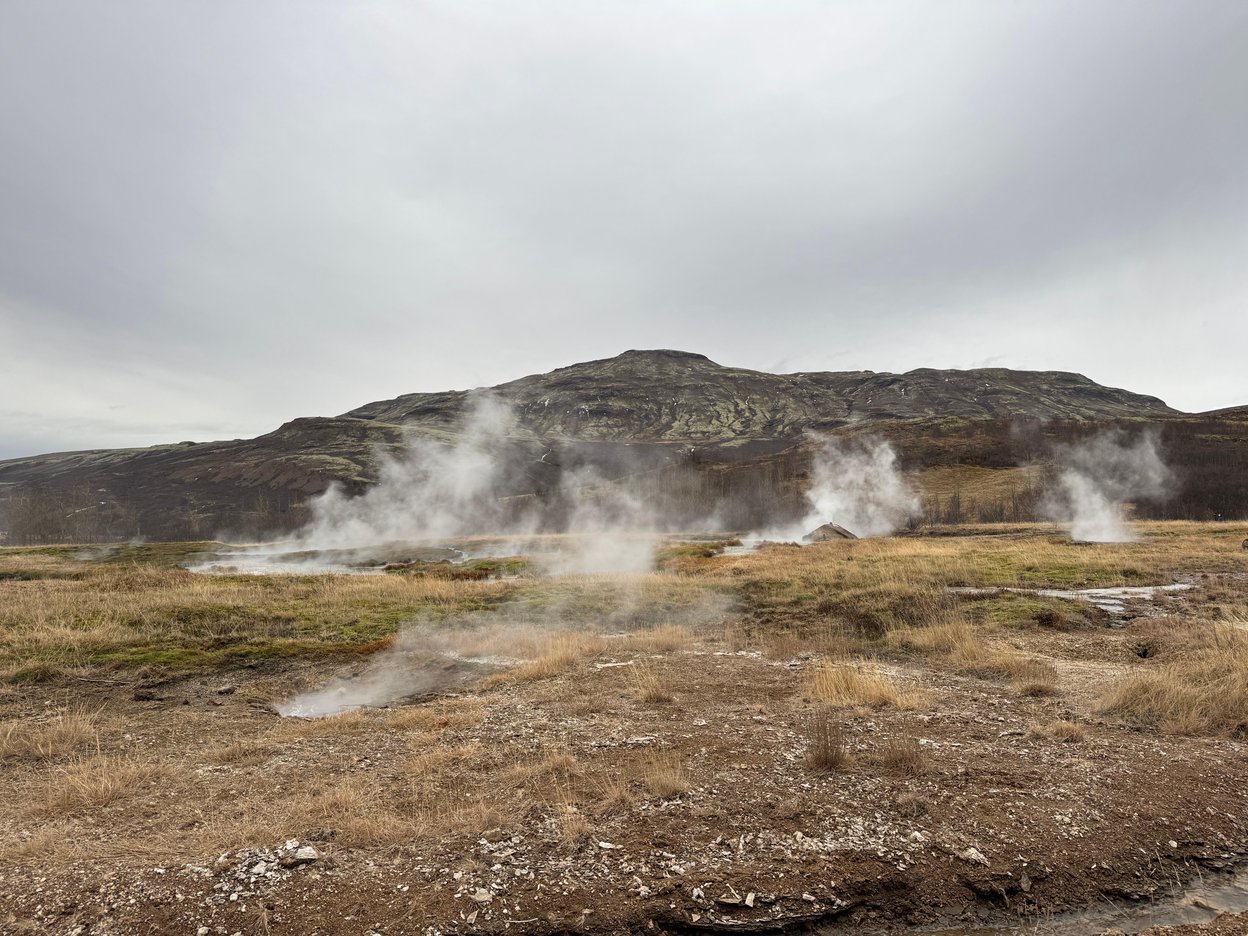
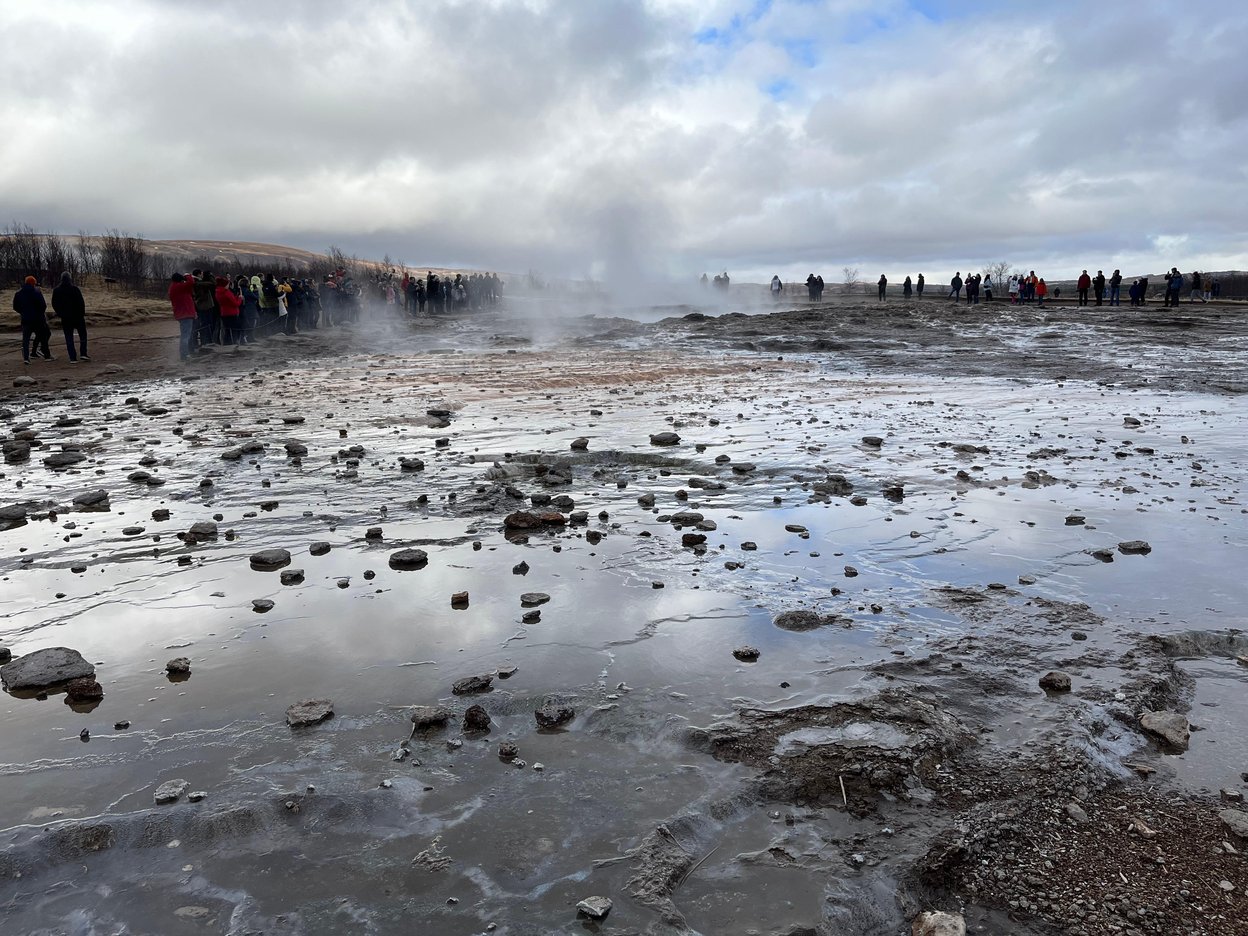
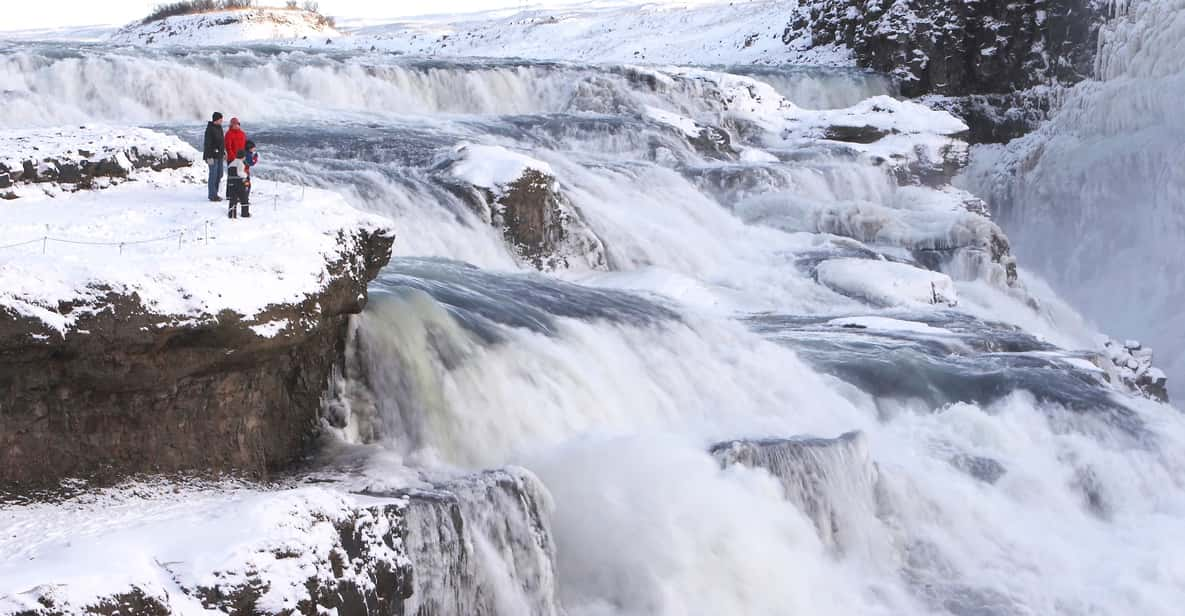
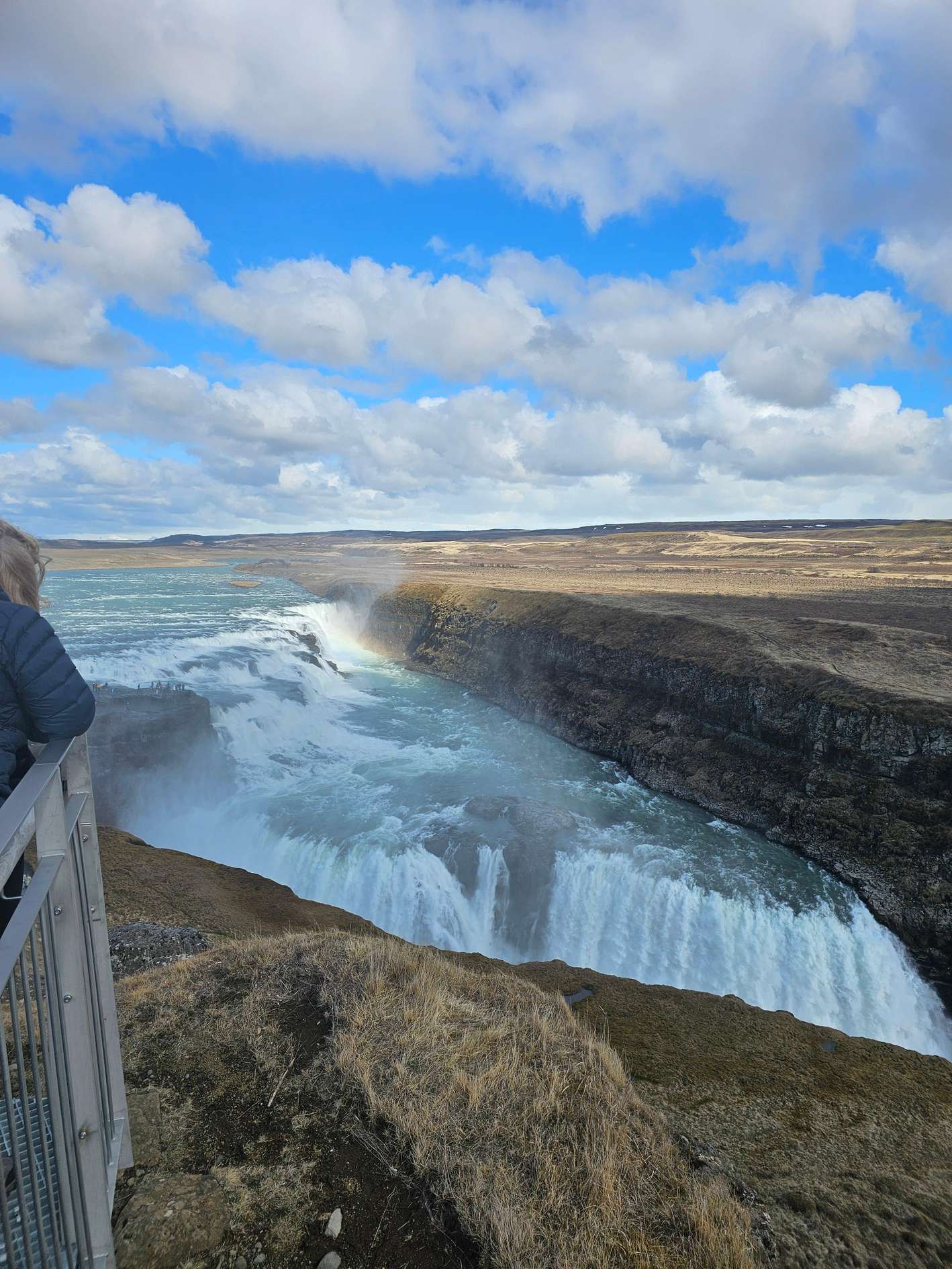
At Geysir, Strokkur erupts every 4 to 10 minutes, and the water domes up turquoise seconds before it bursts. Gullfoss thunders through its gorge even in deep winter, when freezing spray builds thick ice shelves along the walls.
Back in Reykjavik you get a few hours for dinner and warmer layers before the night part begins.
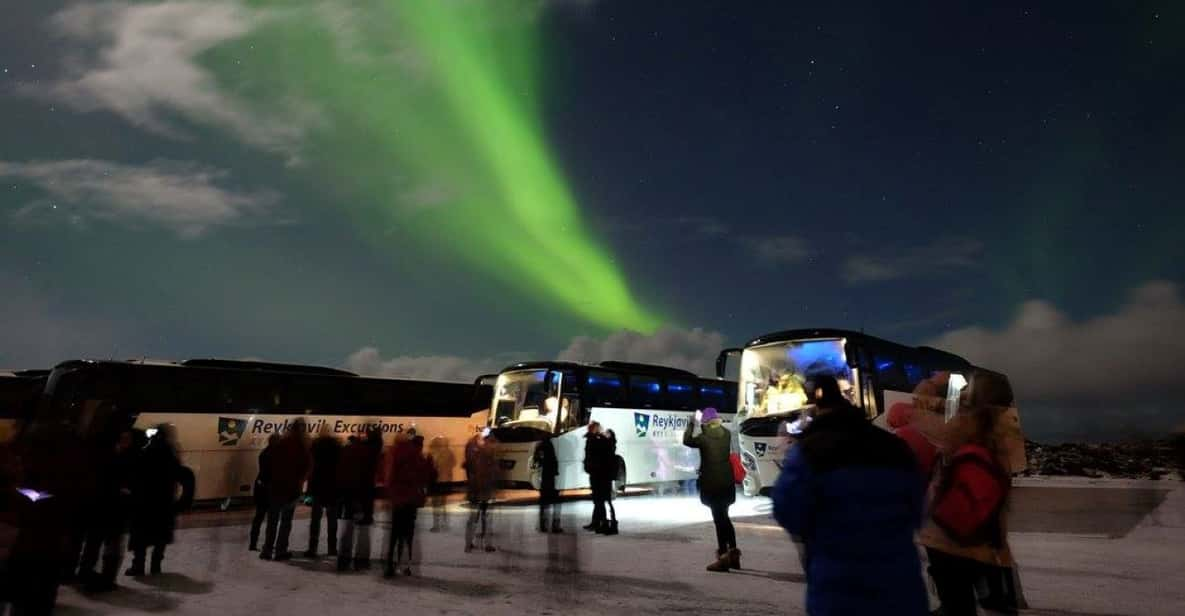
A guide trained in aurora tracking reads the cloud cover and drives toward the clearest sky, and hot chocolate comes on several of these tours. If the lights stay away, most operators let you join again on another night for free.
Pickup32 places, depending on your optionDrop-off after the aurora chase.Street ViewMeeting pointBSÍ Bus Terminal ReykjavíkDrop-off at the central bus terminal.Street ViewStop 3Thingvellir National Park· 45 minWalk the Almannagjá rift between the North American and Eurasian plates, which separate by about 2 cm a year. A paved path leads to the viewing platform.Stop 4Geysir· 60 minStrokkur erupts every 4 to 10 minutes, doming turquoise before it bursts. Stay on the marked paths near the vents; the cafeteria toilets are free.Stop 5Gullfoss Waterfall· 60 minA two-tiered glacial waterfall. In midwinter the spray freezes into ice columns on the gorge walls while the river keeps flowing. The upper platform is paved and step-free.Stop 6Reykjavik· 180 minFree time in the city for dinner, a rest and warmer layers. Evening aurora departures on combo tours typically leave between 8:30 pm and 9 pm.From this tourDrop-off33 places, depending on your optionDrop-off at the domestic airport at the end of the night.Street View
Included
Hotel pickup and drop-off (if option is selected)Local guide for Golden CircleSpecially-trained Northern Lights guideInstructions on how to set up your camera to capture the Northern Lights and the night skyWi-Fi and USB charger for each seatMultilingual audio guide available via our app.
Not included
Food and drinksHeadphones for the audio guide
Where the other tours go
Thingvellir National ParkGullfoss WaterfallGeysir
Reykjavík: Golden Circle, Blue Lagoon & Northern Lights Tour
Book the combo for your first night in Reykjavik, not your last. If clouds or a storm cancel the aurora chase, operators let you join another night for free, so an early date leaves backup evenings to rebook into.
Pro tipAn early booking protects you twice: weather cancellations and no-show lights both come with a free second evening
RecommendedCheck the aurora forecast on vedur.is before choosing which night to make your first
2. Choose pickup or meeting point
Most combos offer two options: a meeting point in the city or pickup from selected locations. Central hotels in postcodes 101 and 105 sit within a 10-minute walk of a designated bus stop, so the meeting point often saves you nothing but costs less.
Common mistakeAssuming the bus collects you at your hotel door. Downtown Reykjavik redirects tour buses to 12 numbered stops instead
Pro tipAccommodations outside the center usually get doorstep pickup, and you wait outside rather than in the lobby
3. Pay and read the confirmation
After payment, a confirmation email arrives with your voucher and the exact pickup stop and time. Read it the same evening: it names where the bus waits and when to be there, and it is the message to show on your phone on the day.
RecommendedCancel up to 24 hours in advance for a full refund, so book now and rework the plan later if skies turn
Pro tipSave the operator's phone number from the voucher in case you cannot find the bus in the dark
4. Set your day around the times
Most combos start with 9 am or 10:30 am Golden Circle pickups and return to Reykjavik around 5:30 pm to 7 pm. The night chase then departs around 8:30 pm to 9 pm, typically returning near midnight or 1 am.
RecommendedBook a dinner spot near your hotel for the break in between, since the gap runs about 1.5 to 3 hours
Common mistakePlanning an early start the next morning. These days run past midnight when the lights cooperate
5. Dress for the wait outside
You stand still in open countryside for the aurora watch, so pack a waterproof jacket and pants, hat, gloves and warm boots. Hand warmers and a thermos help, and some tours pour hot cocoa on board.
ImportantThere is no age shortcut: the 15-hour Blue Lagoon combo takes nobody under 14, and the 12-hour combos exclude children 7 and under
RecommendedBring the headphones your audio guide needs and a spare camera battery kept warm in an inside pocket
What to know before you book a Northern Lights tour from Reykjavik
book the first night, free rebooking covers cloudy ones
Can stop the dayGood to knowGood news
01
ChoosingWhat it is, who it suits, when to go
6
The gap
These combos split into two parts with a break in Reykjavik between them. You come back from the Golden Circle in the late afternoon, get 1.5 to 3 hours for dinner and a rest, then board again for the evening chase. The lagoon versions fill that gap with a soak instead.
Night timing
The aurora portion runs late. From October to mid-March the chase operates from 9 pm to midnight, and in the shoulder seasons from 10 pm to 1 am. Travelers report returns stretching to 2 am when conditions are good, so plan a quiet next morning.
Second chance
The lights are a natural phenomenon and no tour can promise them. Four of the five tours let you join another aurora departure free of charge if you draw a blank, and the Blue Lagoon combo keeps that offer open for 36 months after booking.
Book early
Put the combo on your first night in Reykjavik if you can. That leaves spare evenings for the free rebooking when clouds or a storm get in the way, and experienced operators recommend it for exactly that reason.
Footwear
No gear is legally required at Gullfoss or Thingvellir, but from mid-October to mid-April the paths ice over. Sturdy waterproof boots with good grip are the baseline, and slip-on microspikes in your daypack cover the worst mornings.
Included
What comes with the ticket varies. The coach combos include the guide and transport, the hot cocoa version adds Kerid crater entry and chocolate, the Secret Lagoon and Blue Lagoon tours add entrance tickets, and towels are an extra at the Secret Lagoon. Meals are never covered.
02
BookingHow far ahead, and what happens if plans change
1
Cancellation
Every tour on this page lets you cancel up to 24 hours in advance for a full refund. If severe weather cancels the lights portion after the Golden Circle has run, you get a refund for that part of the trip.
03
Before you goPapers, health, what to bring
2
AgesCan stop the day
The age limits differ by tour, so match them to your group before booking. The 9-hour combos exclude children aged 5 and younger, the 12-hour combos exclude children aged 7 and younger, and the 15-hour Blue Lagoon version is not suitable for children under 14.
Warmth
January lows around Thingvellir average -6.4°C, and you stand still in open country waiting for the sky. Wear a moisture-wicking base layer, a wool or fleece mid-layer, a down jacket and a windproof shell. Hot chocolate comes included on the lagoon and cocoa tours.
04
On the dayWhere to be, when, and how you get there
2
Pickup
Central Reykjavik hotels mostly sit in a bus-restricted zone, so pickups happen at numbered tourist bus stops rather than the front door. Accommodations outside the core usually get doorstep collection, and you wait outside rather than in the lobby.
Meeting point
Skipping pickup saves money on every one of these tours. The meeting-point options leave from central spots such as Bus Stop 12 or the BSÍ Bus Terminal, and most downtown accommodations are within a 10-minute walk of a stop.
05
During the tourWhat is expected of you
1
Photos
Phone Night Mode can capture the aurora with exposures of several seconds; rest the phone on a rock or the bus roof and use a two-second timer. Bring a mini tripod if you have one, and carry a spare camera battery in an inner pocket, because cold drains batteries fast.
Golden Circle and northern lights tours from Reykjavik - the full day
september equinox, dark skies, less ice
Iceland packs its two headline sights into one long day: waterfall, geyser and rift by daylight, aurora hunt after dark. One booking claims both, at the cost of being out from morning until past midnight.
Reykjavik· 64.14° N, 21.88° W
If you only remember three things
1
A combined day means being out from about 8:30 am until 1 am or later, so pace yourself.
2
Book the combo for your first night in Reykjavik so a free retry still has backup evenings.
3
Aurora season runs from late August to mid-April; May to July have no true darkness at all.
One day, both tours - Golden Circle and northern lights from Reykjavik
The bus rolls out of Reykjavik around 8:30 am, before most of the city has finished breakfast. Somewhere past midnight, the same engine is idling in a dark field while everyone stares at the sky. That is the honest shape of a combined Golden Circle and northern lights day.
The trade-off is real. Doing both on separate days gives you a relaxed pace and two easy evenings.
On a three or four-night stopover, the single-day version frees up a whole evening you would otherwise spend on a separate aurora tour, and a dedicated Golden Circle day is already the most efficient way to see Iceland's signature landscape.
The day itself runs from roughly 8:30 am to 1 am or later, with an intermission in town between the two legs.
One operator's own schedule adds up to about 16 hours door to door, pickup to final drop-off, while travelers who have done it describe 12 to 14 hours of actual touring; the difference is the intermission in town, which sits outside the tour clock. Either way, nobody uses the word restful.
If your dates are tight, the combo is still worth it. You sleep between stops, the driver handles the winter roads, and you wake up having crossed off the two things you came for. Just book the version that matches your energy, which is what the chapters ahead settle.
Tour for this
From Reykjavik: Golden Circle and Northern Lights Tour4.1★ (707) · 9 hours · Hotel pickup · Free cancellation
Can you see the northern lights from the Golden Circle near Reykjavik?
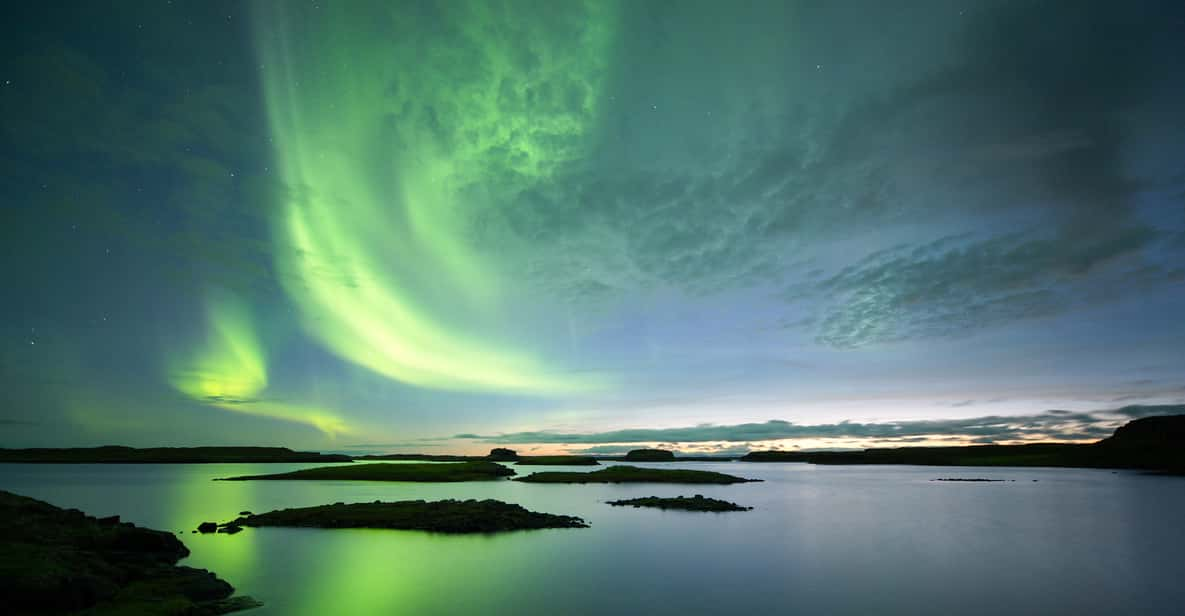
Yes, and you do not need to drive for hours to find them. Iceland sits directly beneath the auroral oval, the band where solar wind meets the upper atmosphere, so even quiet nights with low activity can show lights from dark spots near the capital when the sky is clear.
Darkness and cloud do the deciding on any given night. Þingvellir, the park on the route, gets clear dark skies on only a handful of nights in some months. The chase matters: a guide watching satellite cloud maps can find a gap within an hour or so of Reykjavik on many nights.
Northern lights conditions by month
February has 11.8 hours of full darkness daily, 6.3 clear dark nights at Thingvellir and 12.3 nearby; tours are among the busier months.
HighestFeb, Jul to Aug
In betweenMar, Jun, Nov to Jan
LowestApr to May, Sep to Oct
Darker: a higher how busy it gets score, out of 5
Tap a month to read it.
December has 14.9 hours of full darkness daily, 9.7 clear dark nights at Thingvellir and 16 nearby; tours are a little quieter than an ordinary month.
HighestOct to Feb10.7 to 14.9 h
In betweenMar, Sep7.3 to 8.6 h
LowestApr to Aug0 to 3.7 h
Darker months: higher, from 0 to 14.9 h
Tap a month to read it.
November has 13.4 hours of full darkness daily, 10.3 clear dark nights at Thingvellir and 17.3 nearby; tours are busier than an ordinary month.
HighestMar, Oct to Jan7 to 10.3 nights
In betweenFeb, Apr, Sep5 to 6.7 nights
LowestMay to Aug0 to 2.3 nights
Darker months: higher, from 0 to 10.3 nights
Tap a month to read it.
November has 13.4 hours of full darkness daily, 10.3 clear dark nights at Thingvellir and 17.3 nearby; tours are busier than an ordinary month.
HighestSep to Mar12.3 to 17.3 nights
In betweenApr11 nights
LowestMay to Aug0 to 5.3 nights
Darker months: higher, from 0 to 17.3 nights
Tap a month to read it.
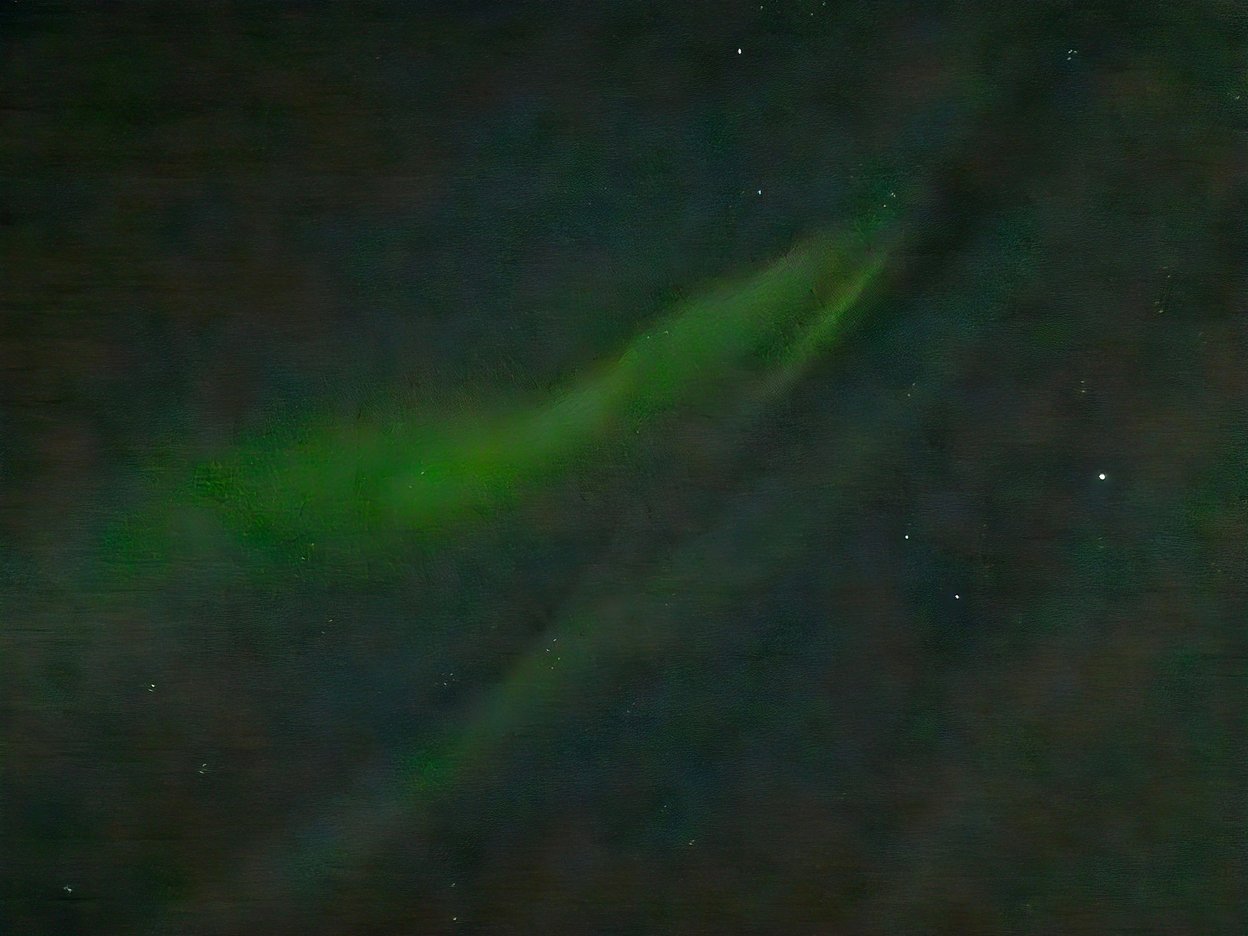
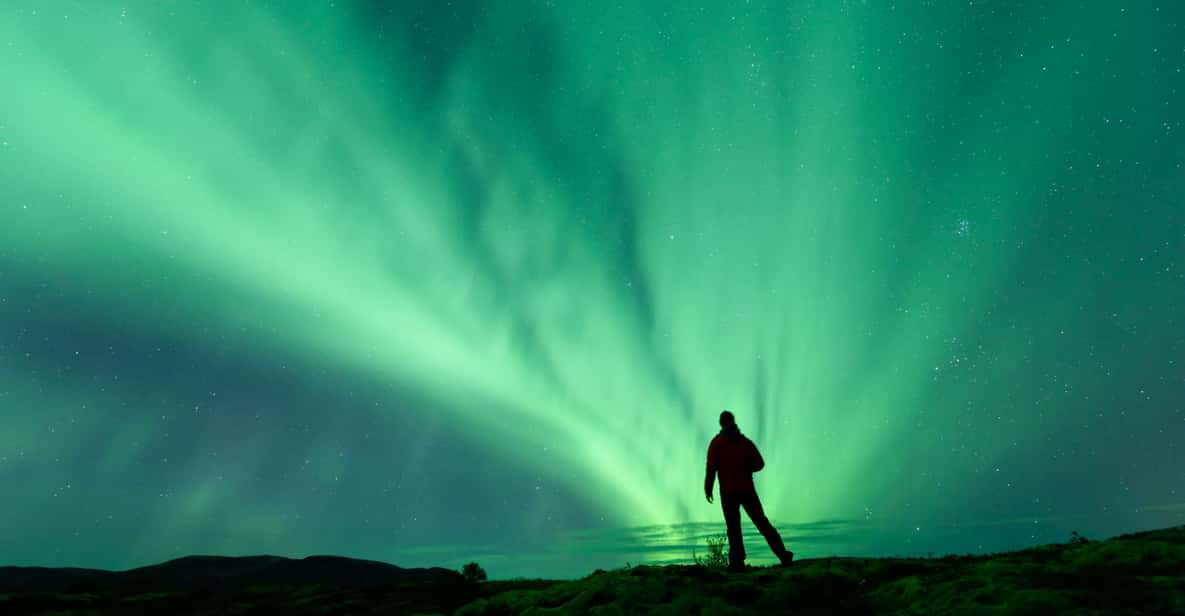
One more thing people who go often mention: a faint aurora can look like a pale grey cloud to the naked eye. Your camera sees the green that your eyes cannot. Long exposures of several seconds pull the colour out of a sky that looks almost empty.
And manage expectations on both ends. No operator can guarantee a sighting, because appearances need solar activity and a cloudless patch of dark sky at the same time. The good tours treat that honestly, and their retry policies are covered further down.
Tour for this
From Reykjavik: Golden Circle and Northern Lights Combo4.4★ (398) · 9 hours · Hotel pickup · Free cancellation
How a Reykjavik Golden Circle and northern lights day runs, hour by hour
Pickup starts around 8:30 am to 9 am in Reykjavik, and the coach heads east towards Þingvellir National Park, where the North American and Eurasian plates pull apart a little more each year.
From November through January, daylight runs roughly four to six hours, so the day starts in dawn light and the last stops happen in the dark.
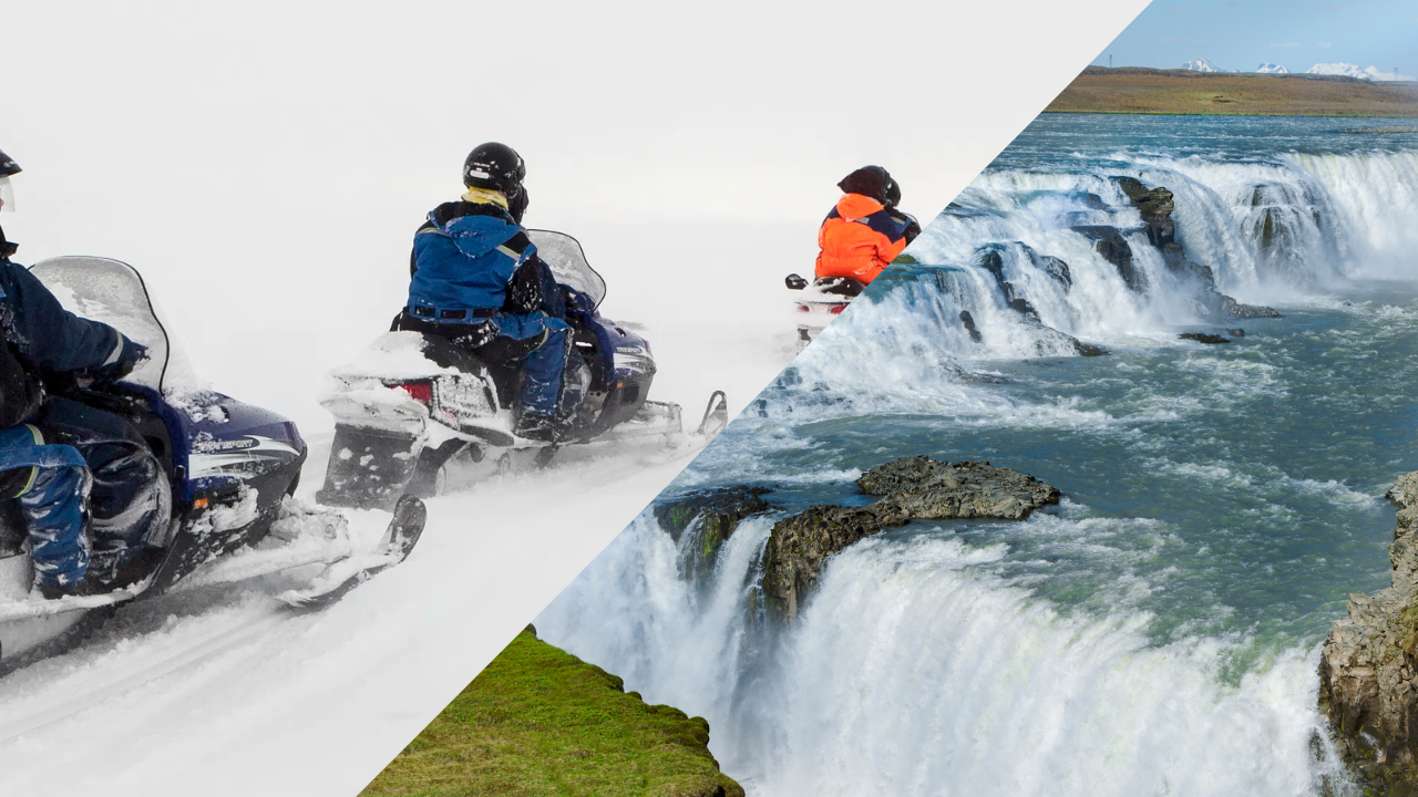
Each of the three landmarks gets about 40 to 70 minutes. At Þingvellir you walk the rift; at the Geysir area Strokkur erupts every 4 to 10 minutes, so nobody waits long; at Gullfoss the glacial river drops 32 metres into the canyon, partly frozen into ice sculptures at the coldest point of winter.
The hour-by-hour shape of a combined day
1
8:30 am to 9 am
Pickup in Reykjavik and departure
Downtown hotels meet at numbered bus stops
2
9 am to 5 pm
Þingvellir, Geysir and Gullfoss stops
40 to 70 minutes at each, in short winter daylight
3
around 7 pm
Return to Reykjavik
Dinner and rest break in town
4
8:30 pm to 9 pm
Northern lights departure
Guide checks cloud cover and forecasts
5
midnight, 2 am
Return to Reykjavik
Later if the aurora is active
The return to town lands around 7 pm on one operator's schedule, though 12-hour versions run differently. Then the night leg begins, driving out of the city lights towards the clearest patch of sky.
If you start a daytime leg too late in winter, Gullfoss arrives after dark entirely, so morning departures are the winter standard for a reason.
Tour for this
Reykjavík: Golden Circle, Blue Lagoon & Northern Lights Tour4.8★ (278) · 15 hours · Hotel pickup · Free cancellation
The dinner break in Reykjavik between northern lights legs
The gap between the two tours is not dead time. It lasts between an hour and a half and three hours, and it is where the day either recovers or falls apart. Buses roll back into town around 7 pm, and the night buses leave between 8:30 pm and 9 pm
Dinner break in Reykjavik
1.5-3 hrstypical break in Reykjavik
7 pmday tour return to Reykjavik
9 pmwinter aurora departure
Use the window deliberately. Eat something warm, since dinner is never included in the tour price and the stops along the route are cafeteria territory.
Then change into your night gear: the clothes you wore at the waterfall are not the clothes you want standing in a frozen field at 10 pm, and a dry base layer matters more than a spare hour of sightseeing.
If you still have energy after dinner, downtown sits within a short walk of the drop-off. A hot dog at the stand that has fed Icelanders since 1937 takes ten minutes.
A nap at your hotel takes twenty. The nap wins, most people who have done this day say, because the real event starts when everyone else is going to bed.
Tour for this
Reykjavík: Golden Circle, Secret Lagoon & Aurora Chase4.9★ (8) · 12 hours · Hotel pickup · Free cancellation
When to book a northern lights tour from Reykjavik
The combined season runs from late August to mid-April. Between 25 August and 15 April the tours operate; from May to July the midnight sun removes true darkness entirely, so no operator can even try.
Within the season, the months behave very differently. September and the equinox weeks give dark skies without deep ice, which is why regulars rate them. Mid-winter has the longest nights but sub-zero roads and storm risk. December and January dark sets in by late afternoon; February stretches daylight enough that daytime stops finish before sunset.
April is the month that catches people out. True darkness arrives near midnight, so the chase starts late and runs deep into the morning. Check sunset and twilight hours before you fix your dates.
One more caution from people who book often: long-range forecasts of solar activity made weeks ahead tell you almost nothing. The Kp index and the cloud maps only mean something a day or two out. Book the date that suits your trip and let the guide read the charts on the night.
Tour for this
Reykjavík: Golden Circle & Northern Lights with Hot Cocoa4.5★ (52) · 12 hours · Hotel pickup · Free cancellation
Coach or minibus - Reykjavik northern lights combo formats
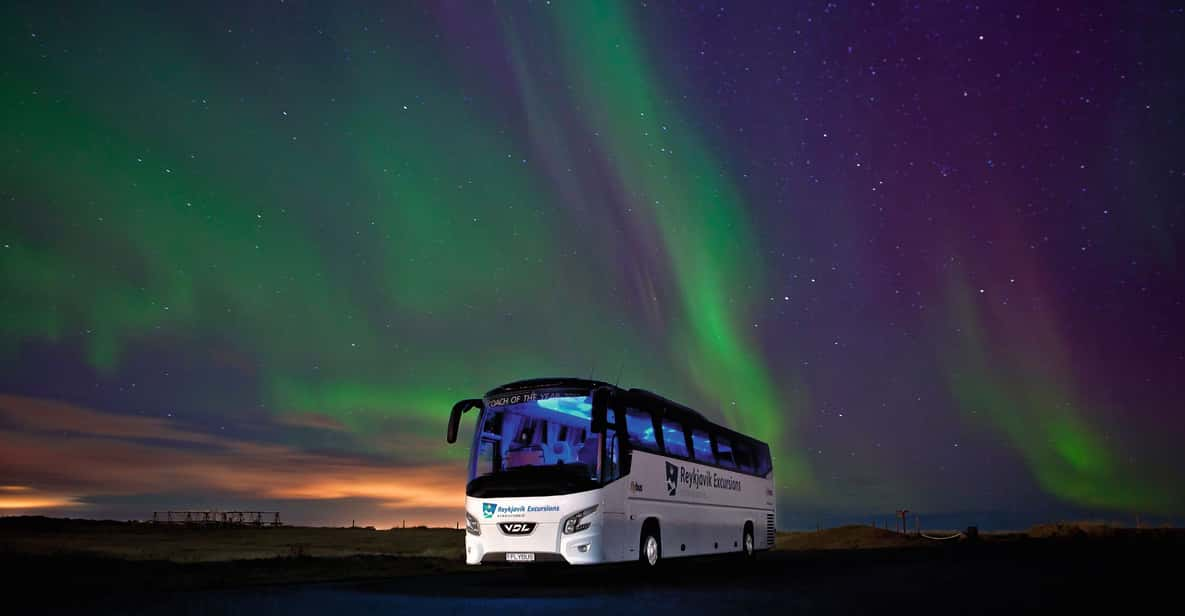
Two formats carry this itinerary. The large coach carries 40 to 60 people and works as a heated retreat between outdoor stops, warm and comfortable, with limited guide access. The minibus takes up to 19, which means you can actually ask the guide questions and hear the answers.
Agility is the minibus's quiet advantage on the night leg. A smaller vehicle repositions faster towards a gap in the clouds and handles narrower country roads. On a chase that lives or dies by cloud cover, that matters.
How the formats compare
Large coach
Small minibus
Lagoon combo
Group size
40 to 60 people
up to 19
varies
Guide access
limited on a full bus
personal, easy to ask questions
included with an expert guide
Warmth
heated coach between stops
heated, but smaller cabin
spa block built into the day
Night agility
fixed route
moves quickly to cloud gaps
route includes the lagoon stop
Large coach
Group size
40 to 60 people
Guide access
limited on a full bus
Warmth
heated coach between stops
Night agility
fixed route
Small minibus
Group size
up to 19
Guide access
personal, easy to ask questions
Warmth
heated, but smaller cabin
Night agility
moves quickly to cloud gaps
Lagoon combo
Group size
varies
Guide access
included with an expert guide
Warmth
spa block built into the day
Night agility
route includes the lagoon stop
The straightforward pairing of both tours in one booking is what the From Reykjavik: Golden Circle and Northern Lights Tour delivers: a 9-hour frame, a specially trained northern lights guide at night, camera-setup help, and Wi-Fi and USB charging at every seat.
Whichever format you pick, a warm vehicle and a hot drink during a long outdoor wait is not a luxury in January. It is the difference between watching the sky and retreating from it.
Tour for this
From Reykjavik: Golden Circle and Northern Lights Tour4.1★ (707) · 9 hours · Hotel pickup · Free cancellation
Here is the fix for a punishing day that frequent travelers keep recommending: put the soak in the middle.
A geothermal bath slotted between the daytime sights and the night chase gives the day a slow-down and recovery block in the middle, and a spa block at the end of the day leaves people feeling refreshed rather than finished.
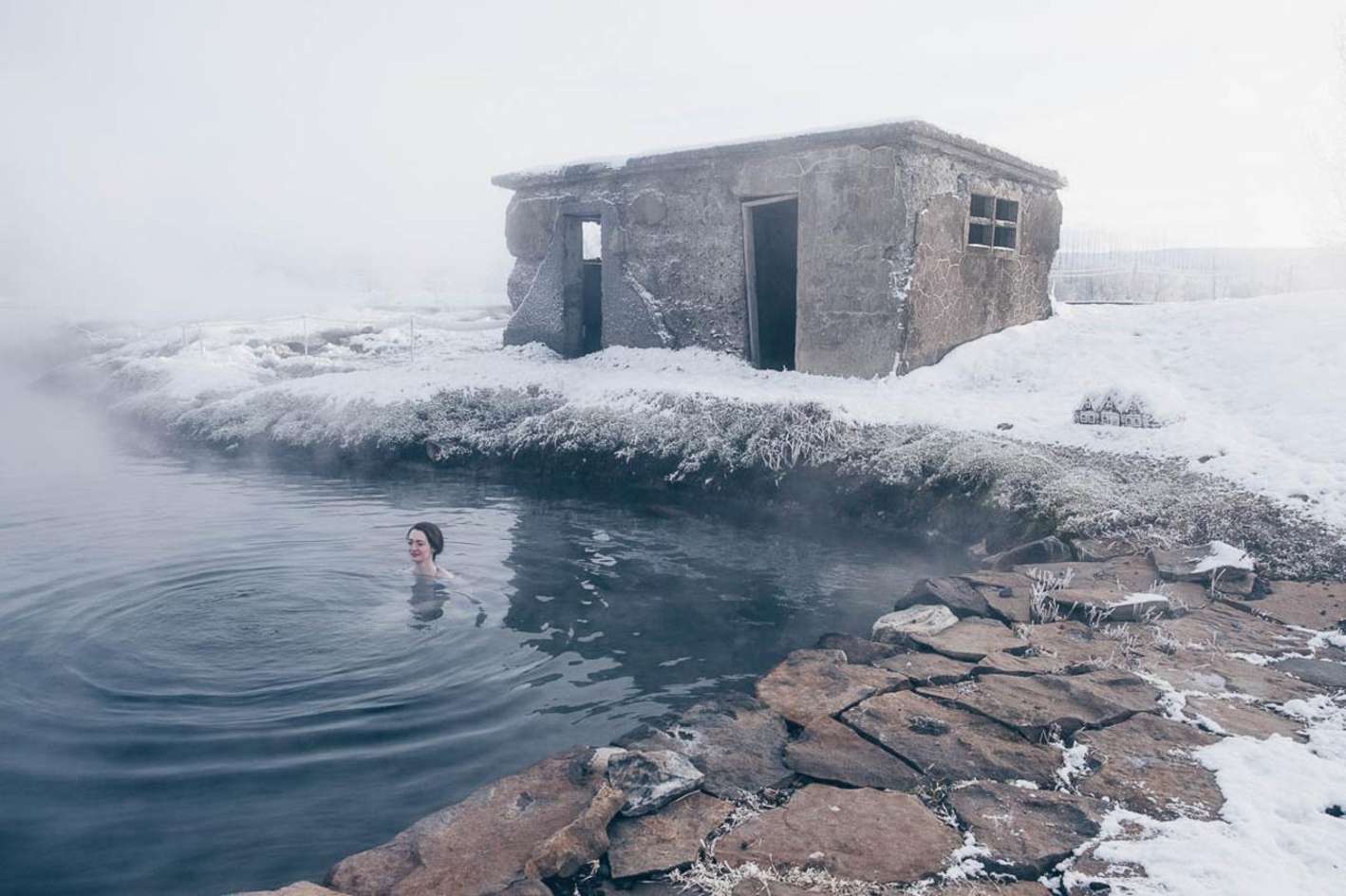
The Reykjavík: Golden Circle, Secret Lagoon & Aurora Chase builds exactly that: 12 hours with about two hours at the Secret Lagoon, Iceland's oldest thermal pool, along with Kerið crater entrance, hot chocolate on the night leg, and a free second-chance aurora tour if the sky stays dark.
You bring swimwear and a towel, since towel rental is an extra.
The lagoon version runs longer than the plain 9-hour combo, so check that your schedule can carry it.
One warning from people who tried it independently: public transport back to Reykjavik stops running early, so a lagoon visit bolted onto a separate night tour leaves you stranded unless the tour bus handles both legs. Book it as one package, and the recovery comes built in.
Tour for this
Reykjavík: Golden Circle, Secret Lagoon & Aurora Chase4.9★ (8) · 12 hours · Hotel pickup · Free cancellation
Reykjavik pickup points for northern lights combo tours
Downtown Reykjavik has no doorstep pickup. City rules keep tour buses out of the central streets, so since mid-2017 pickups happen at 12 numbered tourist bus stops across the 101 and 105 postcodes, positioned so that downtown accommodation sits generally within a ten-minute walk.
The practical version: if you stay in the centre, check your voucher for the stop number and walk there. If your accommodation lies outside the downtown core, the bus often collects you at the door. With a direct pickup, wait outside, because the driver will not come into the lobby for you.
This matters twice in one day. The morning bus and the evening aurora bus both collect from the same system, and the night departure means standing at a street corner in the cold, in the dark, in a city you do not know.
Read the voucher before the day, note both times, and give yourself the walk with a margin.
Getting it wrong costs more than time. People who missed the bus describe waiting outside in sub-zero temperatures while their tour left without them, which no amount of hot chocolate fixes afterwards.
Drive the northern lights route from Reykjavik yourself?
A rental car is legal on this route. The Golden Circle's roads are paved, a two-wheel-drive car with winter tyres manages, and from 1 November to 14 April winter tyres are mandatory on every rental anyway. A 4x4 is recommended for traction, not required.
The daytime leg is the easy part. The night chase is why first-timers hand the wheel to a professional. Rural roads outside town are unlit, sometimes without reflective markers for long stretches, and snow on the verges makes them feel narrower than they are.
Crosswinds push cars across lanes, drifting snow hides the road edge, and rain near freezing turns pavement into invisible black ice. Even a road that looks clear can be icy.
Then there is the thing nobody thinks about: you drove out here to look at the sky. A driver glancing up at the sky on a winding, narrow road is exactly the heightened risk the locals worry about.
How hard each way of travel is
Guided coach or minibusa professional driver watches road reports and weather while you sleep between stops
Easy
Rental car, daytimewinter tyres mandatory from 1 November to 14 April; roads ploughed regularly
Moderate
Rental car, night chase in winteryou judge ice, wind and closures alone on unlit rural roads
Difficult
If you do drive, check safetravel.is, road.is and umferdin.is before setting out, and check them again before the return.
Driving yourself
Rent a car in ReykjavíkCompare cars from the rental companies in one search, then pick yours.
Standing still in a frozen field for hours is a different problem from walking around a waterfall. Movement generates heat; waiting for an aurora generates none. January nights around Þingvellir drop to about minus six, and wind strips away whatever warmth your clothes have trapped.
The answer is four layers, each doing its own job. A merino or synthetic base layer next to the skin, a fleece or wool mid-layer, a high-loft down jacket for static warmth, and a windproof, waterproof shell outside it, trousers included.
Add insulated boots with thick soles, mitts over thin liner gloves so you can still work a camera, and a fleece balaclava for the face.
Grip matters at Gullfoss, where freezing spray ices the paths and the lower trail closes when it turns to sheet ice. Slip-on microspikes are strongly recommended from mid-October to mid-April, though never legally required.
What to wear for standing in sub-zero Arctic wind
Thermal base layer top and bottomsWicks moisture from skin so sweat cannot chill you when stopped. Choose merino wool or synthetic fabrics, never cotton.
Insulating fleece or wool mid-layerTraps warm air close to the torso and thighs. Thick fleece or an Icelandic wool sweater provides crucial passive insulation.
High-loft down parkaProvides heavy-duty static warmth when standing still for hours without body movement generating heat.
Windproof and waterproof shell jacketPrevents Arctic gusts from penetrating clothes and stripping trapped warmth, with a storm hood to seal out drafts.
Windproof and waterproof pantsShields lower body insulation from sub-zero winds, blowing snow, and freezing spray at exposed viewpoints.
Insulated winter bootsThick soles prevent ground frost from freezing feet, paired with heavyweight wool socks and room to wiggle toes.
Windproof mitts and liner glovesLayering warm outer mittens over thin touchscreen liner gloves lets you adjust cameras without exposing skin.
Fleece balaclava or neck gaiterProtects face, neck, and forehead from sharp wind chill and seals open collar drafts completely.
For the camera: cold kills batteries, so carry spares in an inner pocket close to your body. On a phone, Night Mode with a two-second timer, resting on a rock or a car roof, beats handheld.
On a camera, manual mode, ISO 2000 to 7000, shutter over five seconds. Food is never included on the daytime leg, so pack lunch and snacks and skip the cafeteria queue.
Booking your Reykjavik northern lights tour for the first night
Book the combo for your first night in Reykjavik. The reasoning is arithmetic, not optimism: the aurora cannot be guaranteed by anyone, so the retry policy is worth nothing unless you still have evenings left to use it.
A free second-chance tour is the standard safety net, offered when the lights fail to appear or the chase cancels for weather.
If an overcast sky cancels the night leg entirely, operators refund that portion. If the whole day cancels for a storm or a road closure, you get an alternative date or a full refund.
When the day changes
If this happens
What happens then
Night chase cancels for cloud
free retry on another night, or a refund of that portion
No lights under clear skies
join the aurora tour again free on another night
Day tour canceled by severe weather
alternative date or full refund
Tour cut short by a mid-day road closure
generally not refunded
The last line is the one people miss. A tour that departs and runs in part before weather forces it back is generally not refunded, so the guarantee covers the night, and the daylight leg stands on its own.
The retry only works while you are still in Reykjavik with a free evening. On a trip that moves straight along the Ring Road, it is worthless. Build one spare night into the capital if the lights are why you came.
Around Reykjavik before your northern lights combo
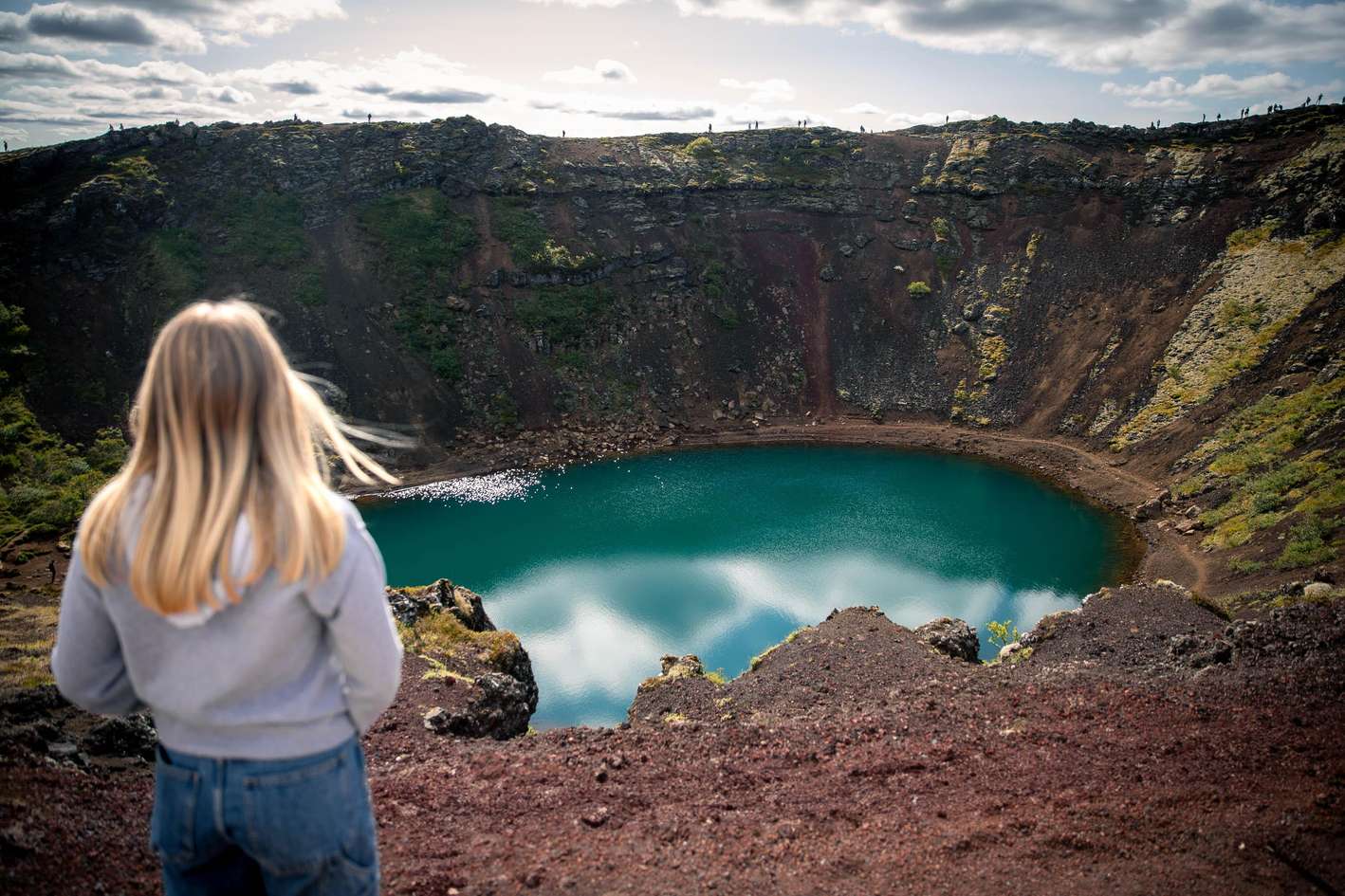
Once the combo day is booked, the edges of the trip fill themselves in. On the Golden Circle route itself, two stops sit outside the standard trio: Kerið crater, an ancient volcanic lake that some tours include and some charge for separately, and Brúarfoss, whose parking carries a fee.
Friðheimar, the greenhouse farm famous for its tomato soup, is the food stop people talk about for weeks, and several lagoons line the route if one soak a day is not enough.
Back in Reykjavik, the pickup district doubles as the sightseeing district. The Settlement Exhibition, the city museum and the park in front of parliament all sit within a short walk of where the tours gather, and Perlan's museum is an eight-minute drive.
If your ship docks at Skarfabakki, the city centre is walkable, about four kilometres, no shuttle needed.
Save something for the hours after a late return too. The city eats late enough by local standards, and a food hall in a former bus station serves dinner well past the time most aurora buses are still out in the fields. The trip ends better fed than rushed.
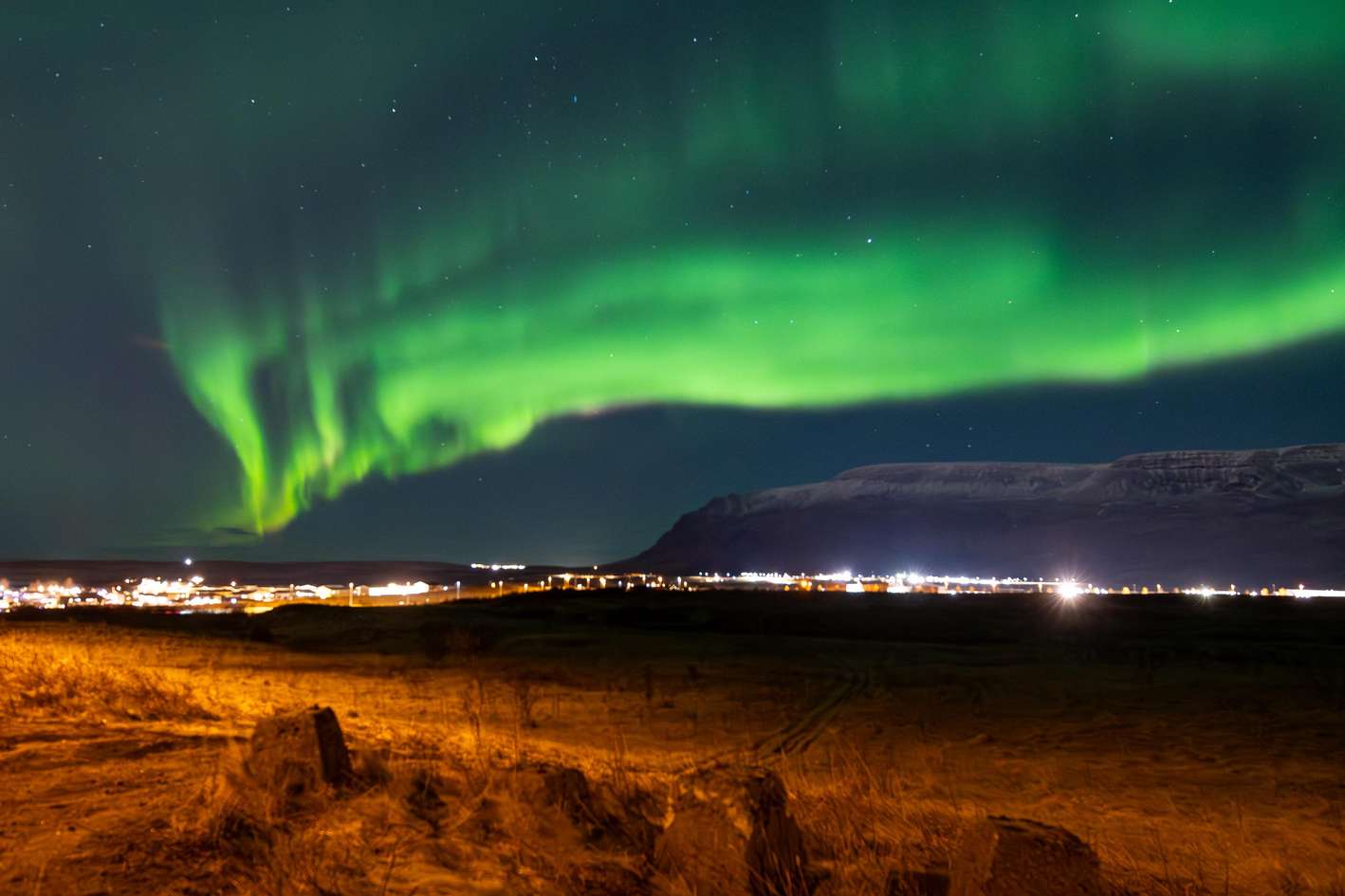
Golden Circle morning was lovely, comfy bus, kind staff. Aurora tour was rescheduled for bad weather, and next night at Pingvellir the lights danced. Most emotional moment of my life.
The combined Golden Circle and northern lights day is the right move on a short trip: two headline experiences, one booking, no icy night driving.
It works because the schedule is honest about its cost, roughly 8:30 am to 1 am, so plan a lighter day after and book it for your first evening, when the free retry still has nights to land on.
Pick a minibus if you want guide contact and cloud-chasing agility, or a lagoon version if you would rather recover than rush. On a three-day stopover, this single day earns its exhaustion.
Go ifYou have three or four nights and want both highlights without booking separate daysYou are visiting between late August and mid-April and can spare one backup eveningYou would rather a professional handle winter night driving than rent a car
Skip ifYou travel with young children; the lagoon version excludes children under 2 and the 15-hour Blue Lagoon version excludes under 14sYou want an easy pace; travelers say the single-day format runs 12 or more exhausting hoursYou arrive in May or June, when true darkness disappears entirely
Our pick to book
HÓTHótel Ísland Spa & Wellness
REYReykjavik
Length9 hours
At Reykjavik3 h
PickupHotel pickup
Rating4.1★
From Reykjavik: Golden Circle and Northern Lights Tour$162/personCheck availability →Free cancellation
Northern Lights from Reykjavik - your questions answered
september gives the most clear dark nights
Straight answers on timings, cloud cover, and what happens when the sky does not cooperate.
Reykjavik2026
The sky split green above the frozen falls at Gullfoss last night, and nobody spoke for a full minute. Book your first evening in town, so a cloudy night still leaves you a spare.
Can you see the Northern Lights on the Golden Circle in Iceland?
Yes. Þingvellir sits under the auroral oval, so displays are possible on any clear dark night from late August to mid-April. September averages about 7 clear dark nights at the park, and recent tour visitors have seen the lights from there.
How does a Golden Circle and Northern Lights combo day actually run?
Pickups start around 8:30 to 9:00 in the morning, and the daytime loop returns to Reykjavík around 5 pm to 7 pm.
You get a break of 1.5 to 3 hours for dinner and warmer layers, then the aurora departure leaves between 8:30 pm and 10 pm. Expect to be back at your hotel near midnight, sometimes later.
What happens if clouds or a blizzard cancel the Northern Lights chase?
If the chase cancels for weather, operators give a full refund for that part of the trip. If the tour runs but no lights appear, most operators let you join another aurora departure on a later night for free. The lights themselves are never guaranteed on any tour.
Should I book the combo for my first night in Reykjavik?
Booking for your first evening gives you spare nights to rebook if weather cancels or the lights stay hidden. Leaving it until the end of your trip leaves no room for a second try.
Where do the aurora guides drive at night?
Guides check satellite cloud maps, the Icelandic Meteorological Office forecast, road reports, and webcams each evening, then head for the nearest gap in the cloud. Chases usually stay within about 60 to 100 km of Reykjavík, often toward Þingvellir or the Reykjanes Peninsula.
Is it tiring to do both the Golden Circle and the aurora chase in one day?
Honest answer: it is a long day. Travelers describe 12-plus hours on their feet, and the daytime loop plus an evening chase means being out from morning until past midnight with only a short break. Splitting the two across separate days is the relaxed option if your schedule allows.
Can I drive to the Northern Lights viewing spots myself instead?
You can, but winter rural roads are unlit, often icy, and prone to crosswinds and drifting snow. A guided bus spares you that driving, and a driver who is not also watching the sky for the aurora makes the icy roads safer for everyone.
How cold will it be waiting outside for the lights?
Around Þingvellir, January lows average about minus 6°C, and you stand still for long stretches. Waterproof layers, hat, gloves, and proper shoes matter more than any forecast. Some combos pour you a hot cocoa while you wait.
Can I photograph the Northern Lights with just my phone?
Yes, if you keep it steady. Use Night Mode with a long exposure, rest the phone on a rock or the bus roof, and set a two-second timer to cut shake. Guides on several tours walk you through camera settings before the first stop.
Why did the aurora look gray to me but bright green in my photos?
Your eyes switch to color-blind vision in the dark, so a faint display reads as pale gray or white. Camera sensors collect light over several seconds and record the green that your eyes miss. A weak display may only ever look gray in person.
How many daylight hours do the Golden Circle stops get in winter?
December gives about 4.3 hours of daylight with sunset near 3:25 pm, so parts of a daytime tour run in the dark from November through January. By February, sunset moves to around 5:52 pm and the stops finish before dark.
Are there restrooms on the night chase?
It depends on the tour. Some rural aurora chases have no restroom facilities on board, while some minibuses do. Check the inclusions on the tour you book, and use the visitor centers before the daytime loop ends.