

3 days·English
5.0(3)
Iceland: 3-day Wellness, Blue Lagoon, & Hotel Minibus Tour
Free cancellationHotel pickup included3 fully guided day tours

Plan your Iceland itinerary around the Golden Circle in one well-paced day, and add the South Coast only if you have a second or third day to spare. Start with a full-day loop that fits Þingvellir, the Geysir area, Gullfoss, and Kerið into eight hours from Reykjavik, with pickup, a guide, and hotel-free logistics handled for you. Pick your departure and lock in the schedule today.
"Our guide was so knowledgeable, polite, friendly and helpful. Made the whole trip a real pleasure."






thingvellir parking: use the parka app
The full loop fits in one long day, and most visitors still come home saying they rushed it. How the hours break down, what the winter light allows, and when a second day earns its keep decide whether the day works.
One day covers the loop: 230 to 300 km of driving plus stops, about 7.5 to 8 hours door to door from Reykjavik.
The honest order is Thingvellir first, then Geysir, then Gullfoss, with 45 to 90 minutes at each stop.
December gives barely four and a half hours of light, so winter tours run the whole route inside a narrow midday window.
Leaving Reykjavik before 8 am, or taking an afternoon departure, keeps you clear of the coach wave at Geysir and Gullfoss.
Two or three days turn the loop into a southbound route to waterfalls, black sand and the glacier lagoon, with a night in Selfoss doing the bridging.
Check safetravel.is and road.is for road alerts before you set out, and plan your Iceland itinerary around the upper viewpoints at Gullfoss in winter. Pack ice grips for the paths.
The loop itself answers the question. From Reykjavik the full circuit runs 230 to 300 kilometres, depending on whether a detour like the Kerið crater goes on the route, and pure driving takes about three and a half to four hours.
Add the sightseeing and a one-day Golden Circle itinerary costs 6 to 8 hours, with the standard guided day running about 7.5 to 8 hours door to door.
So yes: the whole thing fits in a single day, comfortably, as long as that day is genuinely set aside for it. Three main stops sit on the route, Thingvellir National Park, the Geysir geothermal area and Gullfoss, and each deserves more than a dash from the bus to the viewpoint.
What one day does not hold is the South Coast. Budget a full day here and a separate day there, and both get the time they deserve. If your Iceland itinerary only has room for one shorter trip, this loop is the more time-efficient choice.
Those numbers are the honest cost of the day. Book the loop early in your trip: it is the clearest introduction to Iceland's geology, and it sets up everything you see afterwards.
Most days start with headlights. Buses leave Reykjavik around 8:00 or 8:30 am, and the first stretch of road runs in the dark for much of the year.
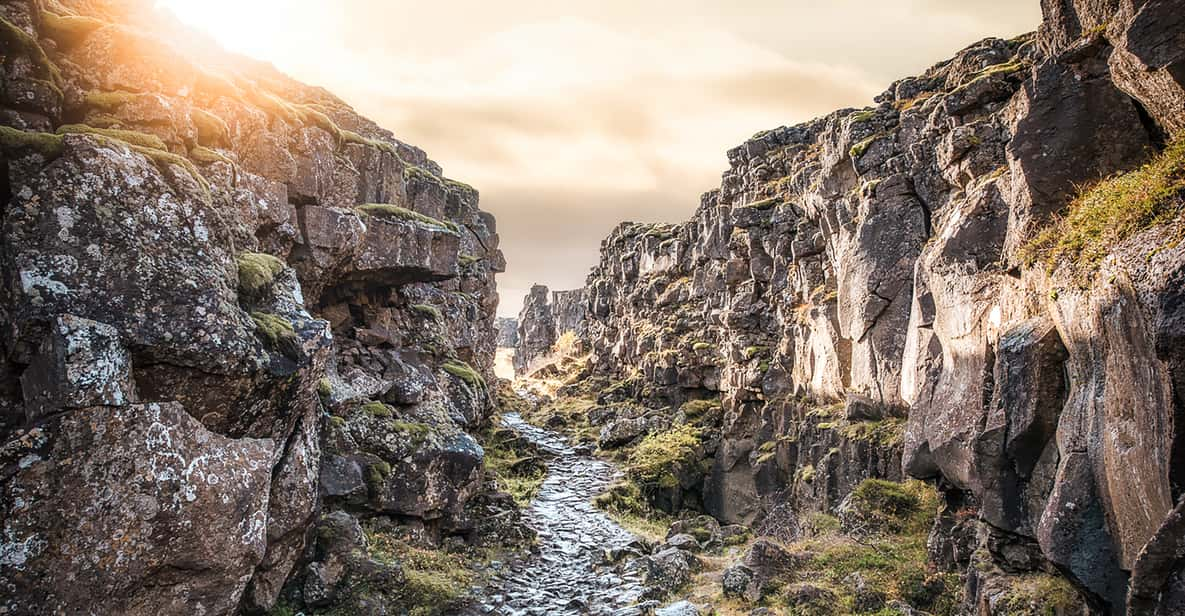
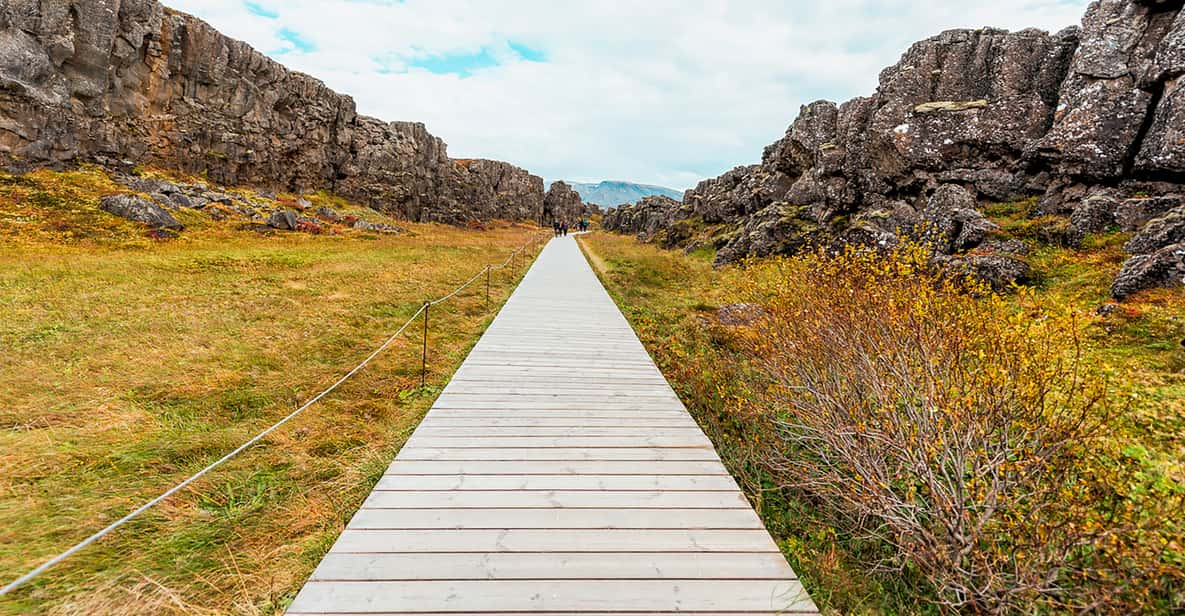
The first stop is Thingvellir National Park, where the North American and Eurasian plates pull apart a few centimetres a year and the old Icelandic parliament sat from 930 AD.
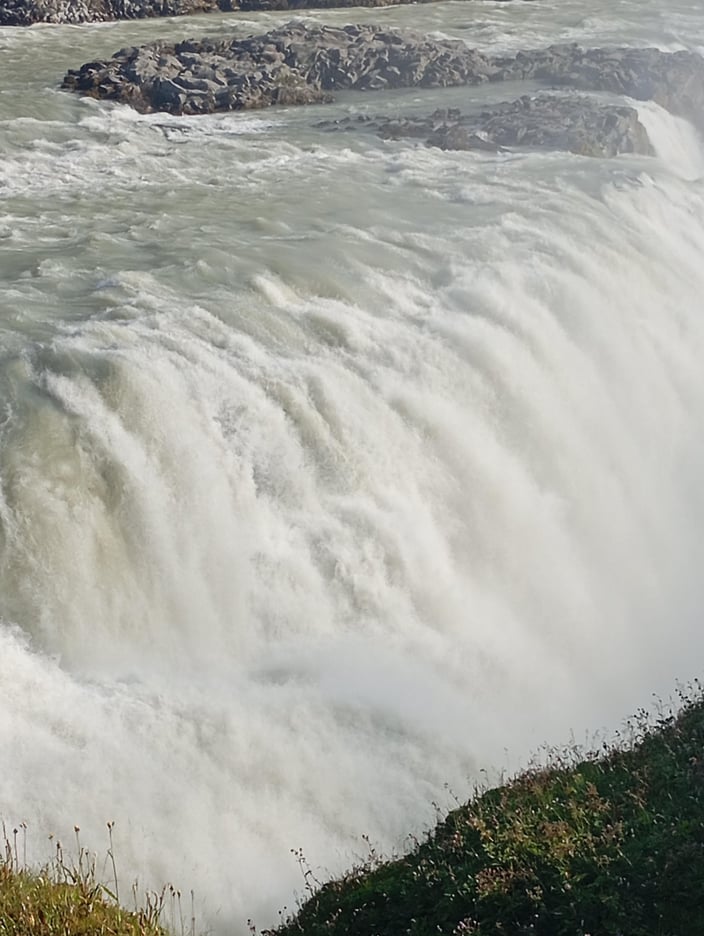
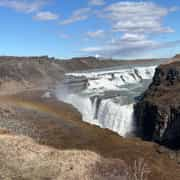
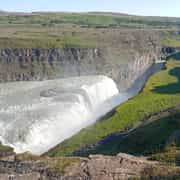
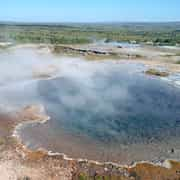
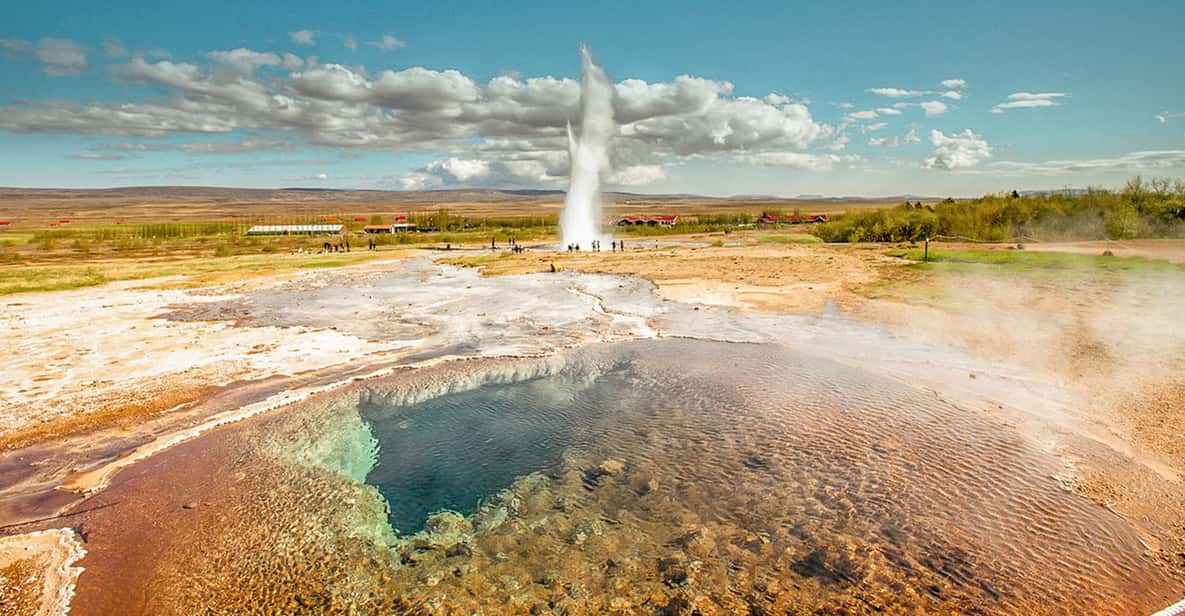
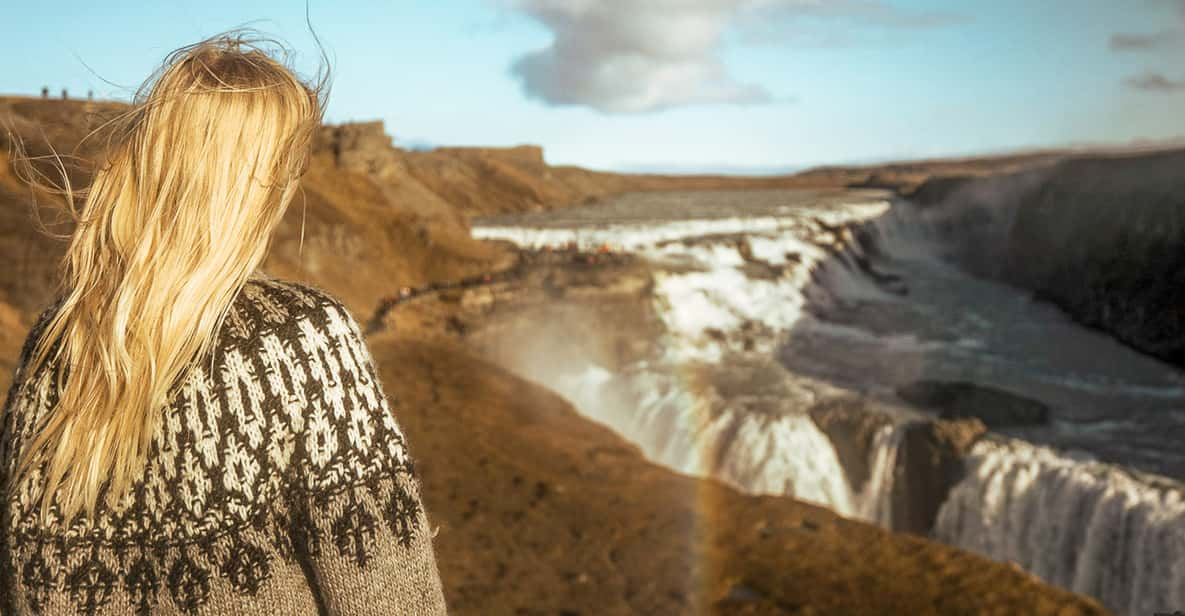
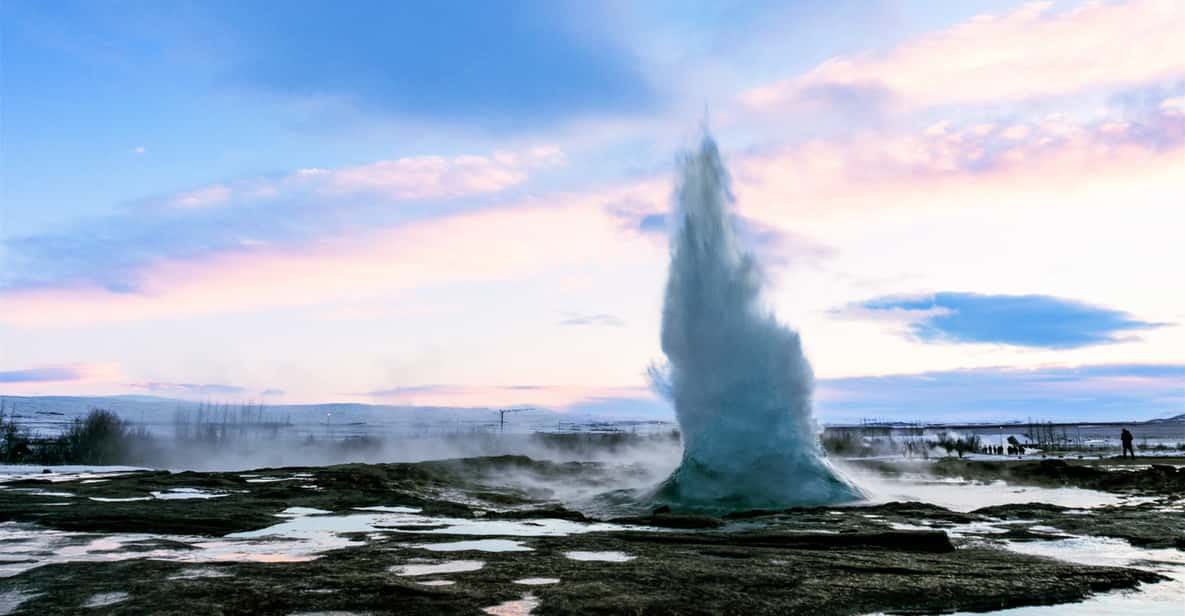
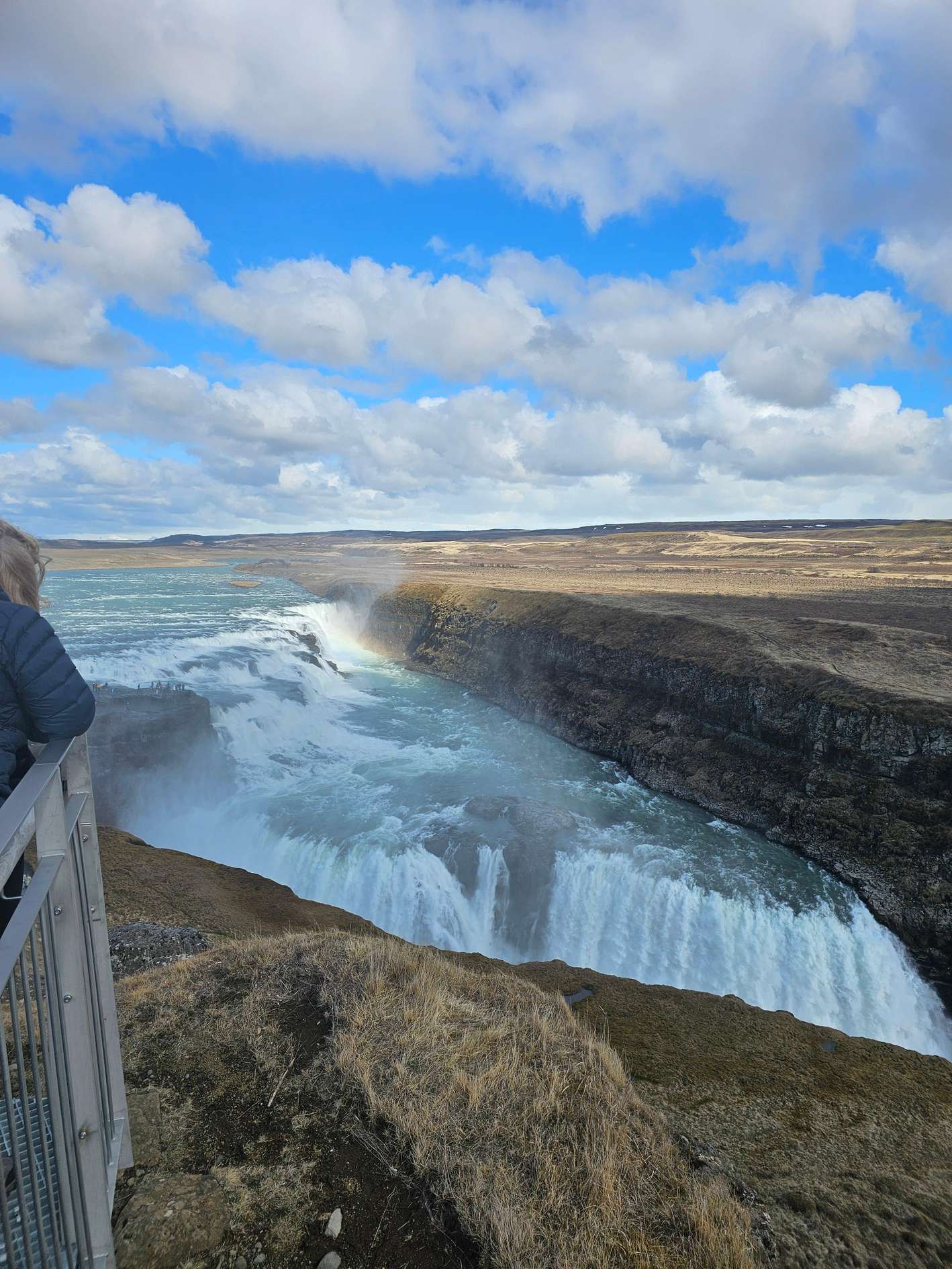
From there the route runs to the Geysir geothermal area, where Strokkur sends steaming water tens of metres up every few minutes, and finishes at Gullfoss, where the glacial Hvítá river drops into a canyon you feel as spray before you see it. Then the loop returns to the city by a different road.
The dwell times are the part worth insisting on. To see the falls properly, including the lower path, budget closer to an hour at Gullfoss than the bare minimum thirty minutes. Twenty minutes at a major stop barely covers the walk from the car park and the restroom queue.
Those minutes are what separates a sight from a photo stop. A tour that schedules the bare minimum leaves you choosing between the two Gullfoss viewpoints; one that allows an hour lets you do both and still catch a second Strokkur eruption.
The Geysir stop rewards a slow walk: within five minutes of the parking area sit four separate hot springs.
If a guided day suits your schedule, the full-day tour with Kerið Crater covers all three main stops plus the crater in 7 to 8.5 hours, with pickup and a guide who fills the driving legs with the stories behind each stop.
Shops at Geysir and Gullfoss sell food and drinks, so lunch is a stop away. The Friðheimar greenhouse in Reykholt, between the first two stops, is the sit-down option people remember, famous for fresh tomato soup, and you pay for the meal yourself even when the tour schedules it.
Daylight is the hidden variable that decides how much fits into a day here. June hands you nearly 21 hours of light and nights that never go fully dark. December gives about 4 hours 22 minutes, with sunrise near 11 am and the sun setting around 3:30 pm.
That is why winter tours work the way they do: they leave Reykjavik around 8:00 or 9 am in darkness, drive the transit legs before dawn, and run Thingvellir, Geysir and Gullfoss inside the brief midday window. It sounds tight, and it is, but demand in February runs strong, so the schedule holds.
October catches people out for a reason. The days shorten fast and the first real storms arrive, shrinking what a single day can absorb. December's long dark has its own reward: it is the season for the northern lights, which no June evening can offer.
Winter footing matters as much as the light. Freezing spray from Gullfoss and steam from the geothermal field coat the paths in sheet ice, and the lower canyon path at Gullfoss is gated shut in winter.
Park authorities strongly recommend ice grips even where walking stays open, and nobody can stop you from carrying them in your daypack.
Iceland also stays on standard time all year, so winter mornings run darker than you expect. A late sunrise is part of the schedule, and tours build it in.

The buses have a rhythm, and you can hear it before you see it.
Most coach tours leave Reykjavik around 8:30 am, run clockwise with Thingvellir first, and arrive at Geysir between 10:30 am and 2 pm and at Gullfoss between 11 am and 3 pm Fifty people stepping off a coach changes the sound of a quiet hot spring valley.
Self-drivers have the escape hatch. Drive counterclockwise, Gullfoss first, then Geysir, and you reach each sight before or well after the big groups. Take the loop in the standard order, Thingvellir, Geysir, Gullfoss, and leave by a different road, but start early: an 8 am departure puts you at Thingvellir ahead of the wave.
A midday arrival puts you in the thickest crowd of the day
Going the other way empties the popular sights for you
Both beat the morning wave, one ahead of it and one behind
Afternoon departures work the same trick in reverse: they reach the sights after the morning coaches have moved on. Whichever way you travel, the rule is simple, don't arrive at Geysir or Gullfoss between late morning and mid-afternoon.
Both ways work, and the roads make the choice easier than you might fear. The main circuit is paved end to end, so a standard 2WD rental car is enough in summer.
From 1 November to 14 April, winter tyres are mandatory on all rental cars, and a 4x4 is recommended in the cold months for traction and clearance, though never legally required on this route.
Driving yourself buys lingering. You set the dwell times, you add the detours, and you answer to nobody when a roadside waterfall looks worth ten minutes. The price of that freedom is winter: black ice, ground blizzards, and a schedule that one storm can derail.
Self-drivers should also plan the parking: Thingvellir and several other stops charge through the Parka app, and saving your receipt screenshots spares you arguing with the rental agency over automated charges later.
A guided tour hands the wheel, the route and the darkness to someone else. Prices for guided days climb 20 to 35 percent between May and August, while rental rates climb in the same months, so neither option is cheap in high season.
Winter is the season where the guided option proves itself, with drivers who read the ice for a living.
| Check | Why it matters | Our pick |
|---|---|---|
| Winter tyre and 4x4 rules | Winter tyres are mandatory on rentals from 1 November to 14 April, and 4x4 is recommended for ice | The tour runs a bus with a professional winter driver, so none of it lands on you |
| Time at each stop | Rushed stops waste the trip | The day is scheduled around generous stops at Thingvellir, Geysir and Gullfoss |
| Daylight in the dark months | December gives about 4.5 hours of light | Departure and stop order are sequenced to fit the midday window |
| Parking and fees | Self-drivers pay through apps and machines | The tour handles all stops and entrances |
If you want the decision made for you, the 6.5-hour full-day tour from Reykjavik covers the classic three stops with an English-speaking guide, onboard Wi-Fi and the national park visitor fee already handled, leaving you only your own lunch.
Central Reykjavik has a rule that surprises first-time bookers: in postcodes 101 and 105, tour buses do not come to hotel doors.
The city redirects them to 12 designated numbered bus stops, placed so that downtown accommodations sit within about a 10-minute walk of one. Stay further out and you usually get genuine doorstep pickup, with the bus pulling up in front of the building.
The small print follows you to the curb. If your accommodation has no assigned stop number and you get doorstep collection, wait outside the building from the time your confirmation states.
Some passengers are also taken to the main bus terminal first and transferred onto the Golden Circle coach, so read the pickup note the night before.
Food is the clearest extra to budget for. Lunch and snacks sit outside nearly every tour booking, bought at the shops at Geysir and Gullfoss or at a scheduled stop like the Friðheimar greenhouse, where even a booked lunch stop is paid separately.
At the end of the day, nothing else is owed. Tipping guides and drivers is not the custom in Iceland; they earn proper wages and do not depend on tips, though exceptional service is always appreciated with a cash tip in any currency. Cards work almost everywhere, so you can leave the króna unexchanged.
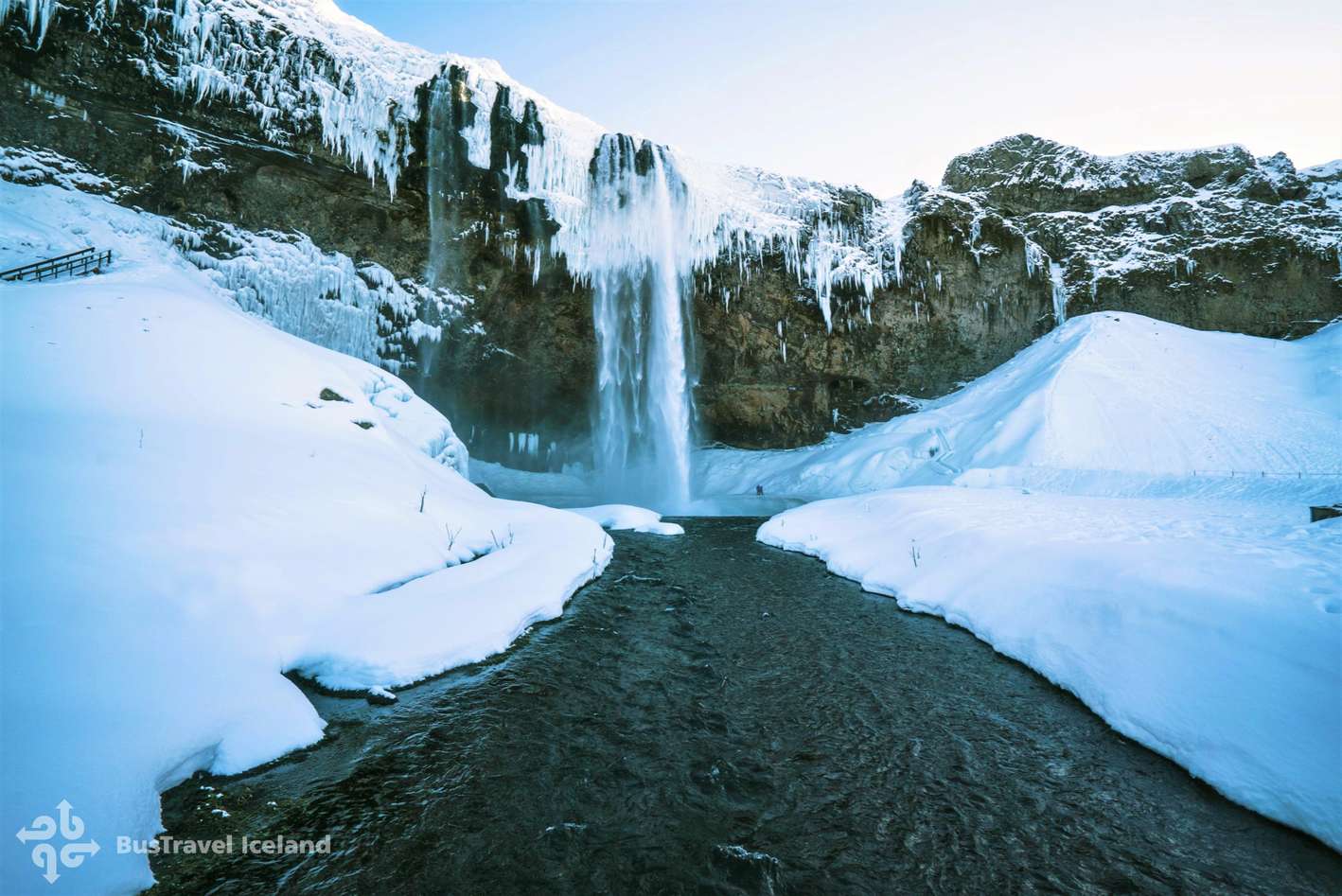
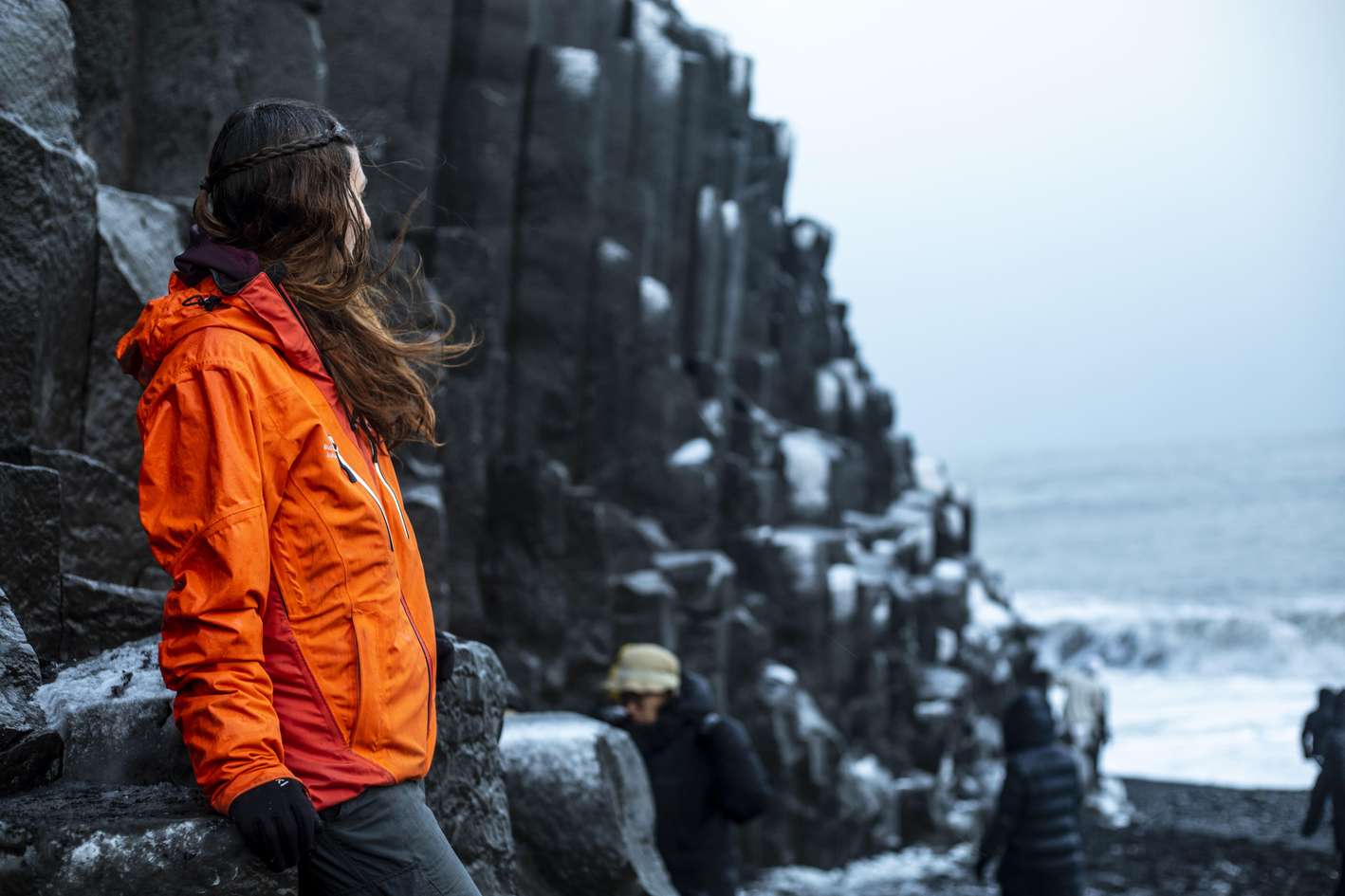
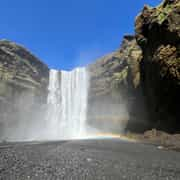
A second day changes the shape of the trip. Instead of looping back to Reykjavik, the route turns south: Seljalandsfoss, where you walk behind the water, Skógafoss, the black sand at Reynisfjara, and the village of Vík.
A third day reaches Jökulsárlón glacier lagoon and an ice cave. Guided packages run exactly this shape, with the Golden Circle on day one and the South Coast unfolding after.
How many days do you need for the Golden Circle in Iceland, then? One for the loop alone, two if the South Coast matters to you, three if the glacier lagoon belongs on your list.
What one day cannot hold is both regions. Squeezing the Golden Circle and the South Coast waterfalls into a single day means at least seven hours of pure driving under ideal conditions, and twenty-minute stops at places that deserve an hour.
With two nights and ordinary flight times, pick one region as your main day trip. If you want both, three days is enough as long as you stay along the route instead of returning to the city nightly.
Selfoss or nearby Hveragerði make practical overnight bases, with services and easy access in both directions; heading back to Reykjavik each night suits you if you would rather not change hotels.
The three-day Golden Circle, South Coast and glacier tour runs this exact route: the loop and Kerið crater on day one, two nights of accommodation with breakfasts included, then the waterfalls, black beach and an optional glacier hike or boat tour at Jökulsárlón, with pickup and drop-off within Reykjavik throughout.
The route has quiet side doors, and the right one depends on how much slack your day carries.
Cheapest in time: Þórufoss, a 15-minute detour between Reykjavik and Thingvellir where the falls drop into a narrow basalt canyon, and Helgufoss, a ten-minute walk from its parking in the valley above Mosfellsdalur. Faxi waterfall sits minutes off the road, with a fish ladder where salmon climb upstream in summer.
Brúarfoss costs more patience. Its blue water sits a five-minute walk from the official parking, or a 7 km riverside hike past two smaller falls if you have two extra hours. Large coach tours usually skip it, which is exactly its charm.
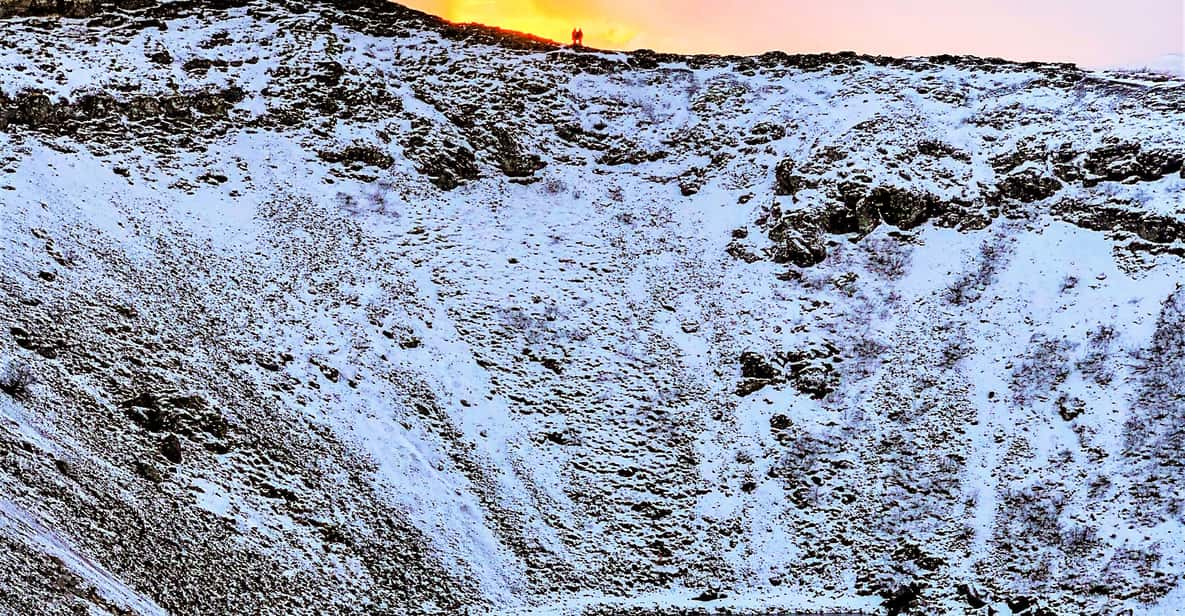
Kerið crater is the most popular extra, red volcanic slopes around a lake, and many standard tours leave it off, so check the itinerary before booking; the entrance fee is paid at the on-site kiosk. The Friðheimar tomato greenhouse between the first two stops turns lunch into the memory of the day.
And a lagoon soak after sightseeing, 90 minutes at the Secret Lagoon once the three main stops are done, is how travelers describe ending a Golden Circle day properly, warm water instead of a hotel lobby.
Pairing the loop with a bigger add-on stretches the day too: lagoon combos run 8 to 11 hours, and snowmobiling or Silfra snorkeling push it to about 10.
That soak costs the day a few extra hours, and travelers who build it in call it the best trade of the whole loop.
The route stays open all year. Thingvellir, Geysir and Gullfoss sit on paved roads cleared daily through winter, and the three sights welcome visitors in every month.
What closes, briefly, is the weather's choice: exposed sections such as Mosfellsheiði on Route 36 and Lyngdalsheiði can shut for hours in a storm, and Gullfoss's lower path closes under ice while the upper viewpoints stay open.
So rehearse the bad morning before you book it. If an operator cancels a tour for heavy rain, thunderstorms or unsafe roads, you get another date or a full refund.
A tour that departs and gets cut short mid-route is a different case: operators reserve the right to alter itineraries, and none of the major ones promises money back for a shortened day.
| If this happens | What happens then |
|---|---|
| Tour cancelled for severe weather or road closures | Another date or a full refund |
| Tour cut short mid-route by a closure | The itinerary is altered; a partial refund is generally not owed |
| Hellisheiði pass closed on the morning | Drivers divert via the lower Þrengsli pass |
| Staying in South Iceland and Route 1 closes | The road to your Reykjavik pickup can be blocked; stay put and contact the provider |
Check the road yourself before setting out. Live warnings and closures sit on safetravel.is, road.is and vedur.is, and the road administration's line answers condition questions by phone.
Staying south of the city in winter carries its own risk: a closed Route 1 can strand you away from your morning pickup, in which case the right move is to stay put and call the operator until the road reopens.
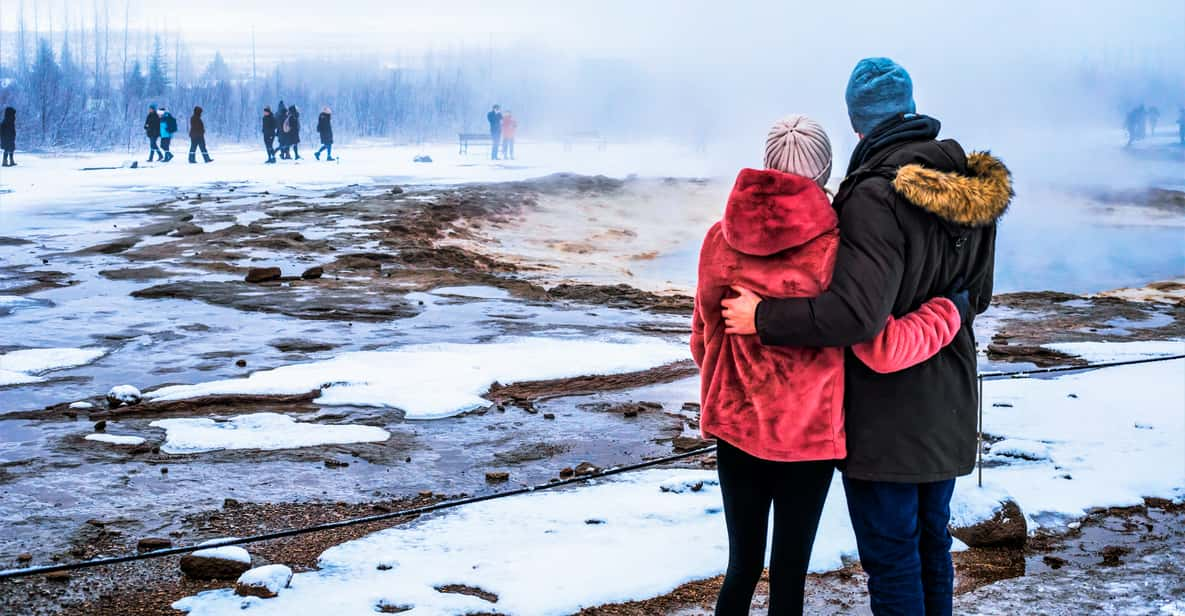
The Golden Circle earns a full day of any Iceland itinerary, run in the order Thingvellir, Geysir, Gullfoss, and it rewards an early start or an afternoon departure that beats the coach wave.
If the South Coast calls too, a second or third day with a night in Selfoss turns two rushed trips into one relaxed route.
counterclockwise avoids the coach crowds
If one full day is all you have, the guided coach trips page shows the classic loop handled start to finish.

Prefer fewer people per stop on your day out? The minibus page compares small-group tours from Reykjavik.
The Super Jeep page covers the rougher side trips a standard rental car cannot reach, whatever your trip length.
For two or three days at your own pace, the private tour page explains flexible itineraries with a driver-guide.
Some day tours skip the red crater. The Kerid page lists the ones that build it into the route.

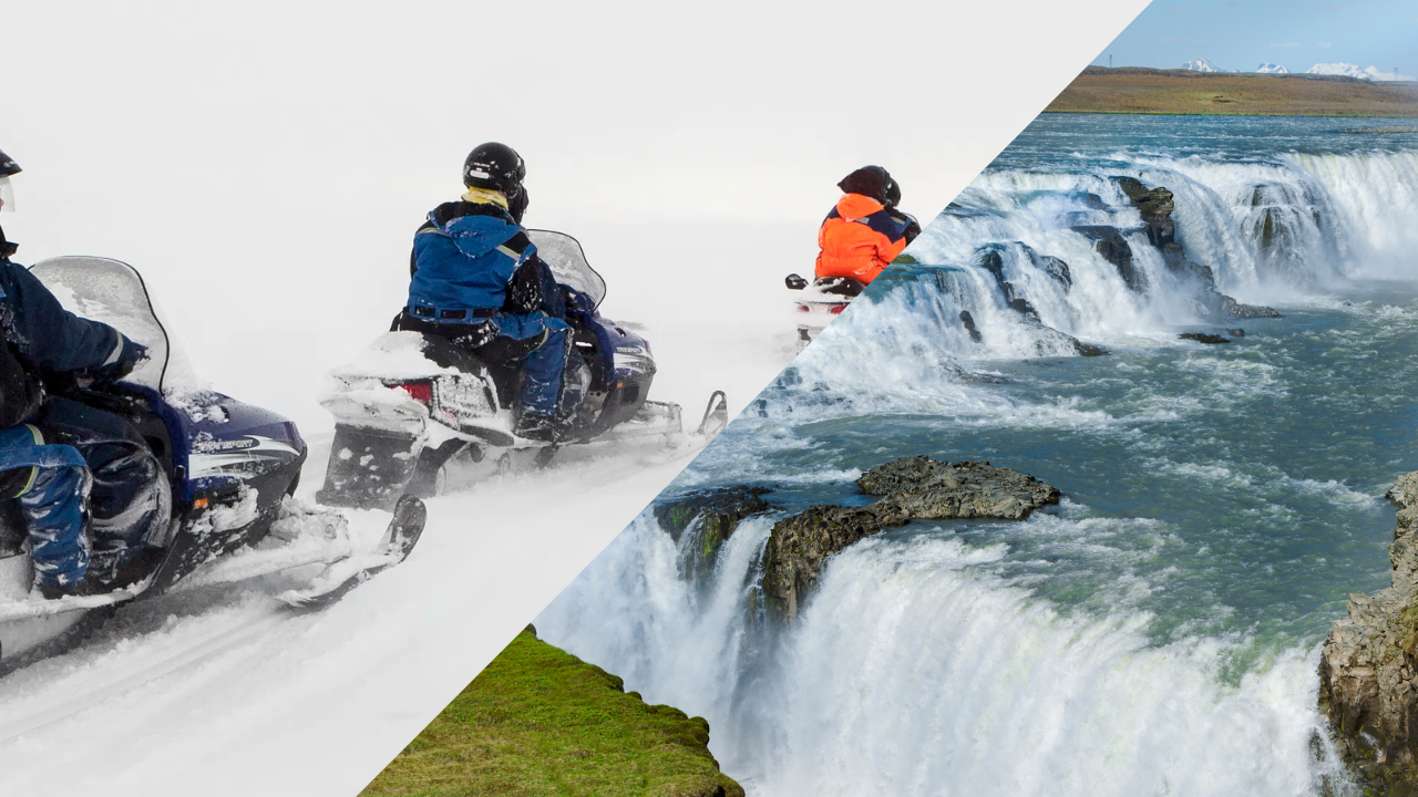
Want snow on day one? The snowmobiling page pairs glacier riding with the loop in a single long day.
dec sun sets around 3:30 pm
Quick answers on timing, route order, and what fits into one day, two days, or three.
 Reykjavik2026
Yes, and most visitors do. A day trip from Reykjavik covers the three main stops, Þingvellir, the Geysir area, and Gullfoss, with a full-day tour running about 6.5 to 8.5 hours door to door.
One full day covers the classic loop, which is 230 to 300 kilometers of driving and 6 to 8 hours with sightseeing stops. A second day lets you add a lagoon soak or the South Coast without rushing.
Pure driving time is about 3.5 to 4 hours out of a 7-to-9-hour day. The rest goes to stops of roughly 40 minutes to an hour at each of the main sights.
The loop works best as Þingvellir first, then the Geysir area, then Gullfoss, returning to Reykjavik by a different road. That sequence cuts backtracking and puts you at Þingvellir ahead of the tour buses.
It can. Travelers suggest seeing Þingvellir, Geysir, and Gullfoss first, then soaking for about 90 minutes before the drive back, so you end the day in warm water instead of a coach seat.
Kerið Crater, with its red slopes and crater lake, is the most popular add-on and charges an entrance fee. Brúarfoss waterfall and the Friðheimar greenhouse, which sits between the first two stops, are other options on some itineraries.
Friðheimar in Reykholt sits between Þingvellir and Geysir and makes a natural lunch stop, though tours that schedule it do not include the meal. Shops at Geysir and Gullfoss sell food and drinks too.
Three days works well: the Golden Circle on day one, then the South Coast with Jökulsárlón Glacier Lagoon on the days after. A two-day version pairs the Golden Circle with the South Coast's waterfalls and black sand beach.
An overnight in Selfoss or Hveragerði bridges the two routes and takes the pressure off driving back to Reykjavik. Stay south if you continue toward the coast next morning; return to the city if you would rather not change hotels again.
Between November and February daylight shrinks to as little as 4 hours 22 minutes, and in December the sun rises around 11:08 am and sets by 3:30 pm. Guided tours leave Reykjavik around 8 or 9 am, often in darkness, and sequence the three sights into the midday light.
With one day and a shorter trip, the Golden Circle is the more time-efficient choice and a compact introduction to Iceland's tectonic history. Pick the South Coast if big waterfalls and a black sand beach matter more to you and you can spare the full day.
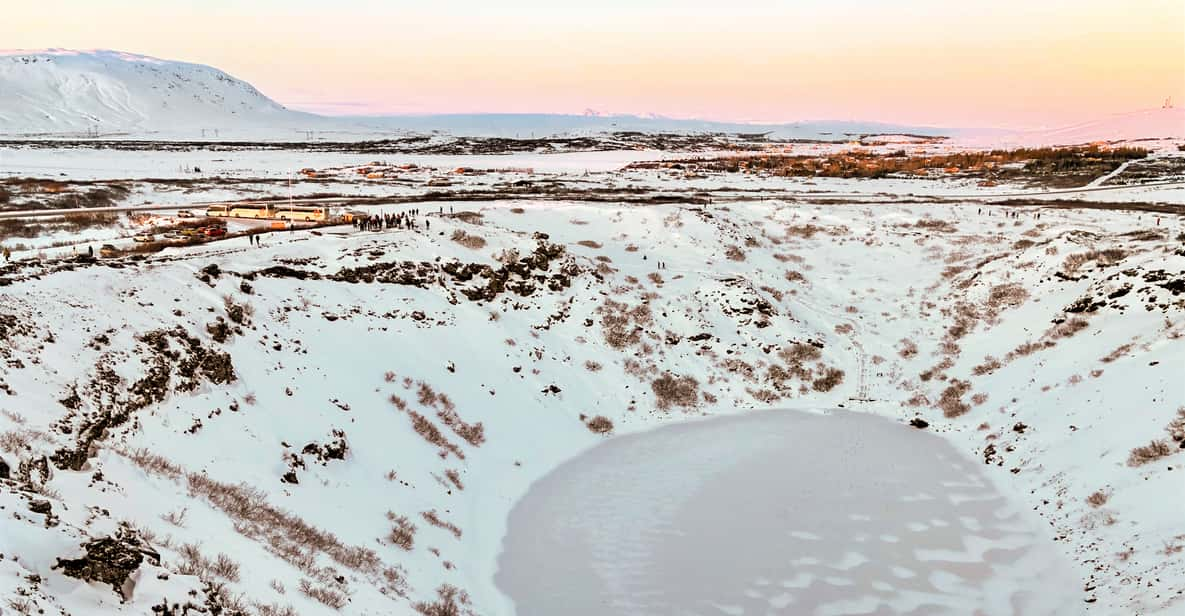
morning departures keep kerid on the route
This full-day Iceland itinerary covers Þingvellir, Geysir, Gullfoss and Kerið Crater in about 7 to 8.5 hours, with pickup in Reykjavik and free cancellation up to 24 hours before.